
Samsung Patents Technology to Stop Long-Stored Data From Corrupting Itself Undetected
Flash memory has a quiet enemy: time. Data stored in a block that hasn't been touched in a while can literally fade, and Samsung's new patent describes a way to catch that decay before you ever notice it.
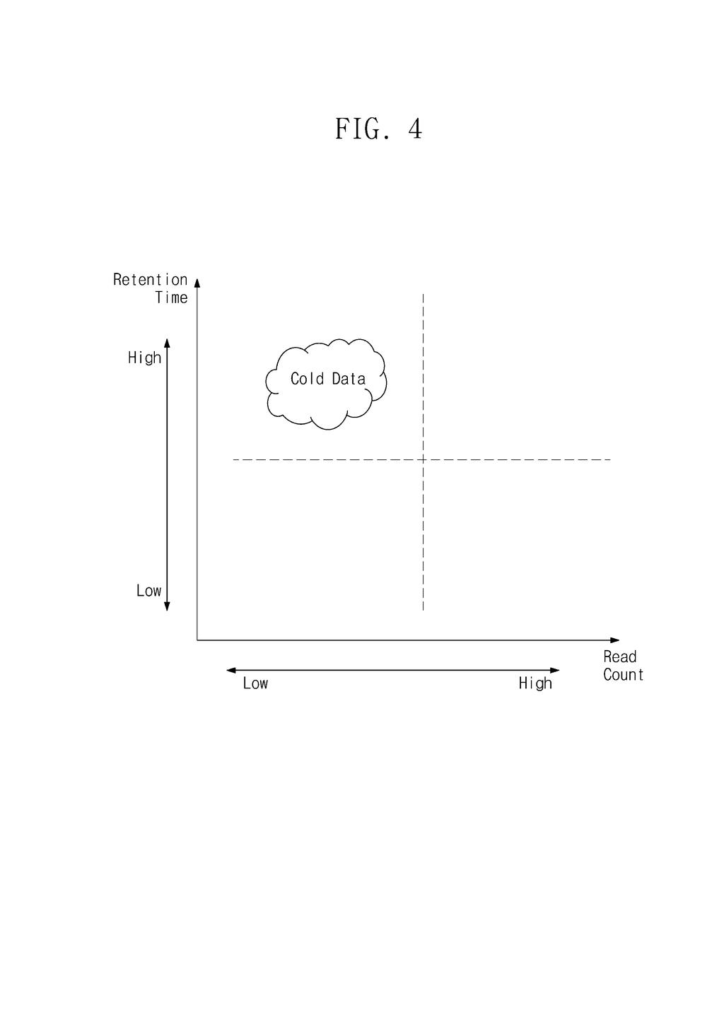
What Samsung's idle-memory protection system actually does
Imagine writing something important to a USB drive or SSD, then leaving it in a drawer for a year. The data might look fine when you pull it back out, but at the physical level, the electrical charges that represent your ones and zeros can gradually weaken. This is a known problem with flash storage, and it gets worse the longer a block goes untouched after being erased.
Samsung's patent describes a storage controller that keeps track of exactly when each block of memory was last erased, then compares that to the current time. If a block has been sitting idle for too long, the controller automatically runs a protective read scan, a process Samsung calls a 'defense code' operation, to catch and correct any bit errors before they become permanent data loss.
The tricky part is that flash storage doesn't have a built-in clock. Samsung's approach solves this by tracking power cycles instead: each time the drive powers on, a counter ticks up, and the controller uses that counter to reconstruct a reliable sense of time. It's a clever workaround for a real engineering constraint.
How the controller times erasure and triggers defense reads
The patent covers a method for a storage controller (the chip inside an SSD or flash drive that manages reads and writes) to detect when a memory block is at risk of data degradation due to prolonged inactivity after being erased.
Each memory block stores two key pieces of metadata: an erase timestamp (when the block was last wiped) and a power count value (how many times the drive had been powered on at that moment). Because NAND flash storage has no real-time clock, the controller cannot directly record wall-clock time. Instead, it uses the power cycle count as a proxy.
Here is the core sequence:
- The controller reads a block's stored erase timestamp and the power count at the time of erasure.
- It compares that stored power count to the current power count.
- If the two counts match (meaning the block was erased in the current power session), it generates a current timestamp for that session.
- It then calculates the elapsed time since erasure. If that gap exceeds a set threshold, it triggers a defense code read operation, which scans and refreshes the block's data to correct any charge-loss errors before they cause permanent bit flips.
This is essentially a proactive health check timed to physical storage age, not just access frequency.
What this means for SSDs and long-term data reliability
Flash memory's data-retention problem is well documented and gets more pronounced as NAND cells shrink to pack in more storage. Enterprise SSDs, data center drives, and even consumer NVMe drives can all suffer from read disturb and data retention errors on blocks that have been erased but not recently rewritten. Current error-correction schemes are largely reactive; Samsung's approach adds a time-aware, proactive layer.
For you as a consumer, this could mean SSDs that hold onto data more reliably over the lifespan of the drive, especially in devices that spend long periods powered down (think archival drives or laptops left in storage). For enterprise customers managing large flash arrays, it addresses a real cost driver: data corruption events that require expensive recovery operations.
This is quiet but genuinely useful engineering. Data retention failure in idle flash is a real and underappreciated problem, and Samsung's power-cycle-as-clock workaround is an elegant solution to a constraint that most people outside the storage industry don't even know exists. It won't generate headlines, but it's the kind of patent that shows up in shipping firmware a few years from now.
There are more where this came from
We read every patent application Big Tech publishes and send you the ones worth knowing. Plain English, free, every week.
The drawings
10 drawing sheets from US 2026/0219803 A1 · click any drawing to enlarge


Want this weekly breakdown for a company we don't cover? Patentlyze Pro →
Be the first to weigh in