
Samsung Patents Smarter Uplink Scheduling for 5G and 6G Full Duplex Networks
Most 5G radios can't send and receive at exactly the same time on the same frequency — Samsung's new patent tackles one of the trickiest scheduling puzzles that stands in the way of making that possible.
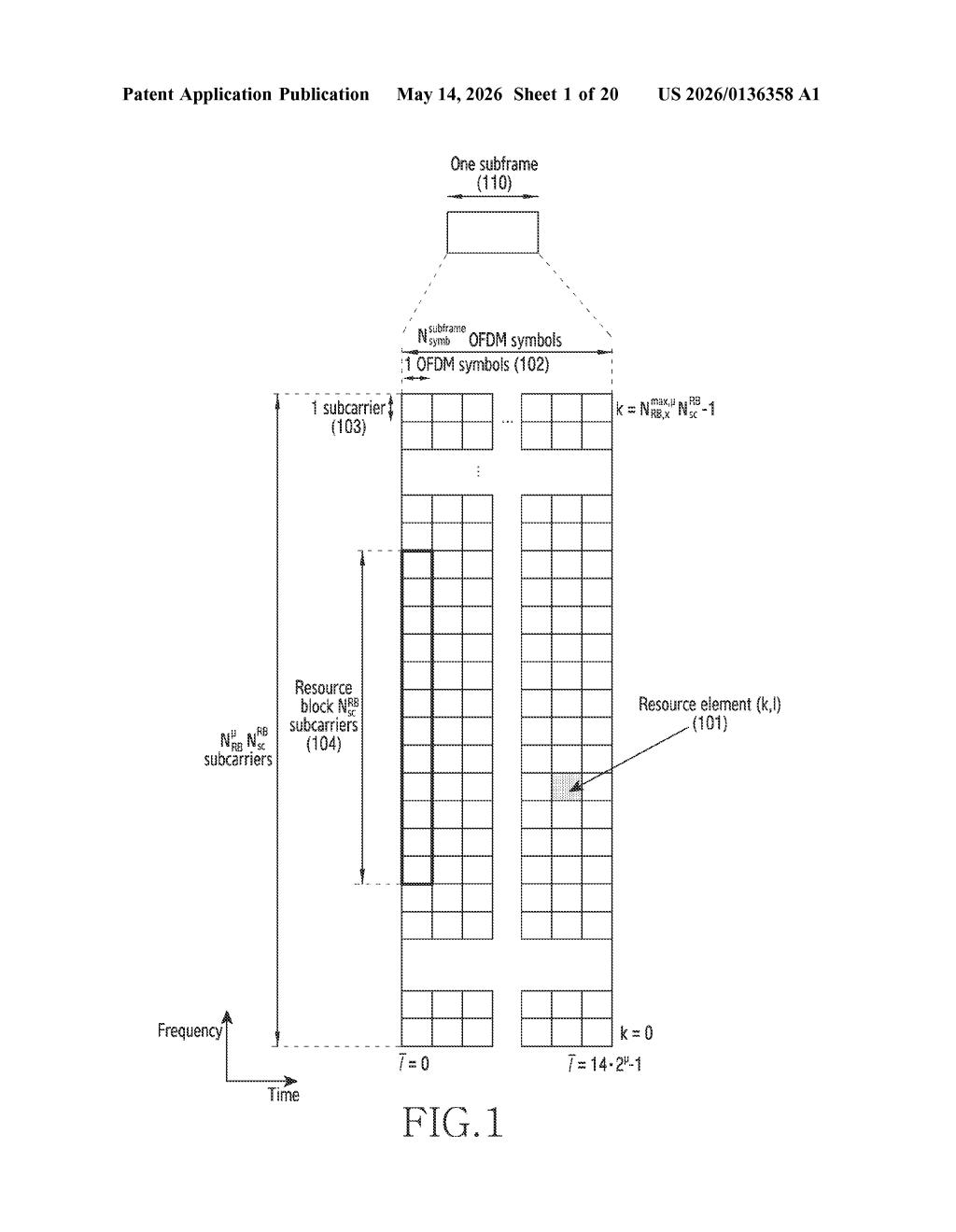
What Samsung's sub-band full duplex scheduling actually does
Imagine a two-lane highway where cars can only travel in one direction at a time. Most cellular networks work similarly — your phone either uploads or downloads, switching back and forth rapidly. Sub-band full duplex (SBFD) is a technique that tries to let both happen simultaneously by splitting the frequency band, some slices for sending, some for receiving, all at once.
The catch is that your phone needs to know which slice of the radio spectrum to use for uploading depending on whether the network is running in standard uplink mode or in that simultaneous send-and-receive SBFD mode. Right now, the control message your phone receives doesn't cleanly distinguish between the two cases.
Samsung's patent describes a method where the same scheduling instruction — a packet called downlink control information (DCI) — can be interpreted two different ways depending on the current mode, pointing the phone to the right set of frequency blocks without needing a bigger or redesigned control message.
How the FDRA field maps to two different RBG sets
The patent centers on how a base station tells your phone where in the frequency band to transmit its uplink data. That instruction arrives as a frequency domain resource assignment (FDRA) field inside a DCI (downlink control information — essentially the scheduler's order slip sent from the tower to your phone).
In standard operation, the FDRA field points to first RBGs (resource block groups — chunks of radio spectrum). These are sized based on the total uplink bandwidth partition, following the conventional 5G NR rules.
When the network is operating in SBFD mode — where a portion of the band is simultaneously used for downlink to other devices — the phone instead maps the same FDRA bits to second RBGs. These second RBGs are carved out of a narrower uplink sub-band, so the phone avoids transmitting on frequencies the base station is actively using for downlink at the same time.
The clever part: the number of bits in the FDRA field stays fixed and is determined by the first RBG count. The phone uses that same fixed-length field plus the sub-band configuration it already knows to derive the second, smaller set of RBGs. No extra overhead in the control message — just a reinterpretation of the existing bits based on context.
What this means for 6G network efficiency
Full duplex — truly simultaneous uplink and downlink — is one of the defining technical ambitions of 6G. Getting there requires solving a cascade of problems, and resource scheduling is one of the unglamorous but genuinely hard ones. Samsung's approach keeps the control-channel overhead lean (a real constraint when you're trying to squeeze more efficiency out of spectrum) while giving phones the flexibility to operate correctly in either mode. That backward-compatible design is exactly what standards bodies like 3GPP look for.
For you as an end user, the payoff is theoretical but real: denser networks, lower latency, and faster effective throughput when SBFD eventually rolls out in commercial 6G or late 5G-Advanced deployments. Samsung, as both a major network equipment vendor and a handset maker, has a direct commercial incentive to get this into the standard early.
This is a cellular standards patent through and through — dry reading, but not unimportant. Samsung is positioning itself early in the 6G scheduling conversation, and this kind of low-level resource-management IP is exactly what accumulates into real leverage at 3GPP negotiations. It won't make headlines, but it's the kind of filing that quietly matters.
There are more where this came from
We read every patent application Big Tech publishes and send you the ones worth knowing. Plain English, free, every week.
Want this weekly breakdown for a company we don't cover? Patentlyze Pro →