
Nvidia Patents Technology That Teaches Self-Driving Cars to Read Road Markings
What if the AI driving your car could read a faded crosswalk marking or an unfamiliar parking symbol the same way you would, by actually understanding what it says? That's the core idea behind Nvidia's latest self-driving patent.
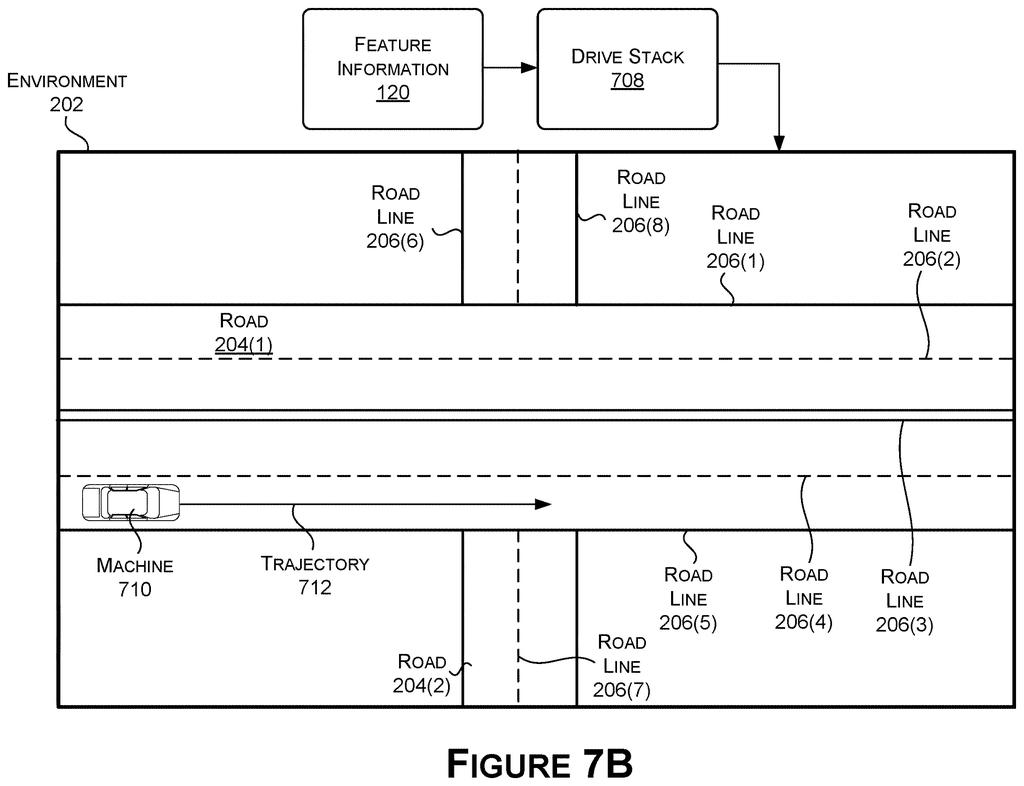
How Nvidia's AI reads road markings to update driving maps
Imagine you're driving in an unfamiliar city and you see a painted symbol on the road you don't recognize. You slow down, read it, figure it out, and adjust. Today's self-driving systems mostly match what their cameras see against a pre-built database, if the marking isn't in the database, the car is often just confused.
Nvidia's patent describes a different approach: feeding camera and sensor images into an AI language model (the same type of technology behind chatbots) that can actually interpret what it sees on the road. Rather than just detecting a shape, the system tries to understand what that shape means, a speed limit, a turn restriction, a crosswalk.
Once the AI figures out what a feature means, it writes that information into the car's map so the vehicle can plan its route and control itself accordingly. The map is no longer a static file you download before a trip; it gets smarter as the car drives.
determining, using one or more language models and based at least on sensor data representative of at least a feature located within the environment, information associated with the feature; and updating the map to indicate at least the information associated with the feature.
Translation: The car uses AI language models to interpret what it sees on the road and update its navigation maps automatically.
How the language model turns sensor data into map updates
The patent describes a pipeline that starts with raw sensor data (camera images, lidar scans, or similar inputs) captured by an autonomous or semi-autonomous vehicle. That data is converted into a format the language model can process, specifically a series of input tokens (chunks of encoded information the model reads sequentially, the same way a text-based AI reads words).
The language model then processes those tokens and outputs its interpretation: what the detected feature is and what it means for navigation. The patent focuses especially on surface markings such as painted road symbols, lane indicators, and signs.
The output feeds directly into a map update step. Rather than requiring a human to verify and add new road features to a centralized map, the system does it autonomously. The updated map then informs the vehicle's planning, navigation, and control operations, so the car's next decisions reflect what it just learned.
- Sensor data is captured and converted into model-readable tokens
- A language model interprets the features it sees
- The map is updated with that interpretation
- The vehicle uses the updated map for real-time navigation decisions
Systems and methods described herein may use a language model(s) to determine information associated with features, such as surface markings, within an environment.
Translation: The technology applies text processing models to figure out the meaning of painted symbols and signs on the pavement.
What this means for self-driving navigation accuracy
Self-driving systems have long struggled with anything outside their training data. A temporary detour marking spray-painted on asphalt, a regional symbol that only appears in one city, or a faded lane line can all throw off a system that relies on rigid pattern-matching. By using a language model that reasons about meaning rather than just matching shapes, Nvidia's approach could make autonomous vehicles far more adaptable to real-world road conditions.
For Nvidia specifically, this builds on its existing position supplying the compute hardware and software stacks for many autonomous vehicle programs. A patent like this suggests the company is pushing further up the stack, into the perception and reasoning layer that decides what a vehicle actually does with what it sees.
This is a genuinely interesting architectural shift. Using a language model for map-feature interpretation rather than a traditional classifier is not an obvious move, and if it generalizes well it solves a real and persistent problem in autonomous driving. That said, the patent covers the concept broadly, the hard part is always whether the approach works reliably in messy real-world conditions, which a patent filing can't answer.
There are more where this came from
We read every patent application Big Tech publishes and send you the ones worth knowing. Plain English, free, every week.
The drawings
22 drawing sheets from US 2026/0229044 A1 · click any drawing to enlarge


Want this weekly breakdown for a company we don't cover? Patentlyze Pro →
Be the first to weigh in