
AMD Patents Method to Run AI Calculations Faster Across Graphics Chip Units
Running AI models requires enormous amounts of repetitive math, and AMD's latest patent describes a way to stop GPU cores from waiting on each other by splitting that math into a pipeline, similar to how an assembly line works.
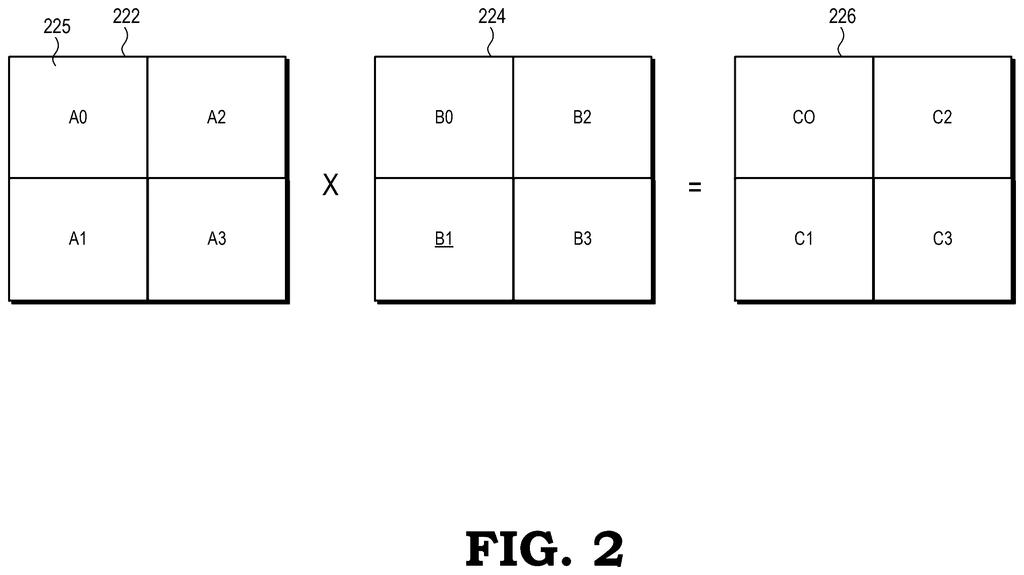
How AMD's GPU splits up AI number-crunching
Imagine a factory where one worker has to finish their task before the next one can even start. That's roughly how some AI workloads run on a GPU today: one big math operation finishes, then the next begins, leaving most of the chip idle in between.
AMD's patent describes splitting those repeated math operations across different groups of GPU cores, each group handling a different piece of the calculation at the same time. The results pass from one group to the next like items moving down an assembly line, so the chip stays busy throughout.
The technique is aimed at a specific type of AI called a recurrent neural network, which processes sequences like speech or text by running the same calculation over and over. By keeping those repeat calculations flowing through the chip in parallel, AMD hopes to get more work done in the same amount of time.
… scheduling a first matrix multiplication operation of the plurality of matrix multiplication operations at a first subset of CUs and a second matrix multiplication operation of the plurality of matrix multiplication operations at a second subset of the CUs …
Translation: The chip splits AI math tasks across different groups of processing units to run them at the same time.
How the scheduler divides and pipelines matrix operations
A GPU (graphics processing unit) is built from many smaller processors called compute units (CUs). For AI tasks, those CUs spend most of their time doing matrix multiplication, which is just a structured way of multiplying and adding large grids of numbers together.
The patent focuses on recurrent neural networks (RNNs), a class of AI model that loops through the same math repeatedly, each loop depending on the output of the previous one. That sequential dependency can create a bottleneck if the GPU handles each loop one at a time.
AMD's approach works like this:
- Multiple matrix multiplication operations are bundled into a single kernel (a batch of instructions sent to the GPU at once).
- The GPU's scheduler assigns one work group (a team of CUs) per operation, so different operations run on different CUs simultaneously.
- The work groups coordinate through software synchronization, passing their results to the next group in the chain, creating a pipeline where multiple stages are active at once.
The result is that the GPU's cores stay occupied throughout the computation instead of sitting idle while one operation finishes before the next is launched.
… the GPU pipelines the assigned matrix multiplication operations so that each subset of CUs provides corresponding multiplication results to a different subset, and so that each subset of CUs executes at least a portion of the multiplication operations concurrently.
Translation: The processing units pass data directly to each other so they can work on the AI calculations simultaneously.
What this means for AI workloads on AMD GPUs
For anyone running AI inference on AMD hardware, whether in a data center or a workstation, this kind of scheduling improvement can translate into faster response times without requiring more powerful hardware. Getting more throughput from the same chip is often more cost-effective than buying a bigger one.
RNNs are still widely used in speech recognition, translation, and time-series forecasting, even as transformer-based models have taken the spotlight. AMD making RNN workloads run more efficiently on its GPUs could matter to companies running those older but still common model types at scale.
This is a focused, practical optimization patent rather than a broad architectural claim. It targets a real bottleneck in how GPUs handle sequential AI workloads, and the assembly-line framing is genuinely clever. It's not the kind of patent that redefines a product category, but it's the sort of low-level work that adds up to meaningful performance gains.
There are more where this came from
We read every patent application Big Tech publishes and send you the ones worth knowing. Plain English, free, every week.
The drawings
4 drawing sheets from US 2026/0228302 A1 · click any drawing to enlarge


Want this weekly breakdown for a company we don't cover? Patentlyze Pro →
Be the first to weigh in