
Nvidia Patents a System That Reads Text Inside Images to Label AI Training Data
Training an AI model requires enormous amounts of carefully labeled data, and labeling that data by hand is expensive and slow. Nvidia's new patent describes a system that does a big chunk of that work automatically, by reading text embedded in images and using it to generate richer labels.
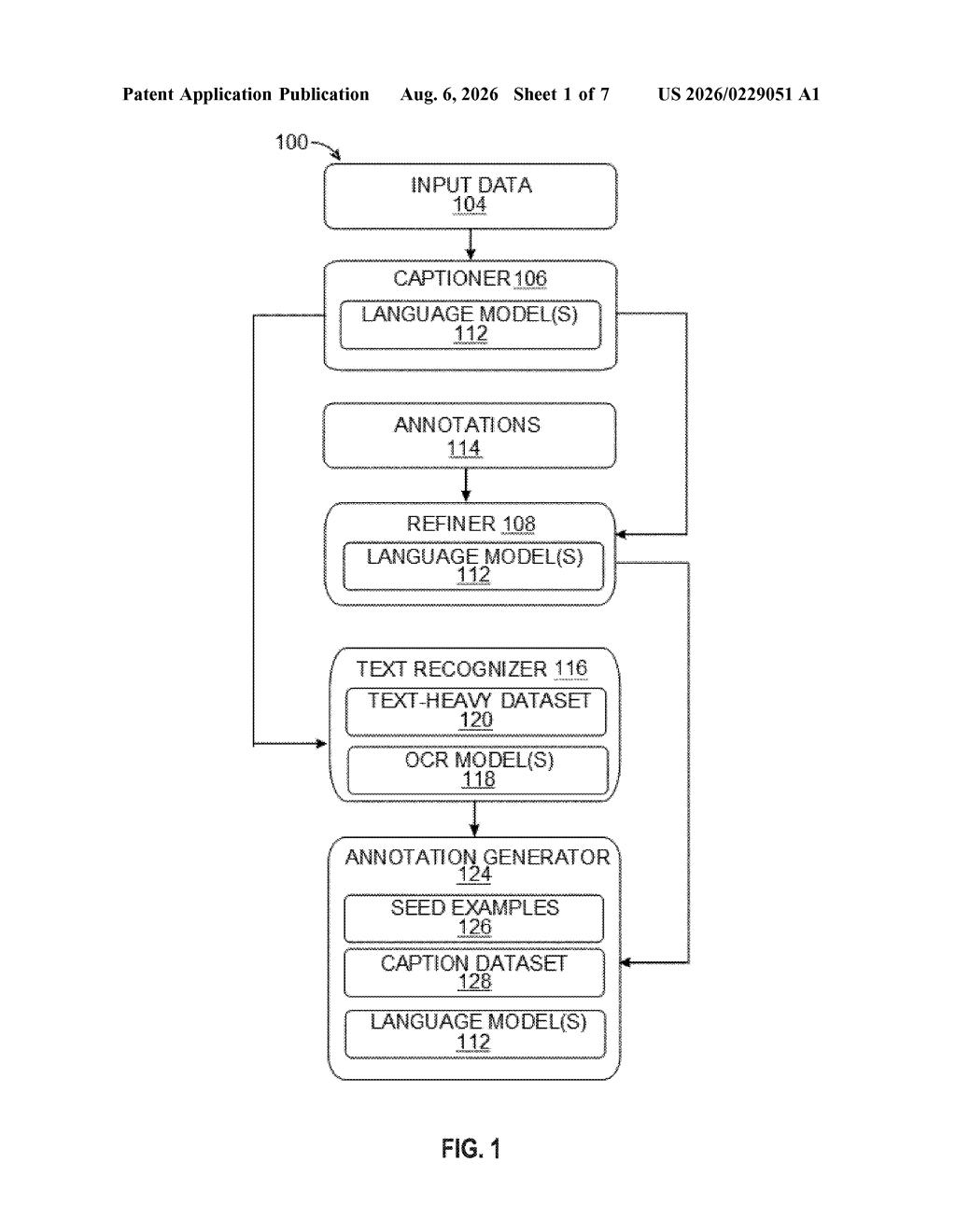
How Nvidia's auto-labeling pipeline actually works
Imagine you're teaching an AI to understand images, and thousands of those images contain screenshots, product labels, street signs, or document scans. A human labeler might write a quick caption, but they'd likely skip over all the actual text visible in the image itself. That missing detail can make the AI worse at its job.
Nvidia's patent describes a system that catches exactly this gap. When it notices that an image's caption contains a lot of text, it kicks off a second step: it scans the image directly to extract any text visible inside it, whether that's a headline on a webpage screenshot or a warning label on a product photo.
All of that, the original caption, the extracted text, plus a worked example of the kind of question and answer the AI should learn, gets handed to a language model to write a final, detailed annotation. The goal is to produce training labels that are richer and more accurate than what a quick human caption would give you, without requiring a human to go back and re-examine every image.
… generate, responsive to detecting that the caption includes at least a threshold amount of text, based at least on applying text recognition to the image, text data represented in the image …
Translation: It reads the words inside an image only when the provided caption is long enough.
How the system combines captions, OCR, and few-shot prompting
The patent describes an automated pipeline for creating annotation labels used to train or fine-tune language models that work with images, sometimes called vision-language models.
The core process has three stages:
- Caption intake: The system receives an existing caption for an image, often a short description written by a human or scraped from the web.
- OCR trigger: If the caption is long enough to suggest the image contains meaningful text, the system applies optical character recognition (OCR), a technique that reads text visible in a photo or screenshot, directly to the image to extract that embedded text.
- Few-shot annotation generation: The extracted text, the original caption, and a worked example, called a few-shot prompt (a sample question and the ideal answer, shown to the model so it understands the format it should follow), are all fed into a language model. The model then writes a detailed annotation for the image.
The key insight is the conditional OCR step: instead of running expensive text recognition on every image, the system only triggers it when the caption signals the image is likely text-heavy. The resulting annotations are then used to fine-tune another language model, improving its ability to understand image-plus-text content.
… cause at least one language model to generate an annotation for the image based at least on the caption, the text data, an example query for the language model to process, and an example response corresponding to the example query …
Translation: It uses an AI model to label the image using the text found, the caption, and sample Q and A guides.
What this means for AI training at scale
Building good vision-language AI, the kind that can read a chart, interpret a product label, or summarize a screenshot, depends heavily on training data quality. If your labeled examples ignore the text inside images, your model will too. Doing this labeling by hand at the scale Nvidia operates would cost enormous amounts of time and money.
For you as an end user, this kind of infrastructure work is invisible but consequential. It's the type of improvement that makes AI assistants better at reading your screenshots, answering questions about scanned documents, or pulling data from graphs. Nvidia, as a company that sells both the chips and the software frameworks that power AI development, has a direct interest in making the training pipeline faster and cheaper for everyone building on its platform.
This is unglamorous but genuinely useful work. The conditional OCR trigger is a practical engineering decision that keeps costs down while improving label quality, and that kind of efficiency matters when you're producing training data at millions-of-images scale. It's not a headline AI capability, but it's the kind of detail that separates good models from great ones.
There are more where this came from
We read every patent application Big Tech publishes and send you the ones worth knowing. Plain English, free, every week.
The drawings
7 drawing sheets from US 2026/0229051 A1 · click any drawing to enlarge


Want this weekly breakdown for a company we don't cover? Patentlyze Pro →
Be the first to weigh in