
Samsung Patents a Way to Check Whether Its 5G AI Models Are Actually Working
AI models are increasingly making real-time decisions inside 5G networks, but nobody wants to find out one went wrong after the fact. Samsung's new patent describes a built-in report card for those models, one that catches errors while the network is still running.
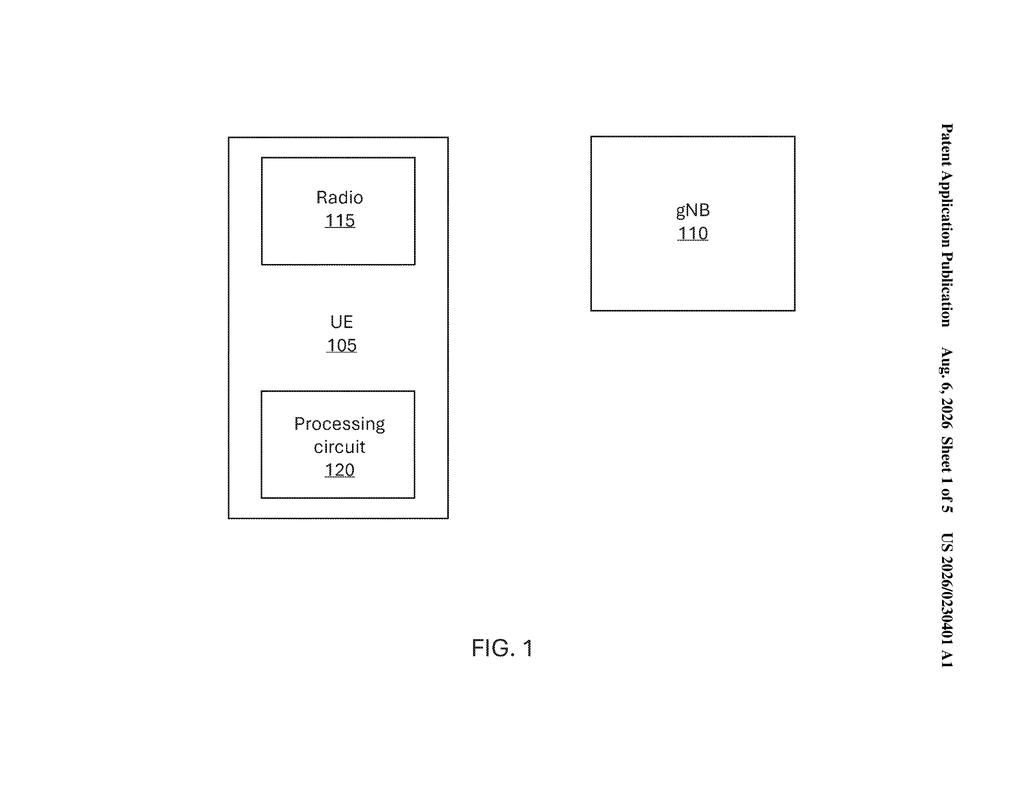
What Samsung's AI signal-checker actually does
Imagine your phone's connection to a cell tower is being managed, in part, by an AI. That AI predicts where your signal will be strongest and tells the network how to route your data. Sounds helpful, but what happens when the AI gets it wrong?
Samsung's patent describes a system that continuously checks the AI's work. It compares what the AI predicted about the wireless signal to what the signal actually measured in real time. The gap between those two numbers becomes a performance score.
That score gets packaged into a report and sent back to the network. If the AI is consistently off, the network knows something's wrong and can respond. Think of it as a continuous audit running in the background, making sure the AI steering your connection is earning its keep.
… associating each of the monitoring resource instants with at least one inference result produced by an artificial-intelligence (AI) or machine-learning (ML) model; determining a performance metric by comparing information based on the inference result with information based on the measurements of the monitoring resource instants …
Translation: The system matches AI predictions against actual signal measurements to score how well the model is performing.
How the monitoring window compares predictions to real signals
The patent describes a feedback loop built into the wireless communication stack specifically to evaluate AI and machine-learning models that run inside the network.
Here's how it works step by step:
- Monitoring window: The network configures a defined time period containing several specific moments called "monitoring resource instants" (essentially scheduled checkpoints when reference signals are broadcast).
- Reference signal measurements: At each checkpoint, the device measures the actual state of the wireless channel using reference signals (known test transmissions the network sends so devices can gauge signal quality).
- Inference pairing: Each checkpoint is matched to the output that an AI or ML model produced for that moment (what the model predicted or decided about the channel).
- Performance metric: The system compares the AI's output against the real measured data and computes a score reflecting how accurate the model was.
- Performance report: That score is transmitted back, giving the network or the base station visibility into whether the model should be trusted, retrained, or swapped out.
The key idea is making AI accountability a native part of the wireless protocol rather than something bolted on externally.
receiving a configuration identifying a monitoring window including a plurality of monitoring resource instants; obtaining measurements of reference signals transmitted at the monitoring resource instants; …
Translation: The network sets up a specific observation period to measure incoming reference signals at precise moments in time.
What this means for AI-driven 5G network reliability
As 5G and future 6G networks lean more heavily on AI to manage beamforming, channel estimation, and handoffs between towers, there's a growing risk: a poorly performing model could degrade connection quality for many users at once, with no mechanism to catch it. This patent proposes making model evaluation a standard, reportable part of network operation.
For network operators, that's a meaningful operational tool. For users, it means the AI models affecting your call quality or download speed would be subject to ongoing verification rather than a one-time deployment check. The practical payoff would be more consistent network performance, especially in tricky environments where AI predictions are most likely to drift from reality.
This is infrastructure plumbing, not a flashy consumer feature, but it's the kind of plumbing that actually matters. Deploying AI inside live wireless networks without a formal way to measure whether it's working is a real gap, and standardizing a performance-monitoring report at the protocol level is a sensible fix. Worth watching if you follow 5G standards work.
There are more where this came from
We read every patent application Big Tech publishes and send you the ones worth knowing. Plain English, free, every week.
The drawings
5 drawing sheets from US 2026/0230401 A1 · click any drawing to enlarge


Want this weekly breakdown for a company we don't cover? Patentlyze Pro →
Be the first to weigh in