
Samsung Patents a Processor That Checks Its Own Math for Errors While It Works
Samsung is patenting a processor that can detect errors in its own calculations while doing those calculations, not after. That small timing difference turns out to be a bigger deal than it sounds.
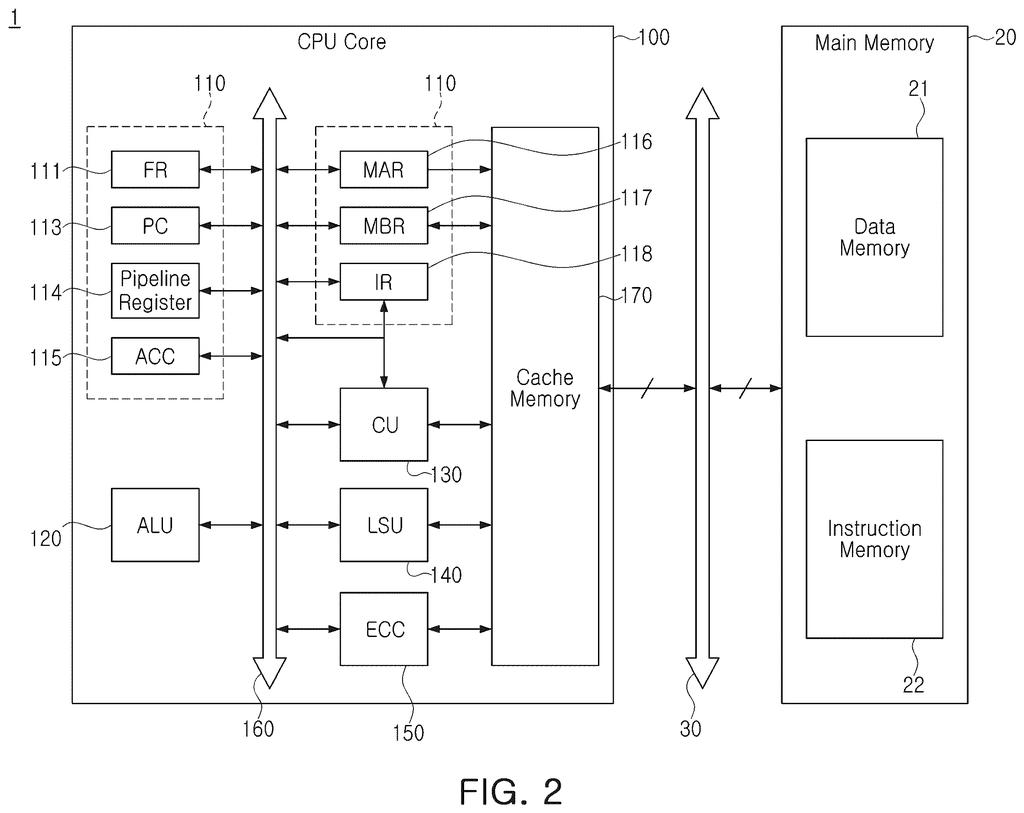
What Samsung's self-checking arithmetic chip actually does
Imagine a calculator that double-checks every answer as it works, rather than stopping to review things afterward. That's roughly what Samsung is building here.
Every time a chip does math, there's a small chance something goes wrong: a cosmic ray, a voltage dip, or just aging hardware can flip a single bit of data and produce a wrong answer. Normally, catching those errors requires a separate checking step, which takes extra time. Samsung's design runs the error check at the same moment as the calculation itself, so there's no waiting around.
The trick is that each number going into the calculation already carries a small fingerprint (called a parity code) that summarizes what it contains. When two numbers are added or multiplied, the chip also combines their fingerprints in a matching way. If the final fingerprint doesn't match the final answer, something went wrong. No extra time needed, because both the math and the checking happened together.
… an incremental parity calculator configured to receive a first parity included in the first operand and a second parity included in the second operand, perform an incremental parity operation on the first parity and the second parity, and output a parity result value based on the incremental parity operation …
Translation: This part calculates error checking codes alongside the main math to spot mistakes instantly.
How the incremental parity calculator runs alongside the ALU
The patent describes an arithmetic logic unit (ALU), the part of a chip that does basic math like addition and multiplication, redesigned to carry error-correction data alongside every number it processes.
Each operand (the numbers fed into the math) is bundled with a parity code, which is a compact checksum generated by an error-correction algorithm. Think of it like a receipt stapled to a document: if anyone tampers with the document, the receipt won't match anymore.
Inside the new ALU, two things run in parallel:
- User data operator: does the actual math on the numbers (addition, multiplication, etc.)
- Incremental parity calculator: simultaneously performs the equivalent operation on the parity codes, producing a new parity that should match the result
The key phrase in the patent is that the parity operation happens while the linear operation is being performed, meaning there is no sequential error-check phase that adds latency. If the computed parity and the result's expected parity agree, the answer is trusted. If they disagree, an error is flagged. The math works because error-correction codes are designed to be compatible with linear operations, the same rules that govern addition also govern how parities combine.
An arithmetic logic unit receives first user data included in a first operand and second user data included in a second operand, performs a linear operation on the first user data and the second user data, and outputs a user data result value of the linear operation …
Translation: The processor core takes in two numbers and performs the requested math operation to produce an output.
Why real-time error checking matters for AI chips and data centers
Error detection in chips is not a new idea, but doing it without a time penalty is genuinely hard. Data centers and AI accelerators run billions of operations per second, so even a tiny per-operation overhead compounds into real performance losses. A design that absorbs the checking step into the calculation itself keeps throughput high while still catching hardware faults, which matters enormously for systems where a silent wrong answer is worse than a slow right one.
Samsung makes both memory chips and processors, and this kind of built-in reliability is increasingly important for high-performance computing and AI inference hardware, where customers demand both speed and data integrity. If this approach works at scale, it could influence how the company designs future server and AI chips.
This is a solid engineering patent, not a flashy one. The problem it solves (error detection costs time) is real and well-understood in the industry, and the approach (parallel parity calculation) is clever because it exploits a mathematical property of linear operations. Whether Samsung can implement this efficiently in silicon at scale is the hard part, but the concept is sound and the motivation is clear given the company's push into AI datacenter chips.
There are more where this came from
We read every patent application Big Tech publishes and send you the ones worth knowing. Plain English, free, every week.
The drawings
12 drawing sheets from US 2026/0228000 A1 · click any drawing to enlarge


Want this weekly breakdown for a company we don't cover? Patentlyze Pro →
Be the first to weigh in