
Nvidia Patents a Method to Run Complex Text Searches on Graphics Chips Faster
GPUs are great at crunching numbers in parallel, but certain text-search patterns trip them up in ways that slow everything down. Nvidia's new patent describes a compiler trick that rewrites those problem patterns before they ever reach the chip.
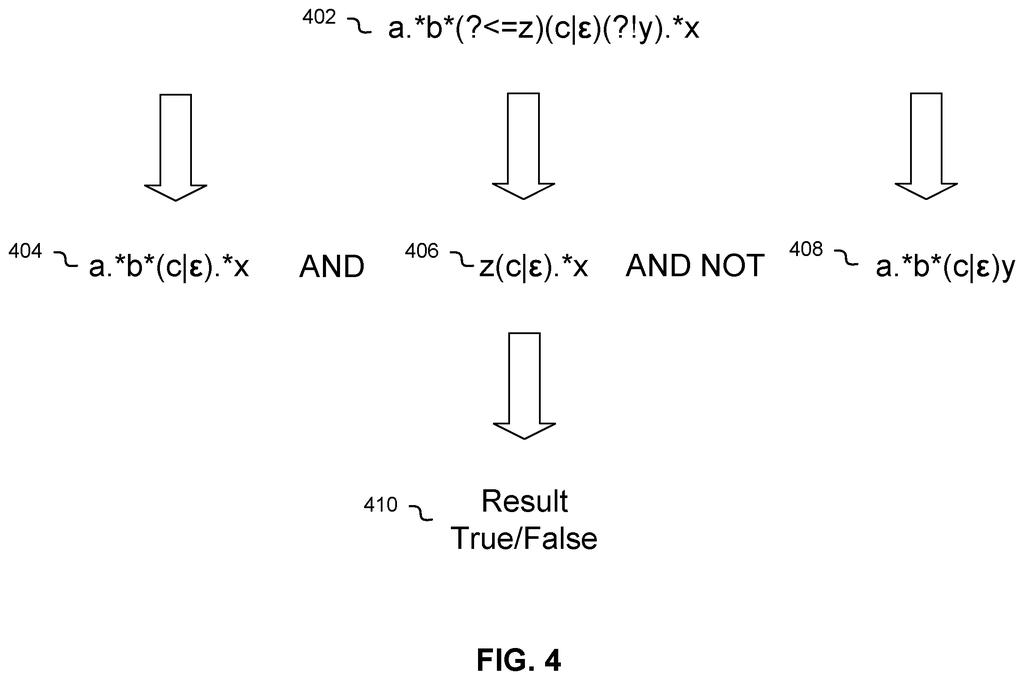
What Nvidia's regex rewriting system actually does
Imagine you're searching a huge database for every sentence that starts with a capital letter but doesn't include a number. That kind of conditional text search, called a regular expression, is used constantly in security scanning, data analysis, and log monitoring. Most of the time it's fast. But certain special conditions inside these searches, ones that check the position in a piece of text without actually consuming any characters, cause real problems for the massively parallel chips inside GPUs.
Nvidia's patent describes a system that automatically detects those tricky conditions and rewrites the search into a set of simpler searches that produce the same answer. Your code goes in unchanged; the compiler handles the translation before it ever reaches the hardware.
This is the kind of low-level engineering work that most people never see, but it's exactly what makes a platform feel fast and reliable for the developers building search tools, network monitors, and AI data pipelines on top of Nvidia hardware.
obtain source code describing a first regular expression with a zero-length assert; determine a plurality of second regular expressions without the zero-length assert that, when evaluated, generate a result equivalent to the first regular expression with the zero-length assert; …
Translation: The system finds a complex search pattern and breaks it down into simpler equivalent patterns.
How the compiler strips and replaces zero-length asserts
The patent targets a specific construct in text-pattern matching called a zero-length assert. Regular expression syntax (the mini-language developers use to describe text patterns) includes special markers, like "start of word" or "not followed by X," that check a position in a string without actually matching any characters. These are called zero-length asserts because they consume zero characters from the input.
CPUs handle zero-length asserts without much trouble. GPUs, however, process many input characters at the same time across thousands of parallel threads, and zero-length asserts create ordering and context dependencies that break that parallelism.
Nvidia's system works at compile time (the stage where human-written code is translated into machine instructions):
- The compiler scans incoming source code for any regular expression containing a zero-length assert.
- It calculates a set of equivalent regular expressions that cover the same matching logic without using zero-length asserts.
- It swaps the original pattern for the new set of patterns in the source code before compiling.
- The final compiled output contains no zero-length asserts at all.
The result is functionally identical behavior, but in a form the GPU can execute in parallel without special-case handling.
… a regular expression that includes at least one zero-length assert is refactored and processed as an equivalent plurality of regular expressions that do not contain zero-length asserts.
Translation: Tricky search rules are rewritten into simpler parts so the graphics chip can process them faster.
What this means for GPU-accelerated text processing
For developers running large-scale text analysis on Nvidia GPUs, this matters because it removes a category of pattern they previously had to work around manually or handle on the CPU. Security tools that scan network traffic for threat signatures, log analysis pipelines, and data-cleaning jobs in AI training all rely heavily on complex regular expressions. If those patterns can now run on the GPU without modification, throughput goes up and the developer's life gets easier.
From a strategic angle, this is Nvidia cementing its position in data-center software. The company's CUDA ecosystem already dominates AI training; extending that reach into general-purpose text processing (think database search, compliance scanning, real-time intrusion detection) is a natural next step.
This is a compiler engineering patent, not a product announcement, and it won't make headlines anywhere else. But for anyone building on Nvidia's GPU computing platform, it closes a real gap: zero-length asserts in regular expressions have been a genuine pain point for parallel processing for years, and automating the fix at the compiler level is the right place to solve it.
There are more where this came from
We read every patent application Big Tech publishes and send you the ones worth knowing. Plain English, free, every week.
The drawings
43 drawing sheets from US 2026/0227975 A1 · click any drawing to enlarge


Want this weekly breakdown for a company we don't cover? Patentlyze Pro →
Be the first to weigh in