
Samsung Patents an Induction Cooktop That Knows When Your Pot Is Boiling
Samsung is patenting a way for induction cooktops to automatically detect when something on the burner reaches a boil — no thermometer, no camera, just a tiny vibration sensor in the glass.
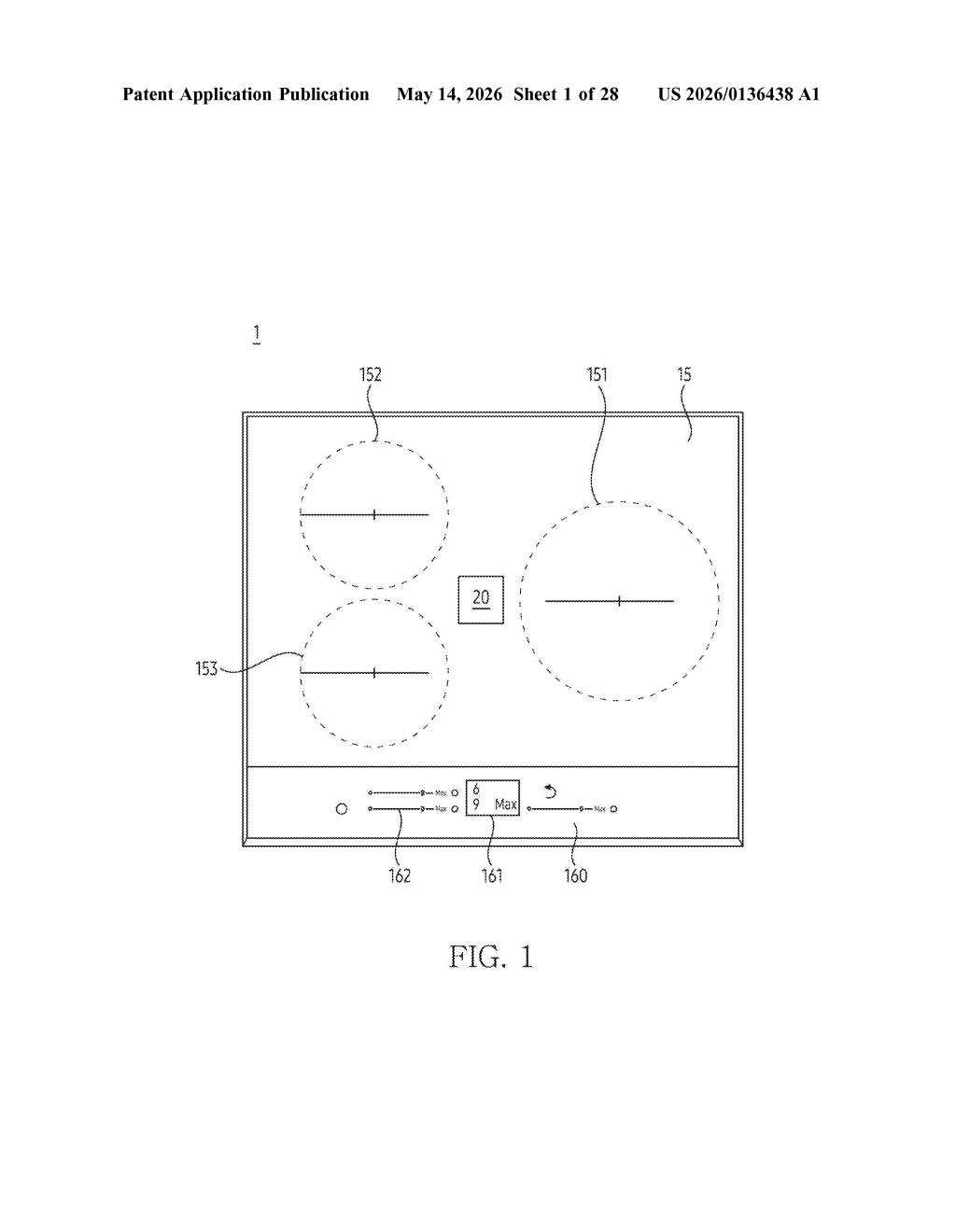
How Samsung's cooktop 'hears' your water boil
Imagine you put a pot of water on your stove and walk away to chop vegetables. Normally, you'd either keep peeking at the pot or risk a boil-over. Samsung's new patent describes a cooktop smart enough to notice the boil for you — and dial the heat back automatically.
The trick is a small accelerometer (the same kind of sensor that tells your phone which way it's tilted) built into the glass top plate. When water starts to boil, it creates a very specific pattern of vibrations. The cooktop's processor learns what your particular pot on that particular burner looks and feels like before boiling, then watches for the moment that vibration signature shifts.
Once it spots that shift, it can reduce power to keep things at a steady simmer instead of a rolling boil-over. No special cookware required — the sensor works through the glass itself.
How the accelerometer reads boiling through vibration spectra
The system centers on an acceleration sensor (accelerometer) physically coupled to the cooktop's top plate. While the induction coil is heating a vessel, the sensor continuously picks up vibration data from the glass surface.
That raw vibration data gets handed to an arithmetic unit — essentially a signal processor — which converts it into a frequency spectrum (think of a frequency spectrum like an audio equalizer display: it shows how much energy is present at each vibration frequency at any given moment). The key insight is that boiling liquid produces a recognizable and consistent shift in that frequency signature.
Critically, the system doesn't rely on a hardcoded boiling threshold. Instead, the processor first establishes a personalized reference value by observing the frequency spectrum during the early heating phase. This baseline accounts for variables like pot size, material, and amount of liquid. The system then compares all subsequent readings against that learned baseline to detect the transition to boiling.
- Detects vibration through the glass top plate via accelerometer
- Converts vibration into a frequency spectrum for analysis
- Builds a per-session reference baseline before boiling begins
- Identifies boiling by evaluating deviation from that baseline
- Controls induction coil output based on the boiling identification
What auto-boil detection means for smart kitchen appliances
For Samsung, this is a plausible differentiator for its premium induction range lineup. Boil detection without a camera or separate temperature probe keeps manufacturing costs reasonable while adding a genuinely useful automation feature. You don't need smart cookware or a paired app — the physics of boiling does the signaling.
More broadly, this patent represents the kind of passive, sensor-fusion intelligence that appliance makers are betting on for the next wave of kitchen automation. If vibration alone can reliably detect a boil, the same approach could theoretically flag other state changes — like a pan running dry or a sauce reaching a simmer — without ever adding a camera or network connection.
This is a quietly clever patent. Using an accelerometer already embedded in the glass to do what a $10 thermometer does — but without any user setup — is the kind of pragmatic engineering that actually ships in products. It's not flashy AI, but it solves a real annoyance in a cost-effective way, and Samsung's appliance division has both the manufacturing muscle and the retail shelf space to put it in front of millions of kitchens.
There are more where this came from
We read every patent application Big Tech publishes and send you the ones worth knowing. Plain English, free, every week.
Want this weekly breakdown for a company we don't cover? Patentlyze Pro →