
Samsung Patents a Conductive Housing Antenna System for Wearable Devices
Samsung may be looking at your smartwatch's metal casing as more than just a pretty shell — this patent describes using the conductive housing itself as part of the antenna system.
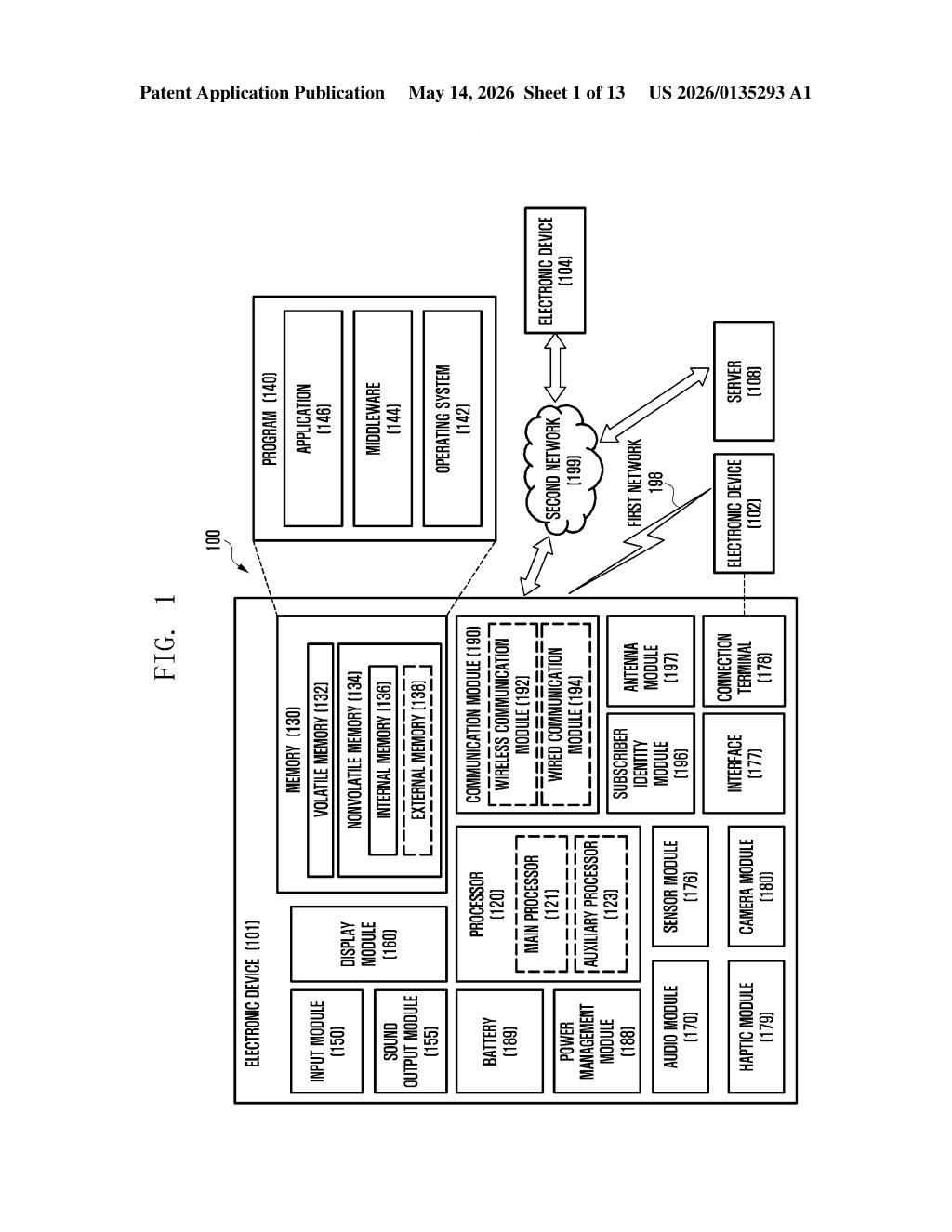
How Samsung turns a smartwatch housing into an antenna
Imagine your smartwatch's metal body doing double duty: looking sleek on your wrist and quietly helping your device stay connected to Wi-Fi or Bluetooth. That's essentially what Samsung is describing here.
This patent details a conductive connection member — basically a small electrical bridge — inside a wearable device. One end attaches to the metal housing, the other connects to the ground plane of the internal circuit board. By tying the housing to the PCB ground this way, the device can use the metal body as part of its antenna structure.
It's a compact engineering trick that's common in smartphones but tricky to pull off in the tighter confines of a smartwatch or earbud case. Getting it right means you can potentially shrink dedicated antenna components and free up precious internal space.
How the conductive bridge connects housing to PCB ground
The patent describes a wearable device built around a conductive housing — think a metal smartwatch case or band frame. Inside, a support member holds both the display and the printed circuit board (PCB), which is the main logic board running the device.
The key invention is the conductive connection member, a two-part component:
- First portion: mechanically and electrically couples to part of the metal housing
- Second portion: electrically connects to the ground plane of the PCB (the ground plane is the large copper layer that provides a stable electrical reference for all the circuits on the board)
By bridging the housing to the PCB ground, the metal casing becomes part of the antenna radiating structure. Instead of needing a fully self-contained antenna module, the device can radiate and receive RF signals through the housing itself — a technique called chassis antenna design.
The exact geometry of the connection member (its shape, placement, and coupling method) would determine which frequency bands are supported, though the patent doesn't lock in specific frequencies in this claim.
What this means for thinner, better-connected wearables
For Samsung's Galaxy Watch lineup or future wearables, this kind of design could help engineers reclaim internal volume currently occupied by discrete antenna components. In devices where every cubic millimeter counts, that matters — it could mean a thinner profile, a larger battery, or space for additional sensors.
It's also a signal that Samsung is continuing to refine RF engineering for body-worn devices, where proximity to skin degrades antenna performance in ways that don't apply to phones. A well-designed conductive housing antenna can be tuned to compensate for that loading effect, potentially improving real-world connectivity for you wearing the device all day.
This is solid, unglamorous antenna engineering — the kind of work that quietly makes devices thinner and better-connected without ever showing up in a keynote. It's not a breakthrough, but it reflects the meticulous RF design iteration that separates competitive wearables from also-rans. Worth a look if you follow Samsung's hardware miniaturization strategy.
There are more where this came from
We read every patent application Big Tech publishes and send you the ones worth knowing. Plain English, free, every week.
Want this weekly breakdown for a company we don't cover? Patentlyze Pro →