
Samsung Patents a Smarter Error-Correction Encoding Scheme for Flash Storage
Flash memory wears out partly because not all bit patterns are equally kind to the cells that store them. Samsung's new patent describes a way to steer data encoding toward patterns that are easier on the hardware — without throwing away the data itself.
What Samsung's shaping parity bit method actually does
Imagine your flash drive slowly wearing out every time it writes data. Part of that wear comes from how the data is written — some bit patterns stress memory cells more than others. If you could nudge the encoding process to prefer gentler patterns, the drive could last longer and make fewer read errors.
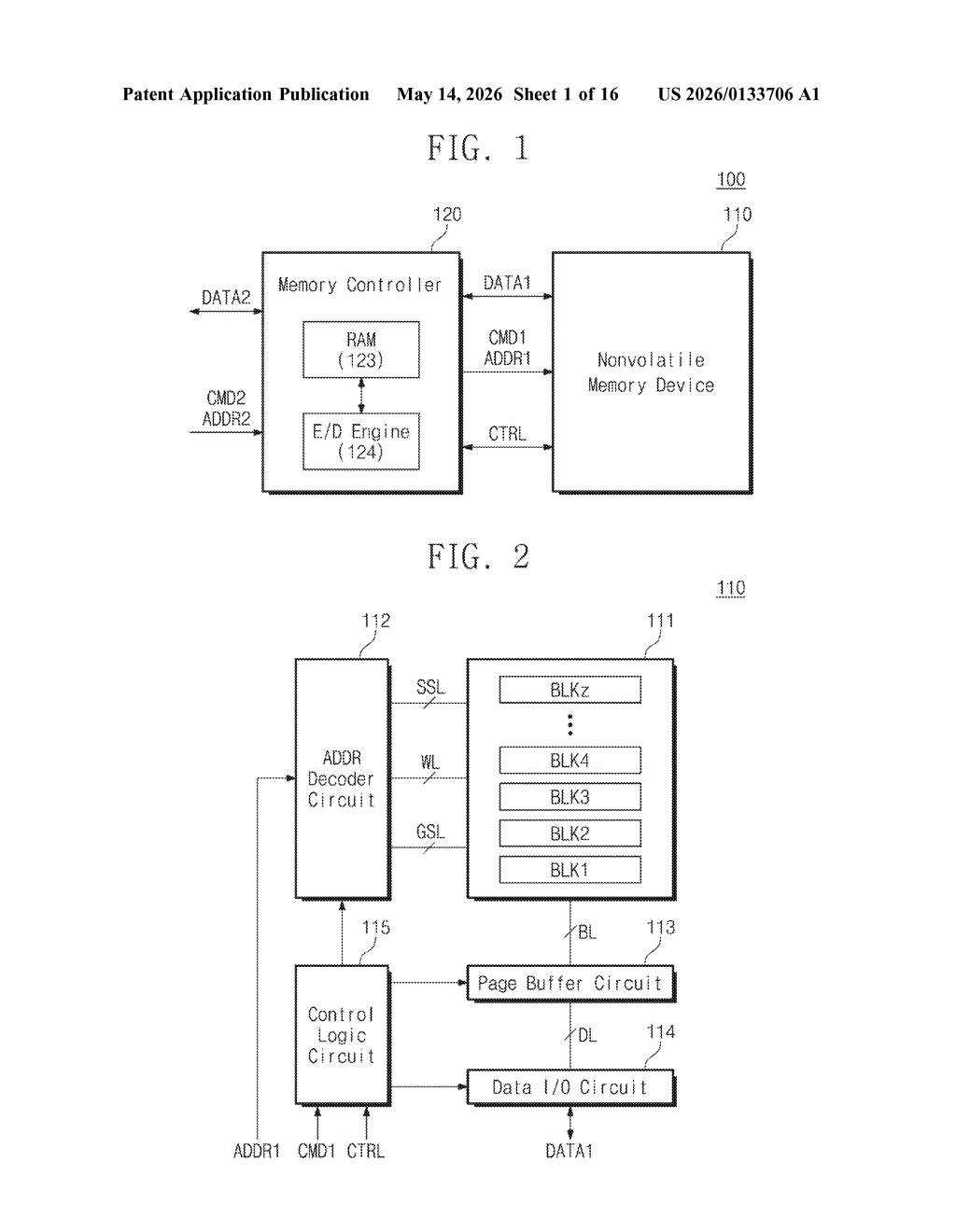
That's the core idea here. Samsung's patent describes a method where a memory controller — the chip that manages what gets written and read — doesn't just encode your raw data directly. Instead, it figures out where special "shaping" bits should go alongside your real data, then uses a probabilistic scoring system to pick values for those bits that guide the final encoded result toward healthier patterns.
The result is a codeword — the final sequence actually written to memory — that carries your data faithfully but is also shaped to reduce stress on the cells. It's a bit like choosing a less congested route to the same destination: you still get there, just with less wear on the vehicle.
How the LLR pipeline determines shaping parity values
The patent describes a multi-step encoding pipeline executed by the memory controller before any data hits the nonvolatile memory cells.
First, the controller receives channel selection information — essentially a map of where the real data bits and the placeholder "shaping parity bits" (SPBs) sit within the overall codeword structure. It builds an alignment vector by slotting data bits into their correct positions and filling the SPB slots with arbitrary temporary values.
Next, it computes first LLR information for that alignment vector. LLR stands for log likelihood ratio — a standard signal-processing measure of how confident the system is that a bit is a 0 or a 1. From that first LLR set, it derives second LLR information specifically scoped to a target vector that includes the shaping parity bit positions.
Using the target vector and the second LLR values together, the controller determines the actual values of the SPBs — choosing them to steer the distribution of the codeword toward channel-friendly patterns. It then performs an update operation to lock those values in.
Finally, it multiplies the updated target vector by a generation matrix (a standard linear algebra tool in error-correcting codes) to produce the finished codeword that gets written to the NAND flash.
What this means for flash storage endurance and reliability
Flash memory manufacturers have been pushing probabilistic shaping — borrowed from optical fiber communications — into storage as a way to squeeze more endurance and reliability out of the same physical NAND cells. If Samsung can do this efficiently inside the memory controller's encoding path, it could extend the usable life of SSDs or allow denser, more aggressive NAND configurations without sacrificing data integrity.
For you as a consumer or enterprise buyer, the downstream benefit would be drives that last longer or perform more consistently at the edge of their rated endurance. For Samsung, it reinforces its position as a vertically integrated player that controls both the NAND fab and the controller logic — a combination that lets innovations like this flow from research directly into shipping products.
This is a technically solid patent in a real and active research area — probabilistic shaping for storage is a legitimate frontier, not a paper exercise. It's not flashy, but if Samsung ships this in a controller, it could meaningfully change the reliability curve for high-density SSDs. Worth watching for enterprise SSD announcements.
There are more where this came from
We read every patent application Big Tech publishes and send you the ones worth knowing. Plain English, free, every week.
Want this weekly breakdown for a company we don't cover? Patentlyze Pro →