
Microsoft Patents a Way to Feed AI Models Context Before They Answer
General-purpose AI models are great at everyday language but often stumble when asked about niche fields like law, medicine, or finance. Microsoft has a plan to fix that by slipping extra context into every query before the AI even starts thinking.
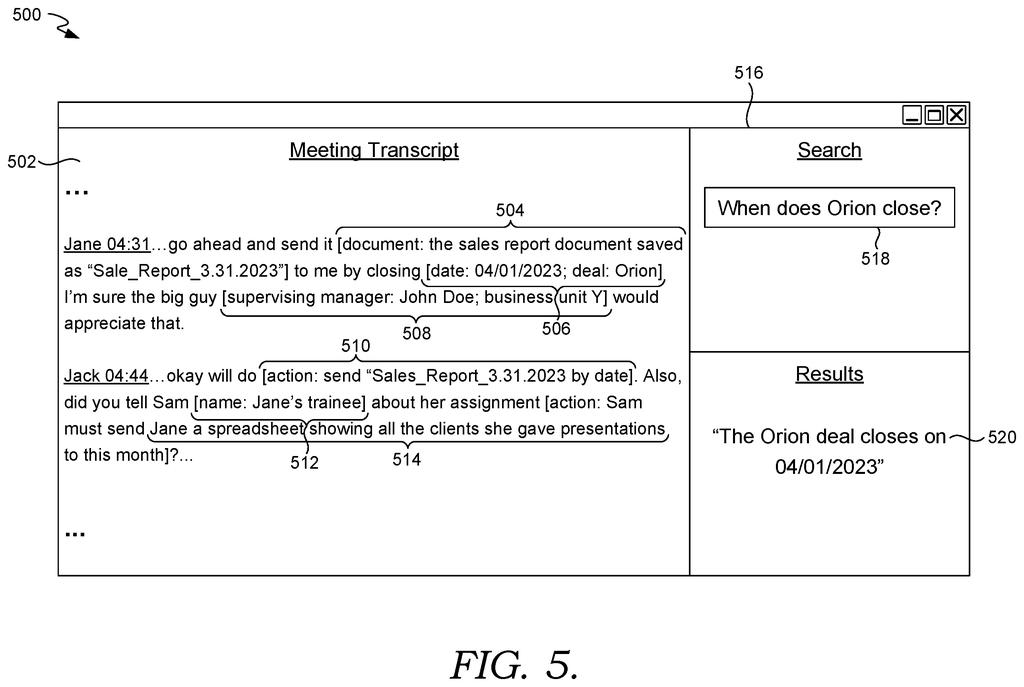
How Microsoft wants AI to stop guessing at specialized terms
AI chatbots today are trained on massive amounts of general text, which makes them good at everyday conversation but unreliable for specialized work. A legal term, a medical code, or an industry phrase might mean something very different in a professional context than it does in plain speech, and the AI usually can't tell the difference.
Microsoft's patent describes a system that automatically attaches a corpus supplement to your question before it reaches the AI. Think of it as a cheat sheet the AI reads first, one packed with domain-specific facts and definitions relevant to whatever field you're working in.
The result is that the model can score or predict answers more accurately because it has the right reference material in hand. Your question doesn't change; the AI just gets a better briefing before it responds.
… providing a corpus data supplement as input into a model, such as a Large Language Model (LLM). Consequently, the model can generate accurate scores or data for predictions because the model is better able to distinguish between a general understanding of natural language concepts and domain-specific concepts.
Translation: The system feeds extra specialized information to an AI so it can better tell the difference between general and expert topics.
How the corpus supplement gets injected into the model input
The patent describes a pipeline that enriches the input to a Large Language Model (LLM) with what it calls a corpus data supplement. A corpus is simply a structured collection of text tied to a specific domain, such as a legal code database, a medical terminology library, or a company's internal product documentation.
Before a user's query reaches the model, the system pulls relevant data from that corpus and bundles it into the model's input. The model then sees both the original question and the supplemental context at the same time, allowing it to distinguish between a general use of a word and its specialized, domain-specific meaning.
The core technical goal is improving the accuracy of scores or predictions the model generates. When an LLM encounters an ambiguous term, having grounding data alongside the query helps it rank or classify outputs correctly rather than defaulting to a statistically common but wrong interpretation.
Key components implied by the claim structure include:
- A corpus retrieval step that selects context relevant to the incoming query
- An input enrichment step that appends that context to the prompt
- A model inference step that processes the enriched input to produce more accurate outputs
This is closely related to a pattern the industry calls retrieval-augmented generation (RAG), where the model is given retrieved documents rather than relying purely on its trained weights.
What this means for AI tools used in specialized industries
For enterprise customers, the gap between a general-purpose AI and one that actually understands their industry is the whole ballgame. A model that confuses a legal term of art with its casual meaning, or misreads a clinical code, can produce answers that are confidently wrong. Microsoft's approach here targets that exact failure mode by making domain grounding a structural feature of the input pipeline, not an afterthought.
The practical stakes are high for products like Microsoft Copilot, which is already embedded in Word, Excel, and Teams and is being pushed into legal, healthcare, and financial workflows. Grounding those AI responses in verified, domain-specific data is the obvious prerequisite for trust in those settings. Filings like this one sit squarely within the broader wave of latest Big Tech patents targeting enterprise AI reliability, where the competition to own the "AI that actually knows your industry" category is intensifying fast.
The design trade here is real: retrieving and injecting corpus data before every query adds latency and complexity, and the quality of the output is now dependent on the quality of whatever corpus you feed the system. If that corpus is outdated, biased, or poorly curated, the model's confidence in a wrong answer actually increases, because it now has authoritative-looking support for the error. That cost is worth naming plainly. Whether the trade pays off depends entirely on how well Microsoft can manage corpus curation at enterprise scale, which is an operational challenge as much as a technical one. This filing describes a sound architectural pattern, but it shifts the hard problem from the model to the data pipeline.
Get our take in your Top Stories
Liked this breakdown? Add Patentlyze as a preferred source on Google, and our plain-English take shows up more often in your Top Stories the next time Microsoft patent news breaks.
There are more where this came from
We read every patent application Big Tech publishes and send you the ones worth knowing. Plain English, free, every week.
The drawings
11 drawing sheets from US 2026/0236678 A1 · click any drawing to enlarge


Want this weekly breakdown for a company we don't cover? Patentlyze Pro →
Be the first to weigh in