
Microsoft Patents AI Reviewers That Automatically Check and Fix Chip Design Code
Writing the code that programs chips is painstaking, high-stakes work, and Microsoft thinks a team of AI agents can help catch mistakes before they become expensive silicon errors.
What Microsoft's AI code reviewer actually does
You're an engineer who just finished writing a chunk of code that will tell a chip how to behave. Before it goes live, it needs to be reviewed for bugs, security gaps, and style problems. That process can take days, especially when multiple specialists need to weigh in.
Microsoft's patent describes a system where an AI "planner" agent reads your code and a brief description of what it's supposed to do, then coordinates a group of specialized AI reviewers. Each reviewer focuses on a different concern, one might check for security issues, another for performance problems, and they all send their findings back to the planner.
The results show up in an interface where you can read the suggestions and push back or approve them. If you disagree with something, the system takes your feedback and loops the AI reviewers again with updated instructions. It's meant to act like a code-review team that never sleeps and doesn't need to schedule a meeting.
… invoking an artificial intelligence (AI) planner agent configured to interact with a plurality of AI review agents that are each trained to: parse the hardware code; analyze the hardware code with respect to the pull request and an attribute; and generate updates to the hardware code in accordance with criteria for meeting the attribute; …
Translation: The system uses one AI supervisor to coordinate multiple specialized AI assistants that check and fix the chip design.
How the planner agent coordinates its AI reviewers
The system centers on what Microsoft calls an AI planner agent, a coordinating AI that receives the hardware code alongside a pull request (a standard software-development document that describes what changed and why).
The planner dynamically generates a review plan, deciding which specialized AI agents to call on and in what order. It then selects or generates prompts (specific instructions) tailored to each reviewer's focus area, such as security compliance, logic correctness, or coding-standard adherence.
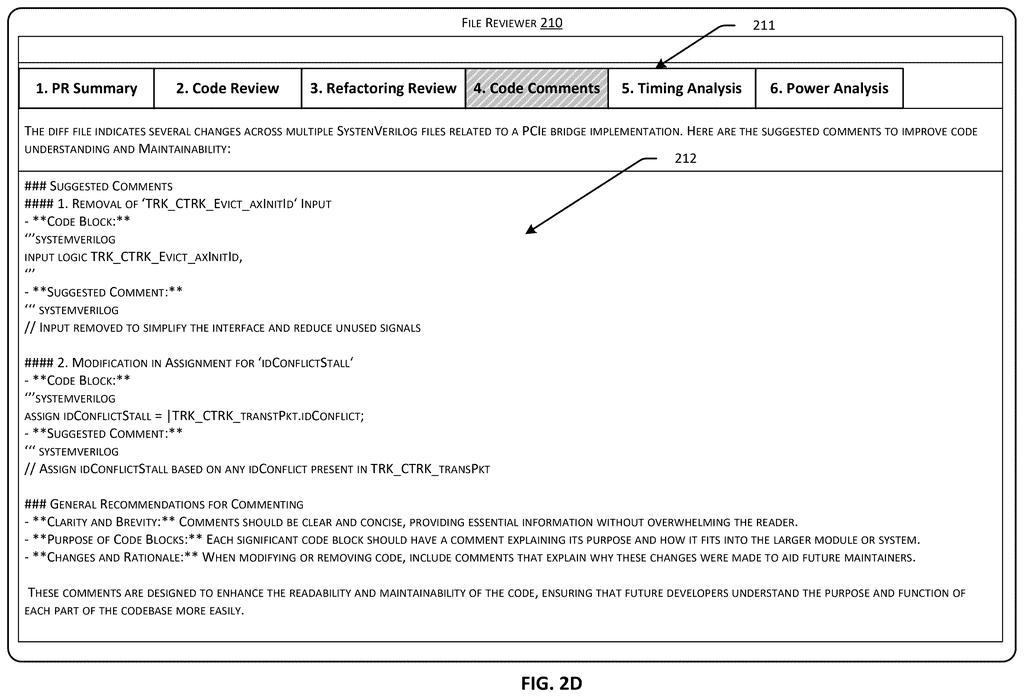
Each AI review agent parses the code, analyzes it against its assigned criterion, and produces suggested edits. Those edits flow back to the planner, which collects and renders them in a user interface.
The human engineer can then accept, reject, or question the suggestions. Critically, the system feeds that feedback back into the loop: the planner generates additional prompts for the review agents based on what the user said, allowing an iterative back-and-forth rather than a single-pass dump of suggestions.
A computing system receives computer-readable hardware code. A pull request is received that indicates the purpose of the hardware code or updates made to the hardware code.
Translation: The software takes in the design files along with a note explaining what changes were made.
What this means for engineers writing hardware code
Hardware code, the kind written in languages like VHDL or SystemVerilog to define how chips behave, is notoriously hard to review. Errors that slip through can mean costly chip respins or security holes baked into silicon. A system that continuously cycles through multiple review perspectives, guided by human feedback in real time, could catch categories of problems that a single reviewer (human or AI) would miss.
For engineers, the payoff is specific: fewer late-stage surprises, faster review cycles, and a paper trail of why each change was made. The iterative feedback loop is the part worth watching because it means the AI doesn't just hand you a report and walk away, it keeps working as you push back. Microsoft's chip and cloud hardware ambitions make this a practical filing, and it fits neatly into the stream of latest Big Tech patents covering AI tools built specifically for hardware engineering workflows.
The iterative feedback loop is what separates this from a standard AI linting tool. Most automated code reviewers give you one pass and leave you to sort through the results alone; this patent describes a system that takes your objections seriously enough to re-query its own agents. Whether that plays out in a shipping product or stays theoretical depends on how well the specialized agents actually perform on real hardware languages, but the architecture at least addresses the right problem. Engineers who've waited a week for a hardware code review would feel the difference immediately if this works as described.
There are more where this came from
We read every patent application Big Tech publishes and send you the ones worth knowing. Plain English, free, every week.
The drawings
13 drawing sheets from US 2026/0236586 A1 · click any drawing to enlarge


Want this weekly breakdown for a company we don't cover? Patentlyze Pro →
Be the first to weigh in