
IBM Patent Uses Virtual Reality to Detect Early Signs of Cognitive Decline
IBM has patented a system that uses a computer-generated virtual world to screen people for signs of cognitive disorders, adjusting the difficulty and type of tasks in real time based on how you perform.
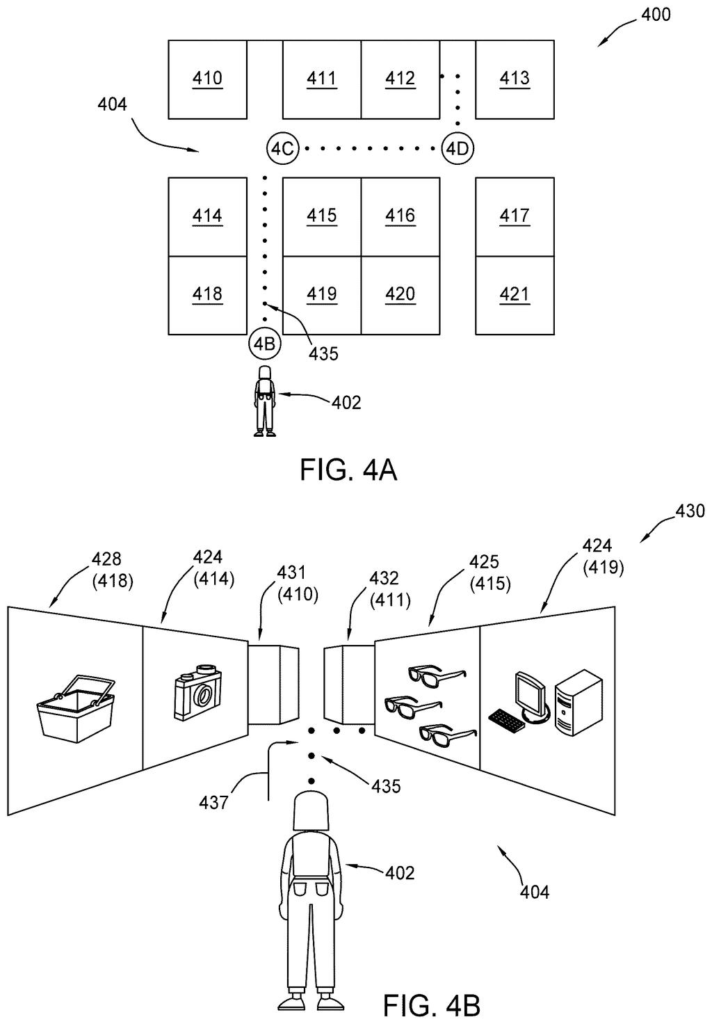
How IBM's virtual cognitive test actually works
Imagine sitting down to what looks like a simple interactive game: you're asked to navigate a virtual room, remember a sequence, or respond to prompts. Without you necessarily realizing it, the system is measuring how quickly you move, how accurately you respond, and whether you hesitate in ways that might suggest early signs of a cognitive disorder like dementia.
What makes IBM's approach different is that it doesn't just run you through a fixed checklist. If your performance on the first task is clear-cut, the session can end there. But if there's ambiguity, the system automatically selects or generates additional tasks targeted at the specific symptoms that weren't resolved yet. It's a little like a doctor ordering a follow-up test only when the first result is inconclusive.
The goal is a more efficient and adaptive screening process. Rather than giving everyone the same battery of tests, the system tailors the experience to what your individual responses actually suggest, potentially catching warning signs earlier and more precisely.
… assessing performance of the first task based on user interaction data generated within the virtual environment and received via one or more input devices, the user interaction data including at least one of navigation behavior, timing information, or response accuracy …
Translation: The system tracks how you move, how fast you react, and how correctly you complete tasks inside the virtual world.
How the system picks and scores each follow-up task
The patent describes a computer system that administers cognitive assessments inside a virtual environment, tracking how a user navigates, how long they take to respond, and how accurately they complete tasks. These three signals (navigation behavior, timing, and response accuracy) are compared against preset thresholds tied to specific symptoms of cognitive disorders.
The key technical move is in what the patent calls adaptive task selection. After evaluating performance on an initial task, the system decides whether the result is conclusive enough to make an assessment or whether additional tasks are needed. Those follow-up tasks are not pulled from a fixed list at random; they are chosen or generated specifically to probe the symptoms that remain unresolved.
- First task: a general probe that flags potential symptom areas
- Threshold evaluation: performance is scored against symptom-specific benchmarks
- Adaptive follow-up: new tasks are selected only for symptoms that weren't definitively assessed
- Final report: delivered inside the virtual environment or through a connected interface
The system accepts input from standard devices, so it does not necessarily require specialized medical hardware. The virtual environment serves both as the testing ground and as the delivery channel for results.
… determining, based on the performance of the first task, whether performance of one or more additional tasks is needed to conclusively assess whether the user exhibits any of the one or more symptoms.
Translation: If the first test is inconclusive, the software automatically decides to give you more specific challenges.
What this means for early cognitive disorder screening
Early detection of cognitive disorders like Alzheimer's is one of the hardest problems in medicine. Standard screening tools are often administered infrequently, require a clinician's time, and can be distressing for patients. A system that can run an adaptive, low-friction assessment inside a familiar interactive environment could make routine screening far more accessible, particularly for people who might not seek out a formal evaluation.
The adaptive structure also matters from a clinical efficiency standpoint. By skipping tests that aren't needed and zeroing in on ambiguous symptoms, it reduces the burden on both the person being assessed and whoever interprets the results. IBM's approach sits inside a growing body of AI-assisted health diagnostics work covered among the latest Big Tech patents, where companies are increasingly applying machine-driven assessment logic to conditions that have historically depended entirely on clinical intuition.
IBM's 294th filing in our IBM coverage since May, which we've tracked since May, continues a run that includes self-gauging AI confidence and pre-build 4D object stress tests.
Cognitive decline is under-diagnosed at scale, and the gap between symptom onset and formal diagnosis can span years, years during which intervention is most effective. A system that lowers the barrier to screening by embedding assessment inside an interactive virtual experience attacks that gap directly. The adaptive task logic is the right approach for the problem: a one-size-fits-all test wastes time for some people and misses nuance for others. The real open question is whether performance in a computer-generated environment translates reliably enough to clinical outcomes to satisfy regulators and clinicians, and that's a validation challenge no patent can resolve.
Get our take in your Top Stories
Liked this breakdown? Add Patentlyze as a preferred source on Google, and our plain-English take shows up more often in your Top Stories the next time IBM patent news breaks.
There are more where this came from
We read every patent application Big Tech publishes and send you the ones worth knowing. Plain English, free, every week.
The drawings
5 drawing sheets from US 2026/0245701 A1 · click any drawing to enlarge


Want this weekly breakdown for a company we don't cover? Patentlyze Pro →
Be the first to weigh in