
Apple Patent Tracks Hand Height to Determine Mid-Air Typing Intent
Apple is working on a way for spatial-computing devices to tell the difference between a hand that's resting and a hand that's ready to give a command, using height as the trigger.
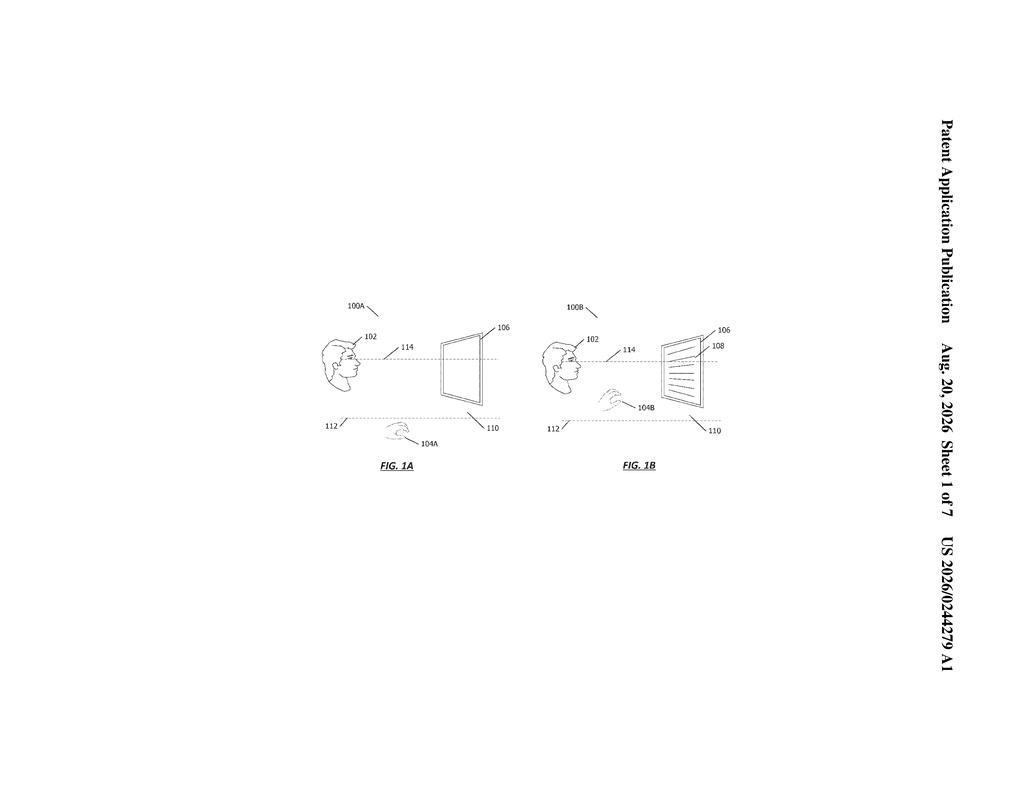
What Apple's hand-height input zone actually does
A person puts on Apple's Vision Pro headset and lifts their hand to scroll through a menu. The headset has to figure out whether that hand movement was intentional input or just the person shifting in their seat, and right now that line can be blurry.
This patent describes a system that watches how high your hand is relative to a virtual boundary. When your hand rises above that line, the device enters an "engagement state" and starts actively watching for gestures. When your hand drops back below it, the device relaxes and stops treating every twitch as a command. The boundary isn't fixed either, it adjusts based on what you have been doing, so the system gets better at reading your natural habits.
The practical effect is fewer accidental inputs when you're just resting your hands, and faster recognition when you actually want to do something. It's a small but meaningful quality-of-life fix for a device where your hands are the keyboard and the mouse.
… determining a comparison of the location of the hand to a first boundary ofan input zoneselecting a set of motion types to monitor for user input based on the comparison …
Translation: The system checks if your hand crosses an invisible boundary to decide what movements to watch for.
How the system decides when your hand is 'in play'
The patent describes a method that uses sensor data (cameras or depth sensors on the headset) to track the position of a user's hand in three dimensions.
The core logic works like this:
- The system continuously reads hand tracking data to figure out where the hand is in space.
- It compares that location to a first boundary, essentially a height threshold that marks the edge of an "input zone."
- Based on whether the hand is above or below that boundary, it selects a set of motion types to monitor. Above the line, it watches for deliberate gesture inputs. Below it, it mostly ignores movement.
- When the hand enters the active zone, the system enters a UI engagement state, processes incoming sensor data more aggressively, and translates detected motions into actual commands.
Critically, the boundary height isn't hardcoded. The patent says it is modifiable based on user activity, meaning the system can shift the threshold over time to match how a particular person naturally holds their hands. That adaptive tuning is what separates this from a simple "hand up equals active" rule.
… initiating a UI engagement state, wherein the system monitors the user for user input during the UI engagement state, and determining user input into the system based on a user motion detected while the hand is tracked.
Translation: Once your hand is in the right spot, the system starts actively watching for you to type in mid-air.
What this means for hands-free AR control
For anyone who has used a spatial-computing headset, accidental input is a real frustration. Your hand drifts slightly, and suddenly you've scrolled past the thing you wanted. A threshold-based engagement zone directly attacks that problem by giving the device a cleaner model of intent, which could make gesture-driven interfaces feel considerably less fidgety.
The adaptive boundary detail is the part worth watching closely. If the system really does learn each person's natural resting-hand height, it could make Vision Pro, or any future Apple headset, feel more personal over time. Apple's AR control patents have been a busy category, and plain-English patent summaries of filings in the spatial-computing input space show just how much engineering effort the company is putting into making hand gestures a reliable replacement for physical keyboards and trackpads.
Apple's 21st filing we've tracked since May in our eye and hand control watchlist builds on ideas like controlling nearby devices by gaze and reading intent from eye movement.
Claim 1 casts a wide net. It covers almost any device that uses sensors to pick different hand movements to track, based on whether the hand is above or below a set boundary. That would reach far beyond headsets to future glasses or even camera-equipped laptops.
The truly new detail is buried in the smaller, narrower claims. The main claim alone could block rivals from using height-based filtering to cut out accidental gestures. In a field where hand-control rules are still being written, that is real power.
There are more where this came from
We read every patent application Big Tech publishes and send you the ones worth knowing. Plain English, free, every week.
The drawings
7 drawing sheets from US 2026/0244279 A1 · click any drawing to enlarge


Want this weekly breakdown for a company we don't cover? Patentlyze Pro →
Be the first to weigh in