
Sony Patents a Faster Way for Cameras to Spot Moving Subjects
Every burst-shooting camera has to figure out which pixels moved between frames, and that calculation can slow things down. Sony's new patent describes a way to make that job faster by only doing the hard math when it's actually needed.
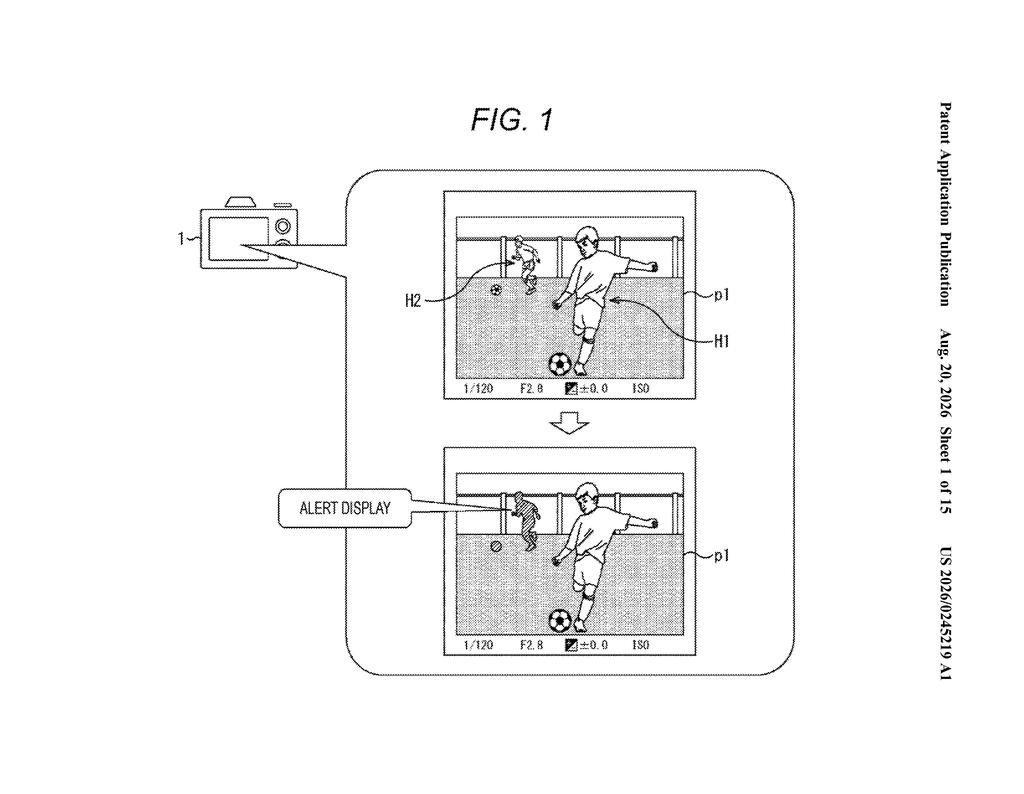
How Sony's pixel-comparison shortcut tracks motion
Every time a Sony camera fires off a rapid burst of shots, its processor compares each new frame to the last one, scanning for pixels that shifted, which is how the camera knows where a moving subject is. That comparison is expensive to run, especially when you're shooting in RAW, the large uncompressed format professionals prefer.
Sony's patent describes a system that gets selective about which version of the image it uses for that comparison. Instead of always crunching the big, full-detail RAW file, the camera can switch to a smaller, lower-detail version of the same image when the full version isn't necessary. The result is the same answer (where did things move?) but arrived at with less effort.
For you as a photographer, this could mean faster, more consistent motion tracking during burst shooting without forcing the camera to sacrifice image quality in what it actually saves to your memory card.
… selectively calculating a first pixel difference that is a difference between data of an image in a first format corresponding to the reference frame and data of an image in the first format corresponding to the target frame, and a second pixel difference that is a difference between data of an image in a second format having a smaller amount of information …
Translation: The camera chooses between comparing high-quality images or smaller, lower-quality versions to track movement faster.
How the device picks between full and compressed frame data
The patent describes an image processing unit that detects moving objects between consecutive frames by calculating pixel differences, which means comparing corresponding pixels across two frames and measuring how much each one changed. A big change signals motion; little change signals a still area.
The clever part is the selective calculation. The system can compute one of two types of pixel difference:
- A first pixel difference using the full-resolution, high-information image (think: a RAW file with every bit of sensor data intact)
- A second pixel difference using a lower-information version of the same image (a compressed or downscaled representation that takes far less processing power to compare)
The device picks between these two paths depending on what the situation calls for. When precision matters, it uses the full RAW data. When speed is the priority or a quick estimate is sufficient, it drops to the lighter format. The reference frame (the earlier image) and the target frame (the newer image) are both available in both formats, so the comparison is apples-to-apples whichever path is chosen.
The abstract specifically calls out continuous RAW burst shooting as the target application, which is a technically demanding scenario where this kind of adaptive shortcut would have the most practical benefit.
Information processing that efficiently performs highly accurate moving object detection is disclosed. In one example, an information processing device calculates a pixel difference of a target frame with respect to a reference frame by selectively calculating a first pixel difference that is a difference between data of an image in a first format …
Translation: This technology helps cameras track moving subjects more efficiently by comparing frames in different data formats.
What this means for burst-shooting Sony cameras
Burst-mode motion tracking is one of those features photographers notice immediately when it works well and curse loudly when it doesn't. Dropping frames, losing lock on a fast-moving subject, or having the processor fall behind are all failure modes that trace back to the same bottleneck: the camera can't compare frames fast enough to keep up. A system that intelligently decides when to use the full dataset and when a lighter version is good enough directly addresses that bottleneck without requiring a faster or more expensive processor.
This filing sits in the broader space of computational imaging, where camera makers are increasingly offloading work from hardware to software-level efficiency gains. Sony's camera division competes in a market where burst speed and autofocus tracking are headline specs, so patents in this area are strategically meaningful. Camera imaging patents like this one are part of this week's Big Tech patents tracked across the industry's major filings.
Sony's 366th filing we've tracked since May joins our Sony coverage alongside a self-powered camera display and split game rendering.
Photographers who shoot sports, wildlife, or anything that moves fast will feel the difference this kind of optimization is targeting, even if they never know it's running. The concrete payoff is fewer missed frames and more consistent subject lock during long RAW bursts, exactly the moments when you can't afford for the camera to fall behind. That's a real and specific problem, and the approach here is a practical engineering fix rather than a theoretical improvement.
Get our take in your Top Stories
Liked this breakdown? Add Patentlyze as a preferred source on Google, and our plain-English take shows up more often in your Top Stories the next time Sony patent news breaks.
There are more where this came from
We read every patent application Big Tech publishes and send you the ones worth knowing. Plain English, free, every week.
The drawings
15 drawing sheets from US 2026/0245219 A1 · click any drawing to enlarge


Want this weekly breakdown for a company we don't cover? Patentlyze Pro →
Be the first to weigh in