
Sony Patent: Spectral Camera Chips Selectively Stream Only Necessary Pixel Data
Sony's latest patent describes a sensor chip that doesn't always send everything it sees, on alternating frames, it deliberately skips data it doesn't need right now. That selective approach could make high-detail color sensors practical in devices that can't handle a firehose of image data.
What Sony's alternating sensor scan actually does
A security camera stares at an empty hallway all night, capturing millions of pixels that nobody ever looks at. That kind of waste gets much worse when the camera doesn't just see color, it sees dozens of invisible wavelengths of light at once, generating a data mountain with every frame.
Sony's patent tackles that problem by teaching a sensor chip to take turns. On one frame it sends the full picture: every pixel, every wavelength. On the next frame it sends only a subset, a thinned-out slice of the data. The chip keeps cycling between those two modes, so downstream processors aren't constantly drowning in information they can't keep up with.
For you, the upside is that this kind of sensor, the sort that can detect things like freshness of food or skin health, not just ordinary color, becomes easier to fit into a phone, a wearable, or an industrial camera without melting the battery or the processor.
How the chip switches between full and partial frame reads
A spectral sensor doesn't just capture red, green, and blue light the way a phone camera does. It captures many narrow bands of the light spectrum simultaneously, essentially seeing wavelengths the human eye misses entirely. That makes it useful for scientific and medical imaging, quality control in factories, and emerging consumer health features.
The problem is volume. A spectral sensor image contains far more data per frame than a standard camera image, and if you run it at video rates you can generate more data than most processors or communication links can handle in real time.
Sony's patent describes a signal processing unit that runs two alternating modes:
- Overall output processing: on a designated first frame, the chip sends pixel data for every region and every wavelength, the complete picture.
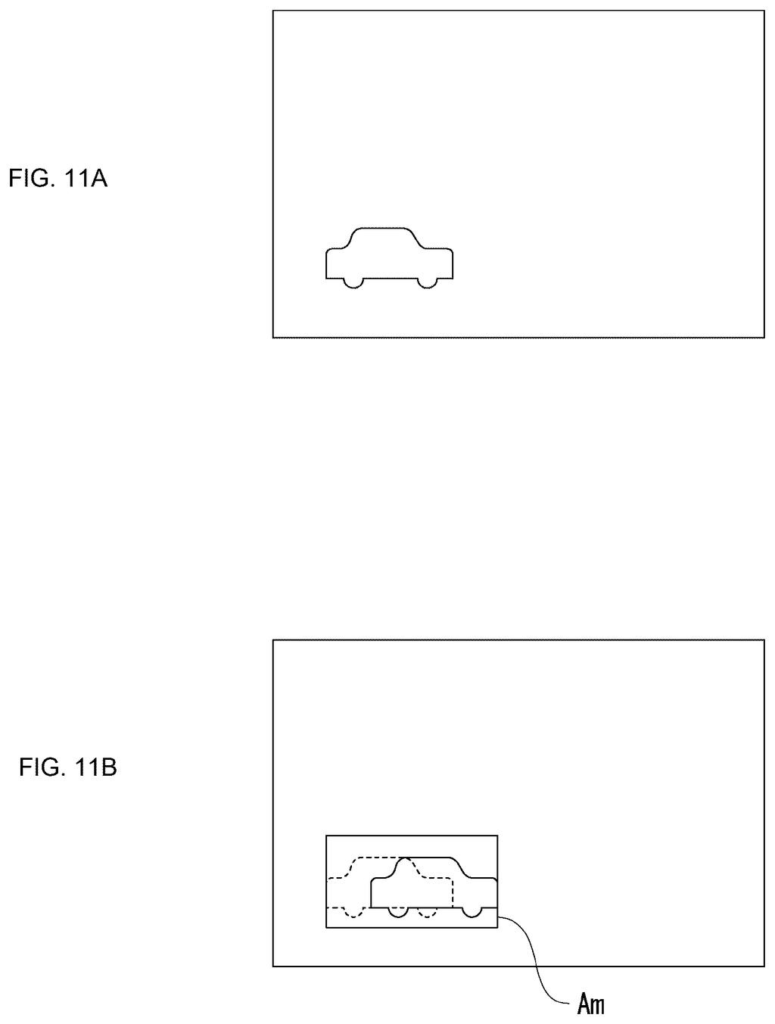
- Thinning output processing: on a different frame, the chip deliberately discards part of that data and sends only a reduced set of pixels or wavelengths.
The key word is thinning: the chip isn't compressing or guessing at the data, it is simply choosing not to transmit some of it on the lighter frames. A downstream system receives a high-fidelity snapshot periodically, and a lighter-weight stream in between, keeping it responsive without being overwhelmed.
What this means for spectral sensing in real devices
Spectral sensors have been a research curiosity for years, but getting them into mass-market hardware has stalled partly because of the data-throughput problem this patent addresses. If Sony can build a sensor that manages its own output intelligently, the engineering barrier to fitting one into a compact device drops considerably.
Sony Semiconductor Solutions supplies image sensors to a huge share of the global smartphone and camera market, so even a modest chip-level efficiency improvement can ripple across millions of devices. Spectral sensing in phones is an area several manufacturers are experimenting with, and patents covering sensor-side data management are part of the steady stream of new tech patents shaping how that hardware actually gets built and shipped.
That makes this Sony's 72nd filing we've tracked in display patents we cover since May, a group that includes mid-shoot screen correction and per-pixel sensitivity controls.
The core idea here is a switching scheme for how a sensor reports its data out, not a new sensor itself. That means no exotic manufacturing breakthrough has to happen first, and the gap between this patent and a shippable feature is shorter than most.
What has to exist first is a spectral sensor actually built into a consumer or industrial device. This patent assumes that sensor is already present and focuses entirely on how efficiently it streams information downstream, which is narrow but real work once you have committed to the harder problem of building the sensor.
If Sony ships a spectral sensor in a consumer product in the next few years, this data-thinning logic is exactly what would be baked into the chip from day one, invisible to users but responsible for keeping the device fast and the battery alive.
Get our take in your Top Stories
Liked this breakdown? Add Patentlyze as a preferred source on Google, and our plain-English take shows up more often in your Top Stories the next time Sony patent news breaks.
There are more where this came from
We read every patent application Big Tech publishes and send you the ones worth knowing. Plain English, free, every week.
The drawings
17 drawing sheets from US 2026/0255071 A1 · click any drawing to enlarge


Want this weekly breakdown for a company we don't cover? Patentlyze Pro →
Be the first to weigh in