Nvidia
Nvidia · Display · Filed Apr 10, 2026 · USPTO published Aug 27, 2026 · Aug 27 release
Nvidia Patents a Way to Skip Blank Pixels to Speed Up AI Image Processing
Most AI image models waste time doing math on pixels that barely matter. Nvidia's new patent describes a way to filter those pixels out before the heavy arithmetic even starts, letting specialized hardware run faster on what's left.
- Publication number
- US 2026/0252396 A1(US20260252396A1)
- Applicant
- NVIDIA Corporation
- Filed · Published
- Apr 10, 2026 · Aug 27, 2026
- Inventors
- Jorge Albericio Latorre, Chong Yu
- Status when we published
- Waiting for an examiner
- Document
- 20 claims
- US classification
- 712/220
- Parent application
- Continuation of 18/240,281 (filed Aug 30, 2023)(18240281)
How Nvidia's pixel-filtering trick speeds up AI chips
Every time an AI model looks at a photo, it runs millions of tiny math operations on every pixel in the image, including the dark corners, blank backgrounds, and near-identical neighboring dots that carry almost no useful information. All that redundant math burns time and power.
Nvidia's patent describes a way to pre-filter images before the main math begins. The idea is to mark pixels that aren't going to contribute much to the result as zero, so the chip's specialized hardware can skip them entirely. Those hardware units already know how to handle sparse data (data with lots of zeros), and this filtering step gives them more opportunities to do so.
The result is that a step called patch embedding, which is how vision AI models chop an image into chunks and convert them into numbers, can run on hardware built to exploit sparsity. That means faster processing without needing a bigger or more expensive chip.
… one or more circuits to cause one or more pixels within one or more images to be modified in a manner to enable one or more operands representing the one or more pixels to be operated on by one or more matrix multiplication acceleration units.
Translation: Hardware circuits alter image pixels so they can be processed faster by special matrix math units.
How sparse activation filtering cuts the matrix math load
The patent centers on a technique called sparse activation filtering, applied right at the front door of an AI vision model.
Here's how the pipeline works:
- An image comes in and pixels are assessed to determine how much they will contribute to the final computation.
- Pixels that fall below a meaningful threshold are set to zero, making the data sparse (mostly zeros, with useful values scattered throughout).
- The modified image is then handed off to matrix multiplication acceleration units, which are dedicated circuits designed to skip zero-valued inputs entirely rather than compute them.
- The result is that the patch embedding operation, a foundational step in vision transformer models where the image is divided into small tiles and each tile is converted into a numeric vector, can be completed with fewer actual multiply-and-add operations.
The key insight is that existing hardware already has a fast path for sparse data. What this patent adds is the upstream filtering step that creates the sparsity artificially, rather than waiting for it to emerge naturally from model weights.
The claim is deliberately broad: it covers any processor circuit that modifies pixels so that the resulting operands (the numbers fed into arithmetic units) can be handled by sparsity-aware matrix hardware.
Apparatuses, systems, and methods to enable matrix multiplication acceleration by modifying an input to apply sparsity through sparse activation filtering.
Translation: The system speeds up math operations by filtering out unnecessary empty pixels.
What this means for AI inference chips and image models
AI image processing, especially in large vision transformer models, is one of the most compute-intensive tasks running on Nvidia's hardware today. Any technique that reduces the number of actual math operations without degrading output quality translates directly into faster inference (real-time predictions) or lower power draw, which matters whether you're running a data center or an edge device.
Sparsity-aware hardware already exists in Nvidia's Ampere and Hopper GPU generations, but getting models to produce enough zeros to actually benefit from that hardware has been an ongoing engineering challenge. This patent approaches the problem from the software-meets-silicon angle, shaping the input data to fit the hardware's strengths. For readers tracking how AI chip design is evolving, this filing sits comfortably alongside the broader wave of plain-English patent summaries covering AI inference acceleration across the chip industry.
This is the 29th Nvidia filing we've tracked in AI chip wars since July, a company that has also applied to patent smarter power delivery and cleaner video compression.
Source: US 2026/0252396 A1 at the USPTO (PDF). Full patent text and figures are in the official publication.
Get our take in your Top Stories
Liked this breakdown? Add Patentlyze as a preferred source on Google, and our plain-English take shows up more often in your Top Stories the next time Nvidia patent news breaks.
Add Patentlyze on Google
One click.
There are more where this came from
We read the new patents from Big Tech, carmakers and more and send you the ones worth knowing. Plain English, free, every week.
The drawings · 60 sheets
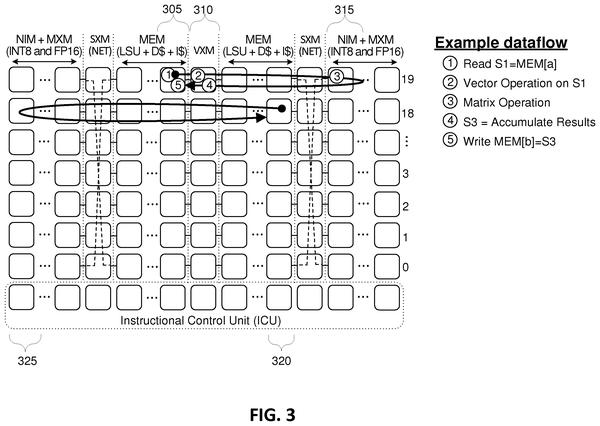
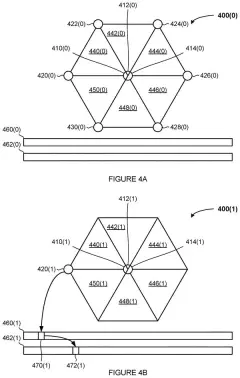
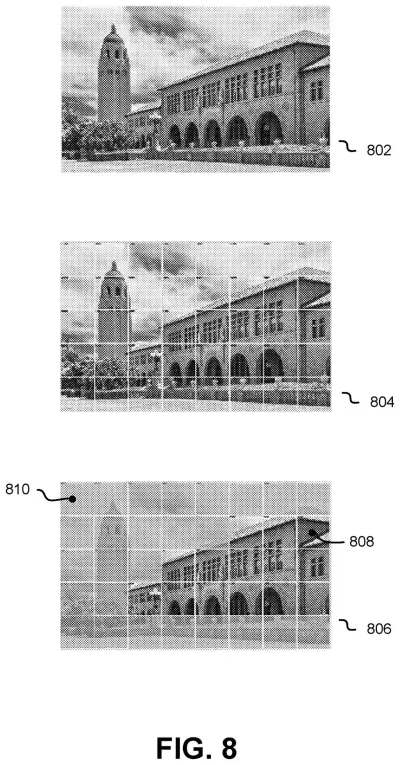
60 drawing sheets from US 2026/0252396 A1 · click any drawing to enlarge


Show the other 52 sheets


More from Nvidia
All 665 Nvidia patents →
More in Display
All 746 Display patents →
Microsoft
Microsoft Patents a Computing System That Uses Light From Transparent Displays as Its Processor
Microsoft
Microsoft Patents a Memory-Access Rule That Speeds Up Video Encoding Chips
Samsung
Samsung Patents a Fix That Stops Background Tasks From Making Screens Stutter
Google