
Disney Patents an AI System That Tags Its Own Movies and Shows Automatically
Every streaming platform lives and dies by its ability to surface the right content at the right moment. Disney has filed a patent for a system that uses AI to automatically generate the behind-the-scenes labels that make that possible, without a human having to type them.
How Disney's auto-tagging system sorts its content library
Ever tried to find one specific clip in a library of thousands of movies and TV episodes? The people who manage Disney's content catalog face that problem at a massive scale every single day.
Disney's patent describes a system where an AI learns the company's own internal categories (think: animated, live-action, family, franchise, villain, sidekick) and then reads a piece of content and writes the labels for it automatically. Those labels, called metadata tags, are what let a streaming app know that a film belongs under "superhero," "family friendly," and "sequel" all at once.
Right now, tagging content at scale requires teams of people to watch, read, or review material and manually assign categories. This system would hand that work to a language model, guided by a map of Disney's own classification rules, so the tags stay consistent across the entire library.
… generating a prompt that includes (i) a representation of the ontology, (ii) contextual information associated with a media content item, and (iii) a textual instruction to a machine learning model; and generating, via the machine learning model and based at least on the prompt, one or more descriptive metadata tags associated with the media content item.
Translation: The system creates a specific instruction for an AI to analyze a video and automatically assign it relevant descriptive tags.
How the ontology prompt tells the AI what categories to use
The patent describes a three-stage pipeline for turning Disney's internal content classification rules into AI-generated metadata tags.
- Stage 1, Build the ontology: The system ingests Disney's existing taxonomies (structured lists of categories, like genres, character types, or franchise labels) along with written descriptions of what each category means and how they relate to each other. It then assembles these into an ontology, which is essentially a formal map of "what belongs under what." Think of it as a family tree for content labels.
- Stage 2, Construct the prompt: That ontology map, plus context about a specific piece of media (a film synopsis, episode metadata, or other descriptive data), gets bundled into a single structured prompt. The prompt also includes a plain-text instruction telling the AI what it is supposed to do with all that information.
- Stage 3, Generate the tags: A large language model (LLM), the same type of AI that powers tools like ChatGPT, reads the prompt and outputs a set of descriptive metadata tags anchored to the ontology's approved vocabulary.
The key distinction here is constrained generation. Rather than letting the AI invent whatever labels it wants, the system keeps outputs inside Disney's pre-approved category structure by embedding that structure directly in the prompt.
The present invention sets forth a technique for performing automated generation of descriptive metadata, the computer-implemented method comprising receiving one or more taxonomies associated with a media content ontology domain, a description of the one or more taxonomies, and one or more hierarchical relationships associated with the one or more taxonomies.
Translation: Disney is patenting a way for computers to organize movie data by using a structured system of categories and relationships.
What automated tagging means for Disney's streaming catalog
For a company managing decades of film and television across multiple streaming platforms and licensing partners, consistent metadata is infrastructure. A wrong tag or a missing one can mean content surfaces in the wrong search results, gets licensed incorrectly, or simply disappears from discovery. Automating that tagging process at the scale Disney operates is a real operational problem, not a theoretical one.
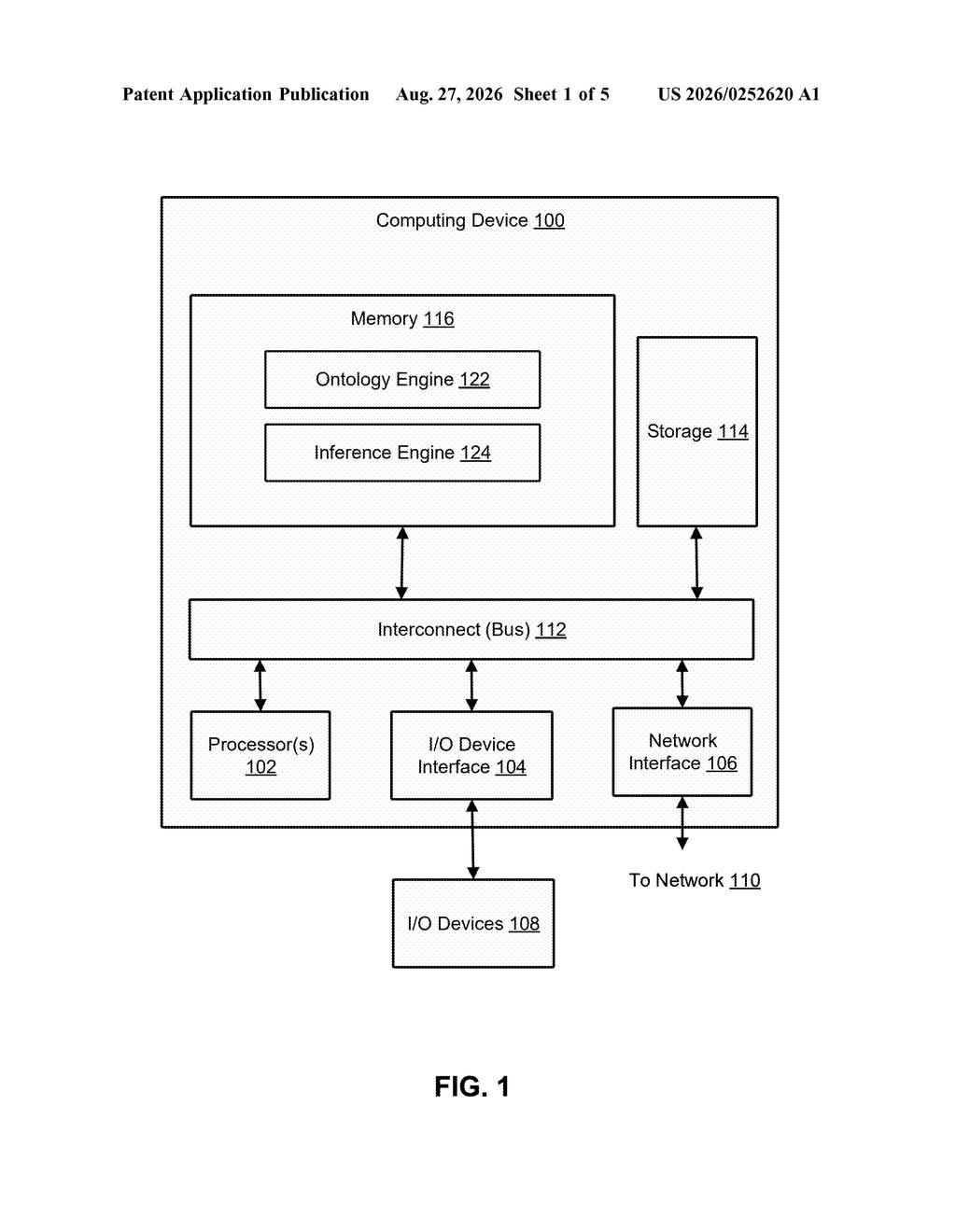
The system is software-only, which means it could, in principle, be deployed on top of existing AI infrastructure without new hardware. The shortest path to a shipped version is integration with an internal content management platform, but that still requires Disney to have its taxonomies clean, consistent, and machine-readable before any of this works. Disney's work here fits into a broader pattern of media companies using AI to manage back-end library operations, part of the stream of new Big Tech patents rerouting AI toward the unsexy logistics of running a content business.
That makes this the fourth Disney filing in our Enterprise AI coverage since June, joining patents on failing park equipment and self-directing animated robots.
This patent is solving a real, large-scale operational headache, not building toward a consumer-facing feature you will ever notice directly. The value is internal: faster cataloging, fewer inconsistencies, lower labor cost per piece of content. The ship path is reasonably short by enterprise-software standards.
No new hardware is required. The main prerequisite is that Disney already has clean, machine-readable taxonomy data, which a company of its size almost certainly does. Connecting the pipeline to a production content management system is an engineering project, not a research project.
The patent's scope is specific enough to be credible and broad enough to cover most content types Disney actually handles. That specificity is a good sign for how seriously this is being developed internally.
Get our take in your Top Stories
Liked this breakdown? Add Patentlyze as a preferred source on Google, and our plain-English take shows up more often in your Top Stories the next time Disney patent news breaks.
There are more where this came from
We read every patent application Big Tech publishes and send you the ones worth knowing. Plain English, free, every week.
The drawings
5 drawing sheets from US 2026/0252620 A1 · click any drawing to enlarge


Want this weekly breakdown for a company we don't cover? Patentlyze Pro →
Be the first to weigh in