
Nvidia Patents an AI Code Writer That Catches and Fixes Its Own Mistakes
Nvidia has filed a patent for an AI system that doesn't just write code -- it tests that code, reads the results, and rewrites until the output is good enough to pass a final review. It's an automated quality loop that tries to cut humans out of the debug cycle entirely.
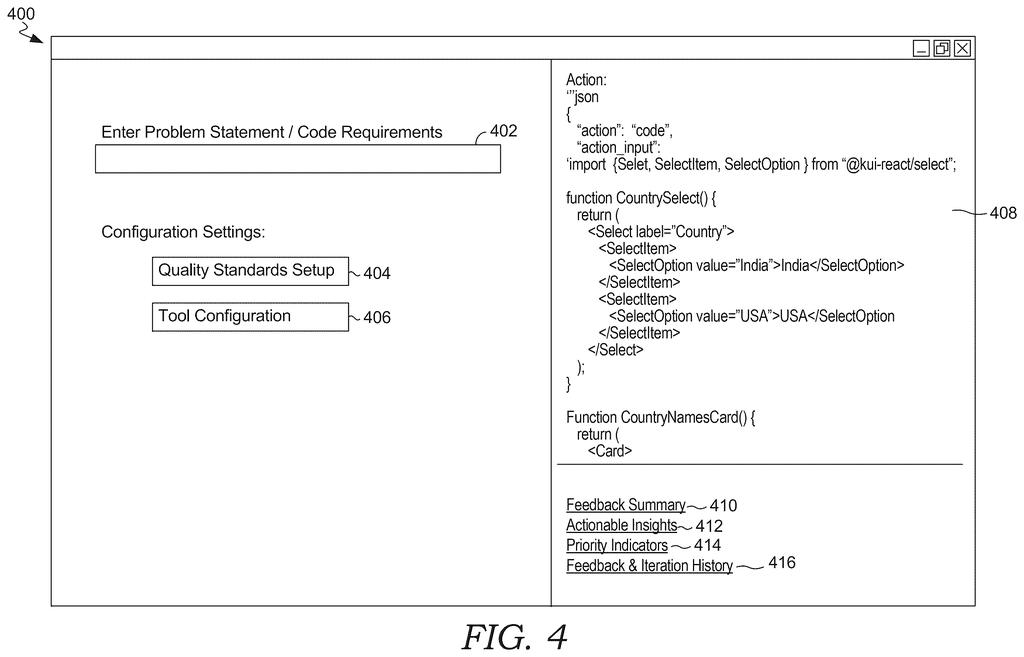
How Nvidia's self-correcting code generator works
Ever tried to fix a typo in a long document, only to introduce two new errors in the process? That's basically what happens when AI tools write code today -- they produce something plausible-looking that breaks when you run it.
Nvidia's patent describes a system where an AI model writes code, hands it off to an automated testing tool, reads the test results, and then rewrites the code to fix what went wrong. That loop repeats until the code clears a set quality bar. Once it does, a second AI model does a final review pass before anything is signed off.
The goal is to reduce the back-and-forth between a developer and an AI assistant. Instead of you copying error messages and re-prompting manually, the system handles that cycle on its own. Think of it as giving an AI coding tool its own built-in editor.
… automatically provide a prompt to the language model to update the computer programming code based at least on the input, the computer programming code, and the feedback; and generate, based at least on the language model processing the prompt, updated computer programming code that accounts for the feedback from the code evaluation tool.
Translation: The system automatically tells the AI to rewrite its own code after it receives error reports from a testing tool.
Inside Nvidia's AI feedback loop for code revision
The patent describes a multi-stage pipeline controlled by what Nvidia calls a language model agent -- essentially an orchestrator that coordinates the whole process.
Here's how the stages work:
- A first language model (an AI trained on code, similar to how GPT-4 works) receives an input prompt and generates a block of computer code.
- That code is automatically sent to a code evaluation tool -- a static analyzer, a test runner, or a linter (a program that scans for style and logic errors) -- which generates structured feedback.
- The feedback and the original prompt are bundled into a new prompt and sent back to the same language model, which revises the code. This loop repeats until the code meets a configurable quality threshold.
- Once the threshold is cleared, a second language model performs a final review -- a second opinion from a different AI before the output is accepted.
The two-model design is notable. Using a separate model for final review means the system isn't just asking the same AI to grade its own homework. The second model brings a fresh context window and potentially different training, which can catch errors the first model is systematically blind to.
The claim is intentionally broad: the patent covers any processor setup running this loop, which means it could apply to cloud infrastructure, on-device chips, or developer tooling.
… automatically provide, back to the first language model, one or more prompts that requests the first language model to re-generate or revise the computer programming code based at least on the original input and the feedback until the re-generated code meets a code quality threshold(s) …
Translation: The AI keeps revising its work based on feedback until the code is good enough to pass a set quality standard.
What this means for AI-assisted software development
Software developers already use AI assistants to draft code, but the current workflow still requires a human to run tests, read the errors, and re-prompt the AI. For teams writing large volumes of repetitive or infrastructure code, that manual loop is a real time sink. A system that closes the loop automatically could make AI coding tools genuinely useful for production-level work rather than just prototyping.
For Nvidia, the strategic interest is clear: the company sells the chips that run AI models, and tools that make those models more capable create demand for more compute. Automated code generation that actually works at scale is exactly the kind of application that drives enterprise GPU purchases. Coverage of new Big Tech patents in AI-driven developer tooling has been growing steadily, and this filing sits squarely in that wave.
That makes this Nvidia's sixth filing we've tracked since July on AI models working in teams, following one on self-correcting AI specs and one on AI models sharing information.
Developers using AI coding assistants spend enormous amounts of time fixing mistakes those tools introduce, which is a strange tax on software that was supposed to reduce work. The errors are often subtle: code that looks fine, runs without obvious complaint, and then fails when real users show up with real data.
Nvidia's approach here matches that problem squarely by encoding something humans do naturally: run the code, read what breaks, and try again. Automating that correction loop, then adding a second model to catch what the first missed, reflects an honest understanding of why AI-generated code fails in practice.
Whether the feedback built into this system is rich enough to actually guide the AI toward better answers is where the real difficulty lies. A loop is only as useful as what travels through it.
Get our take in your Top Stories
Liked this breakdown? Add Patentlyze as a preferred source on Google, and our plain-English take shows up more often in your Top Stories the next time Nvidia patent news breaks.
There are more where this came from
We read every patent application Big Tech publishes and send you the ones worth knowing. Plain English, free, every week.
The drawings
14 drawing sheets from US 2026/0252317 A1 · click any drawing to enlarge


Want this weekly breakdown for a company we don't cover? Patentlyze Pro →
Be the first to weigh in