
Nvidia Patents Technology That Customizes AI Responses in the Cloud, Not on Your Device
Nvidia is patenting a way to serve you a customized AI model without you ever knowing the plumbing behind it. The personalization lives on the server, not your device.
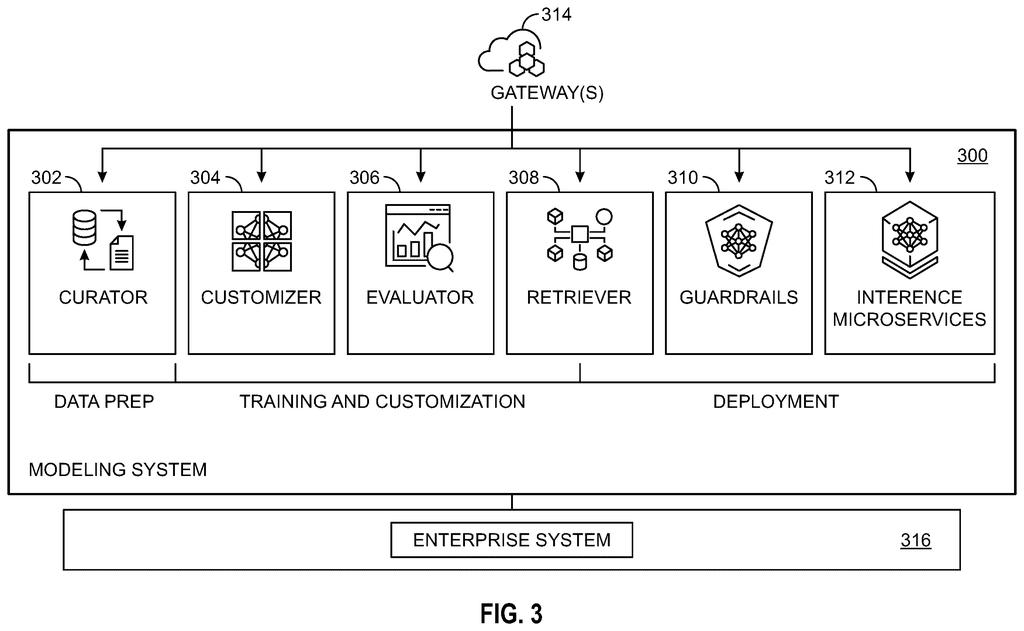
How Nvidia's server-side AI tuning works for you
You open an AI tool at work, type a question, and get back an answer that feels tuned to your industry and your company's style, even though you didn't configure anything yourself.
That's the scenario Nvidia's new patent is designed to support. Instead of making every user download or configure a specialized version of an AI model, the company describes a system where the customized model lives on a server. When you send a prompt, the server figures out which version of the model applies to you, loads it, and sends back the result.
The key idea is that the customization (the part that makes a general AI act more like a specialist for your use case) is baked into the model on the server side. You just ask your question. The server does the rest.
receive, via an interface, a prompt and an identifier corresponding to a model instance; obtain, from a data source using the identifier, the model instance, the model instance comprising at least one customization applied to a base artificial intelligence (AI) model …
Translation: The cloud system grabs your personalized AI model version using a special code tied to your request.
Inside Nvidia's model-instance pipeline
The patent describes a pipeline where a server receives a user's prompt alongside an identifier, basically a tag that tells the system which customized version of an AI model to use for that user or session.
The system then fetches a model instance, which is a version of a base AI model that has already been adjusted through a process called prompt-tuning (a technique where the model's internal settings are shifted so it behaves differently, without retraining the whole model from scratch). Think of it like switching from a general-purpose chef to one who specializes in French cuisine, where the specialization is locked in ahead of time.
The key technical claim is that the customization is stored as an update to at least one parameter of the base model. The system applies the user's prompt to that customized instance and returns the output.
- User sends a prompt plus an identifier
- Server retrieves the matching model instance from a data source
- Model instance (which includes pre-applied customizations) processes the prompt
- Output is returned to the user via the interface
The whole loop is designed to run on the server side, so neither the customization logic nor the modified model weights need to exist on the user's device.
The identified model can be deployed for use with customizations relative to a base model. The system can obtain the identified model and apply the prompt as input to the model to generate an output.
Translation: Your specific version of the AI runs in the cloud to create a custom answer for your prompt.
What this means for AI tools built on Nvidia's platform
For companies building AI tools on top of Nvidia's infrastructure, this patent points toward a cleaner way to offer specialized AI experiences to different users or customers. Instead of maintaining dozens of separate models or making users configure anything, a platform could store many model instances centrally and serve the right one on demand. That reduces the overhead of personalization while keeping the experience consistent.
For everyday users, the payoff is an AI assistant that behaves like it knows your context without ever asking you to set it up. The failure this prevents is the opposite: a one-size-fits-all model that gives generic answers when you needed domain-specific ones. AI model infrastructure is one of the steadier categories among the interesting tech patents Nvidia has filed over the past two years, and this one slots into that ongoing effort to make AI deployment more flexible at the server level.
That makes this the fifth Nvidia filing we've tracked in AI recommendation since May, alongside one on merging camera feeds and one on cleaning up audio rooms.
The reader-facing payoff here is real, if quiet. Most people who use AI tools today get the same base model as everyone else. If Nvidia's architecture gets adopted, the version of an AI you interact with could be shaped for your employer, your industry, or your use case without you doing anything different.
That said, the patent itself is fairly narrow infrastructure work. It describes a mechanism for routing prompts to pre-customized model instances, which is a workflow many AI platforms already approximate in practice. The filing locks in Nvidia's specific approach to storing and retrieving those customizations server-side.
The moment you'd actually notice this is when an AI tool stops giving you off-topic answers and starts feeling like it was built for your job. Whether this patent is what enables that, or just one piece of a much larger system, depends on how broadly it gets built out.
Get our take in your Top Stories
Liked this breakdown? Add Patentlyze as a preferred source on Google, and our plain-English take shows up more often in your Top Stories the next time Nvidia patent news breaks.
There are more where this came from
We read every patent application Big Tech publishes and send you the ones worth knowing. Plain English, free, every week.
The drawings
8 drawing sheets from US 2026/0252948 A1 · click any drawing to enlarge


Want this weekly breakdown for a company we don't cover? Patentlyze Pro →
Be the first to weigh in