
Sony Files Patent for a Two-Layer Daily Playtime Restriction System
Sony is patenting a system that can cap how long you play each day using two independent sets of rules at the same time, not just a single timer. Think of it as a curfew with a backup curfew.
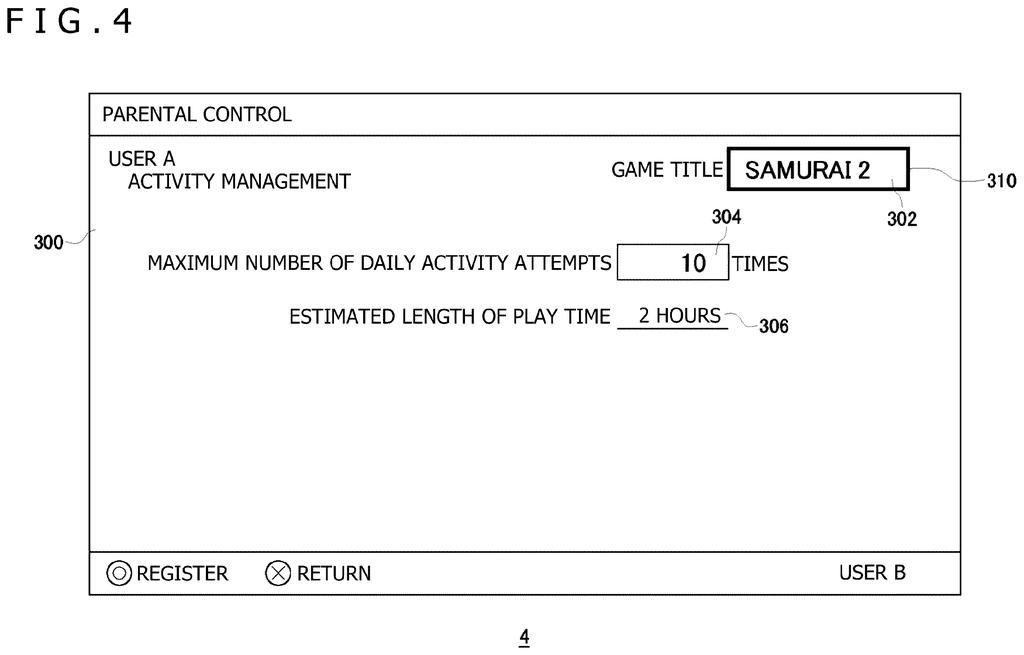
What Sony's dual playtime limits actually do
Ever had a parent (or your own conscience) try to set a daily video game limit, only to find one rule wasn't enough? Sony is working on a system that could enforce two separate playtime restrictions at the same time, each looking at your gaming situation from a different angle.
Say one rule tracks raw hours played, and a second rule tracks what time of night it is. If either condition is met, the system can step in and restrict the game. You don't need to break both rules to hit a wall, just one of them.
The patent describes hardware inside a device that checks both sets of conditions continuously as you play, then acts on whichever one applies first. The idea is that a single timer is easy to game around, but two overlapping rules are harder to slip past.
… restrict gameplay of a user according to a result of a determination whether or not a situation of the gameplay of the user satisfies a first restriction condition for restricting daily gameplay of the user and/or a second restriction condition for restricting the daily gameplay of the user from a viewpoint different from the first restriction condition.
Translation: The console limits how long you can play each day based on two entirely different sets of rules.
How the two restriction conditions check your gameplay
The patent describes an information processing device (likely a game console or a connected server) that holds two distinct types of restriction data at once.
- First restriction condition: one set of rules for capping daily gameplay, such as a total hours-played limit.
- Second restriction condition: a separate set of rules that approaches the same goal from a different angle, such as a time-of-day window or a session-count cap.
- Restriction processing section: the logic that continuously monitors whether the player's current situation triggers either condition.
The execution section runs the game normally until the processor determines that one or both conditions have been met. At that point, gameplay is restricted, which could mean pausing, blocking a login, or ending the session.
The key design choice is the and/or logic: either condition alone is sufficient to trigger a restriction. That means a child who stops playing just before hitting the time limit could still be stopped if, say, the clock crosses a bedtime threshold. The two conditions act like independent trip wires rather than a single fence.
A restriction information holding section 130 holds first restriction information indicating a first restriction condition for restricting daily gameplay of a user, and second restriction information indicating a second restriction condition for restricting the daily gameplay of the user from a viewpoint different from the first restriction condition.
Translation: The system stores two separate criteria to decide when to cut off a user's daily game time.
What this means for parental controls on PlayStation
For parents managing screen time, a single daily timer is the current standard, and kids figure out how to work around it quickly. A two-condition system could make parental controls meaningfully harder to circumvent, because stopping one clock does not stop the other. Sony already ships parental control features on PlayStation consoles, so this kind of enforcement logic has a clear, near-term home.
The broader pattern here is that console makers are under real regulatory and social pressure, especially in Europe and parts of Asia, to give parents stronger tools. Sony filing a patent specifically around layered restriction logic fits that context. Coverage of similar new Big Tech patents in the gaming and child-safety space shows this is an active area of development across the industry, not a one-off idea.
That makes this Sony application the 371st we've logged in our Sony coverage since May, adding to work like resizing touchscreen windows and fixing images mid-shoot.
This patent is closer to a shippable software feature than most filings you'll see. There is no exotic new hardware described, just logic that sits on top of an existing game console's operating system. The device already tracks playtime; this adds a second condition layer and an and/or decision tree on top. The shortest route to a product here is a firmware update to PlayStation's family management settings.
Sony would need to design the user interface for setting two separate rule types, which is the harder problem, but the underlying enforcement logic described is not far from what already ships. What is less clear is whether the second restriction condition is configurable by parents or preset by Sony. The patent is abstract on that point, and the difference matters enormously for how useful the feature actually feels.
A rigid second condition set by Sony is far less helpful than one parents can define themselves.
Get our take in your Top Stories
Liked this breakdown? Add Patentlyze as a preferred source on Google, and our plain-English take shows up more often in your Top Stories the next time Sony patent news breaks.
There are more where this came from
We read every patent application Big Tech publishes and send you the ones worth knowing. Plain English, free, every week.
The drawings
12 drawing sheets from US 2026/0249196 A1 · click any drawing to enlarge


Want this weekly breakdown for a company we don't cover? Patentlyze Pro →
Be the first to weigh in