
Microsoft Patent Aims to Let Plain English Commands Run Telecom Network Servers
Microsoft has filed a patent for a system that lets engineers manage complex telecom network infrastructure by typing ordinary sentences, with an AI translating those sentences into the exact technical commands needed. No specialized scripting knowledge required.
How Microsoft turns plain English into network commands
Every time a mobile carrier's engineer needs to add capacity to a cell tower cluster or fix a network bottleneck, they have to write precise technical commands in specialized tools. One wrong flag and the fix doesn't work, or something breaks elsewhere. That happens dozens of times a day across large networks.
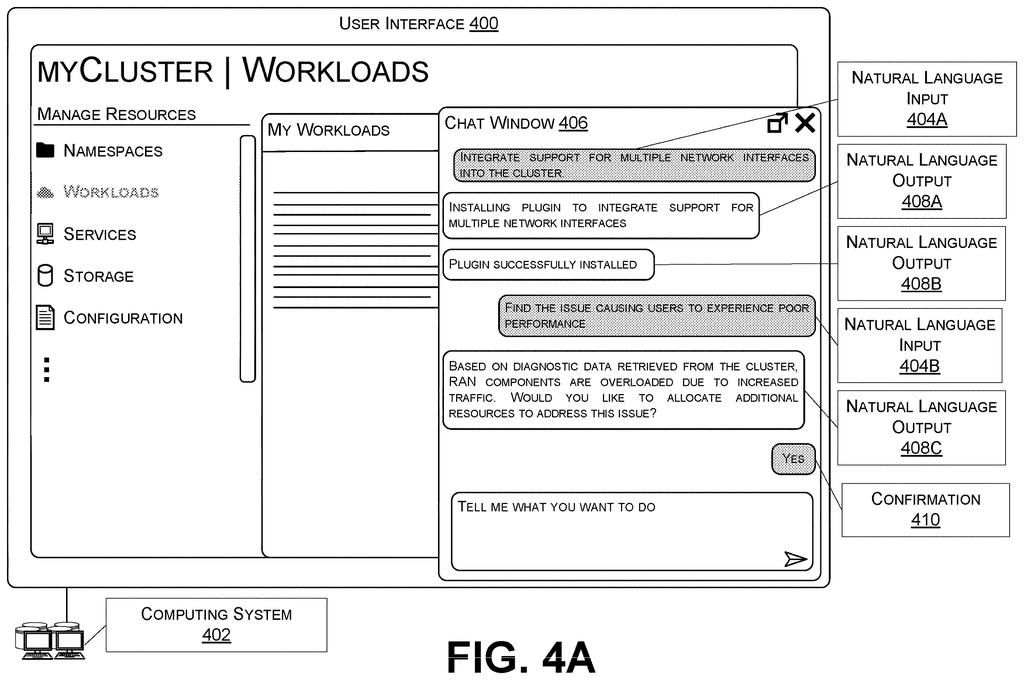
Microsoft's patent describes a layer that sits between the engineer and those tools. You type something like "scale up the processing power on the east-region radio units during peak hours," and the system figures out what you mean, pulls in relevant technical documentation and past records about your specific setup, then hands a fully formed question to an AI. The AI writes the actual commands.
The system then runs those commands on the real network automatically. Microsoft frames this as reducing both the expertise required and the chance of human error, two costs that add up fast when the infrastructure in question is a 5G cellular network.
analyzing, by a processing unit, the natural language input utilizing a natural language processing function to detect a desired outcome for a computing environment; retrieving, based on the desired outcome, an auxiliary information set associated with the computing environment …
Translation: The system reads your plain English request and gathers the specific technical data needed to understand your goal.
How the system builds and fires off command sequences
The patent describes a pipeline with five main stages, each building on the last:
- Intent detection: A natural language processing function reads your plain-English request and identifies the specific outcome you want, like reallocating compute resources or restarting a service.
- Context retrieval: The system fetches an "auxiliary information set" tied to your environment. This includes technical documentation for the tools involved, recent diagnostic logs, and records of past similar operations. Think of it as the system reading the room before answering.
- Contextual query construction: Your detected intent and all that retrieved context are combined into a single, richly detailed prompt. This is what actually gets sent to the AI, and it's far more specific than your original plain-English request.
- Command generation: An AI application (the patent doesn't name a specific model) receives that prompt and produces an operation sequence, meaning an ordered list of commands that a resource management tool can execute directly.
- Automated execution: The system applies those commands to the live computing environment, completing the task without the engineer manually running each step.
The patent explicitly targets radio access network (RAN) workloads, which is the infrastructure that connects your phone to a cellular tower. That's a domain with highly specific tooling (like Kubernetes-based orchestration for cloud-native 5G) where configuration errors can affect thousands of users at once.
… the query can cause the artificial intelligence application to generate an operation sequence comprising a plurality of commands to interface with a resource management tool and control computing resources and supporting components.
Translation: The AI turns your request into a series of technical commands that automatically adjust the network server settings.
What this means for telecom network operations
For telecom operators building out cloud-native 5G networks, the biggest bottleneck is often not hardware but the pool of engineers who know how to configure and tune the software layer. If this system works as described, a much broader set of staff could manage infrastructure that today requires specialists. That has real cost implications for carriers and equipment vendors alike.
The approach also fits into a broader pattern of AI being inserted into operations layers that were previously too risky to automate, because the inputs were too ambiguous. new Big Tech patents in the telecom and cloud-infrastructure space are increasingly staking out this middle ground, where AI handles translation and execution while a human still writes the original intent.
This is the fifth Microsoft filing we've tracked since July on AI agents acting for you, including one on AI learning by watching and one on AI writing chart code.
The central thing this design gives up is human review of each step before it runs. On wireless networks, a single wrong instruction can knock out service for an entire neighborhood, and reversing a change mid-operation is slow and often messy.
Microsoft's answer is to surround the AI with supporting documents and historical records so it generates better commands. That only works as well as the library behind it, and outdated or patchy documentation paired with a confident AI is a real failure mode the patent largely skips over.
The trade probably holds for routine work like scheduled capacity adjustments. It starts to look costly during emergencies, when the reference material is thinnest and the consequences of a wrong move are biggest.
Get our take in your Top Stories
Liked this breakdown? Add Patentlyze as a preferred source on Google, and our plain-English take shows up more often in your Top Stories the next time Microsoft patent news breaks.
There are more where this came from
We read every patent application Big Tech publishes and send you the ones worth knowing. Plain English, free, every week.
The drawings
8 drawing sheets from US 2026/0252818 A1 · click any drawing to enlarge


Want this weekly breakdown for a company we don't cover? Patentlyze Pro →
Be the first to weigh in