
Qualcomm Patents Technology to Help Networks Deliver Smooth Video Without Buffering
When a video call drops frames, the device receiving the data often has no idea which pieces matter most. Qualcomm's new patent wants to stamp that information right onto each data chunk before it travels across the network.
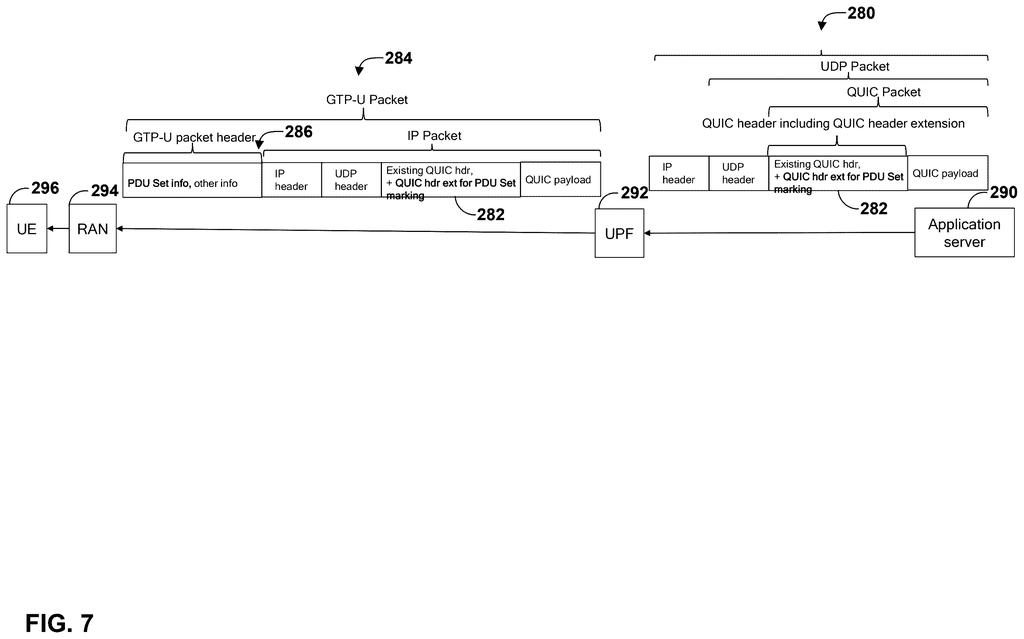
How Qualcomm's packet-labeling system handles video delivery
Today, when your phone streams a video over a mobile network, the individual data chunks flying through the air carry almost no context about their own importance. If the network gets congested, it has to guess which chunks to drop or delay, and that guessing is one reason video calls stutter even when your signal looks fine.
Qualcomm's patent describes a system for attaching a small label to each chunk of data inside a popular internet protocol called QUIC. That label tells the receiving device things like: "this chunk is the last one in a complete video frame," "this frame is high priority," or "there are six chunks total in this group." The device on the other end can then make much better decisions about what to wait for, what to discard, and what to ask the network to resend.
The practical goal is smoother video, especially in situations where bandwidth is tight, like a crowded stadium or a moving car. Instead of every chunk being treated equally, the most important pieces of a scene get through first.
receiving, during a QUIC communication session, a QUIC packet including a QUIC header extension including protocol data unit (PDU) Set signaling information for a PDU Set …
Translation: The receiving device looks inside network packets for extra instruction labels attached by Qualcomm's method.
How PDU Set metadata travels inside the QUIC header
The patent centers on a messaging format embedded in the header of a QUIC packet. QUIC is a modern internet transport protocol (think of it as a faster, more flexible successor to the older TCP protocol) used by services like Google Chrome and many video platforms.
Qualcomm's system groups related data chunks into a PDU Set (a Protocol Data Unit Set, which is just a named bundle of packets that together make up one logical unit, such as a single video frame or a short audio segment). Inside each packet's header extension, the sender can include:
- Whether this packet is the last one in the group
- Whether it is the last one in the current data burst (a wave of grouped content)
- An importance score for the whole group
- A sequence number for the group and for the individual packet within it
- The total size of the group and how many packets it contains
The receiving device extracts all of this from the header and uses it to make smarter real-time decisions. If a group is marked low-importance and the network is congested, the device can drop it without waiting. If a group is marked high-importance and some packets are missing, it knows to request them again before rendering the frame.
This is all happening at the QUIC layer, meaning it does not require changes deep in the operating system or in the application itself. Any QUIC-based session can, in principle, carry this metadata.
… PDU Set importance information, a PDU Set sequence number, a sequence number for the PDU within the PDU Set, a PDU Set size, or a number of PDUs in the PDU Set …
Translation: The labels track how crucial a piece of video is and where it belongs in the streaming sequence.
What this means for real-time video streaming over 5G
For consumers, the most direct payoff would be in live video: video calls, sports streaming, and real-time remote applications where a half-second delay matters. When a network gets busy, devices using this system could discard an unimportant background frame instantly rather than holding up the whole stream waiting to see if the missing pieces arrive.
For Qualcomm specifically, this kind of low-level protocol work fits squarely into its modem and chipset business. The company supplies the radio hardware inside most flagship Android phones, and having its chips understand PDU Set metadata natively would give those devices a quality edge on congested 5G networks. The networking and real-time media space is one of the more active areas among new Big Tech patents, and this filing shows Qualcomm pushing that work down to the transport protocol layer rather than leaving it to app developers.
That makes this Qualcomm's 348th filing in our Qualcomm coverage since May, adding to work like cutting dual-video battery drain and low-power chip memory sleep.
The central design choice here is to move group-awareness metadata into the QUIC header rather than into the application layer above it. That is a meaningful place to put it: the network infrastructure and the device's radio modem can read it without the video app having to do anything. But it also means the whole system depends on both sender and receiver agreeing to use these header extensions, and QUIC header extensions are not universally supported yet. The trade reads as deliberate but fragile in the near term.
If the server streaming your video does not bother tagging its PDU Sets, none of this helps. Qualcomm is essentially betting that media delivery platforms will adopt the standard, which is a reasonable long-term bet but not a sure one.
The importance-scoring field is the most interesting and the most risky piece. Deciding in advance which frame groups are "important" is harder than it sounds for dynamic content like a live sports broadcast, and a wrong importance score could cause a device to cheerfully discard exactly the frame that contains the goal. Whether that edge case is handled by the sender's encoder or left undefined is something the patent is careful not to fully resolve.
Get our take in your Top Stories
Liked this breakdown? Add Patentlyze as a preferred source on Google, and our plain-English take shows up more often in your Top Stories the next time Qualcomm patent news breaks.
There are more where this came from
We read every patent application Big Tech publishes and send you the ones worth knowing. Plain English, free, every week.
The drawings
10 drawing sheets from US 2026/0254867 A1 · click any drawing to enlarge


Want this weekly breakdown for a company we don't cover? Patentlyze Pro →
Be the first to weigh in