
Apple's New Patent Lets Cell Networks Physically Sense Nearby Device Failures
Apple has filed a patent for a system that combines two things cell towers already do, send messages and bounce radio signals, to figure out whether a nearby device is physically broken or behaving abnormally, without anyone pressing a button.
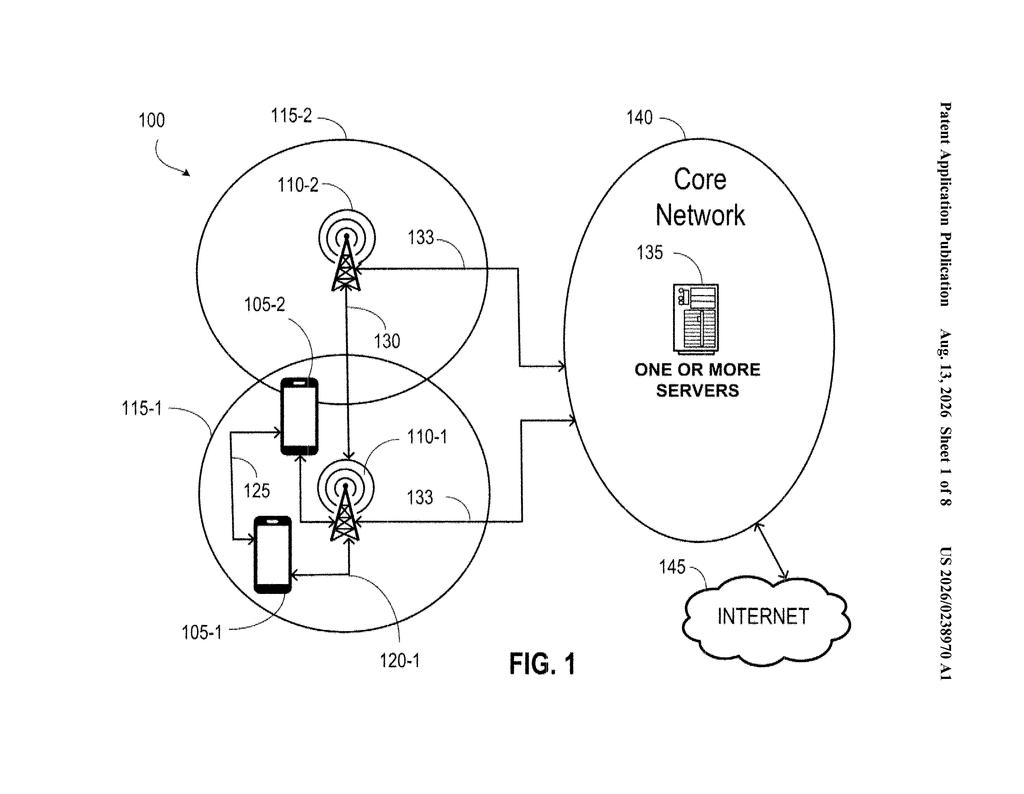
How Apple wants networks to spot a broken device
Today, if a phone or connected device stops working correctly, the network has no reliable way to confirm whether the device is actually still there and functional. It might report itself as fine even when it isn't. Apple wants to change that by giving the network a second way to check.
Here's how it would work for you: a safety message comes in saying a nearby device's status looks off. Instead of just logging that report and moving on, the system asks the cell tower to actively sense the device using radio signals, the same way radar works. The tower bounces a signal off the device and reports back on what it detects.
That combined picture, the safety message plus the radar-style sensing result, gets packaged into a status report. The goal is catching real failures, a car with a dead transmitter, a phone that fell into the road, a sensor that stopped responding, before those failures cause a larger problem.
receiving, from a base station, a message that indicates a status of a user equipment (UE), the message comprising a basic safety message (BSM) transmitted in a device-to-device communication …
Translation: The network gets an alert about a device's condition using direct device messages.
How the base station senses the flagged device
The patent describes a three-step coordination loop between a network server, a base station (cell tower), and the target device being checked.
Step 1: Flag via safety message. The server receives a Basic Safety Message (BSM), a short broadcast a device regularly sends to its immediate surroundings over a device-to-device radio link (think of it like a device saying 'I'm here and okay' every second). When that message suggests something is wrong, the server treats it as a trigger.
Step 2: Request active sensing. The server tells the base station to perform integrated sensing on that specific device. This uses the same radio spectrum already in use for cellular communication, but repurposed to probe the physical environment, similar to how radar measures distance and position by analyzing reflected signals.
Step 3: Generate a combined report. The base station returns a sensing result, which might describe whether the device is still in the expected location, moving, stationary, or absent. The server merges this with the original safety message to produce a UE status report (UE stands for 'user equipment,' the standard industry term for any device on a cellular network).
The claim is broad: it covers the server side, the base station side, and the overall method, meaning Apple is staking out the coordination protocol, not just one piece of hardware.
… determining, based on the message, to perform sensing with the UE. The method includes transmitting, to the base station, a request to perform sensing with the UE.
Translation: The system decides to physically check on the troubled device and asks the cell tower to do so.
What this means for connected-device safety
For most people this would operate entirely in the background, but the failure it prevents is concrete. Connected vehicles, roadside sensors, and industrial IoT devices already broadcast safety messages; the problem is that a message alone can't tell you whether the device sending it has physically crashed, been knocked over, or lost power. A sensing layer that cross-checks the radio report against a physical ping closes that gap, and could matter most in scenarios like a vehicle-to-infrastructure system trying to confirm whether a stranded car is still in the lane.
Apple's angle here is less about consumer iPhones and more about positioning itself inside the standards conversation around next-generation cellular networks, where Big Tech patent news on integrated sensing and communication shows a clear industry race to define who owns the protocol layer between devices and towers.
The concrete payoff for a user is indirect: you would never see this system working, you would only benefit from the accidents and outages it prevents. It's pure infrastructure, and its practical value depends entirely on whether the sensing accuracy is good enough to avoid false alarms that could themselves trigger unnecessary network responses. Apple filing on the coordination protocol rather than the sensing hardware is a smart position: whoever defines how the request-and-report loop works has influence over the standard, regardless of which radio chip ends up doing the actual sensing.
There are more where this came from
We read every patent application Big Tech publishes and send you the ones worth knowing. Plain English, free, every week.
The drawings
8 drawing sheets from US 2026/0238970 A1 · click any drawing to enlarge


Want this weekly breakdown for a company we don't cover? Patentlyze Pro →
Be the first to weigh in