
Microsoft Patent Would Auto-Summon Absent Colleagues When Meetings Require Their Input
Missing a meeting you were only half-invited to is annoying. Microsoft has a patent for an AI that sits in on your behalf and texts you the second someone asks a question only you can answer.
How Microsoft's meeting AI decides when to interrupt you
Most calendar invites include a handful of people who are listed "just in case" but never actually join. Right now, if something relevant comes up, no one alerts those absent people in real time, so the conversation either stalls or moves on without them. Microsoft wants to change that with an AI agent that attends in their place.
The agent listens to the meeting, watches for moments that directly involve the absent person, and then decides whether to interrupt them. If the AI determines the topic is something only that person can resolve, it reaches out immediately over text, a phone call, a video link, or whichever channel makes the most sense.
The key idea is that the AI is not pinging you for everything. It has been trained on your background, expertise, and habits, so it can filter out noise and only pull you in when your presence would actually make a difference. Think of it as a smart assistant watching the meeting so you don't have to.
… determining, by a digital agent representing the invited non-participating user, based on the trained model, whether to contact the invited non-participating user to inform about the first event in real-time in response to the first event; …
Translation: A digital stand-in decides if an absent person needs to be interrupted right now.
How the trained model filters events before sending an alert
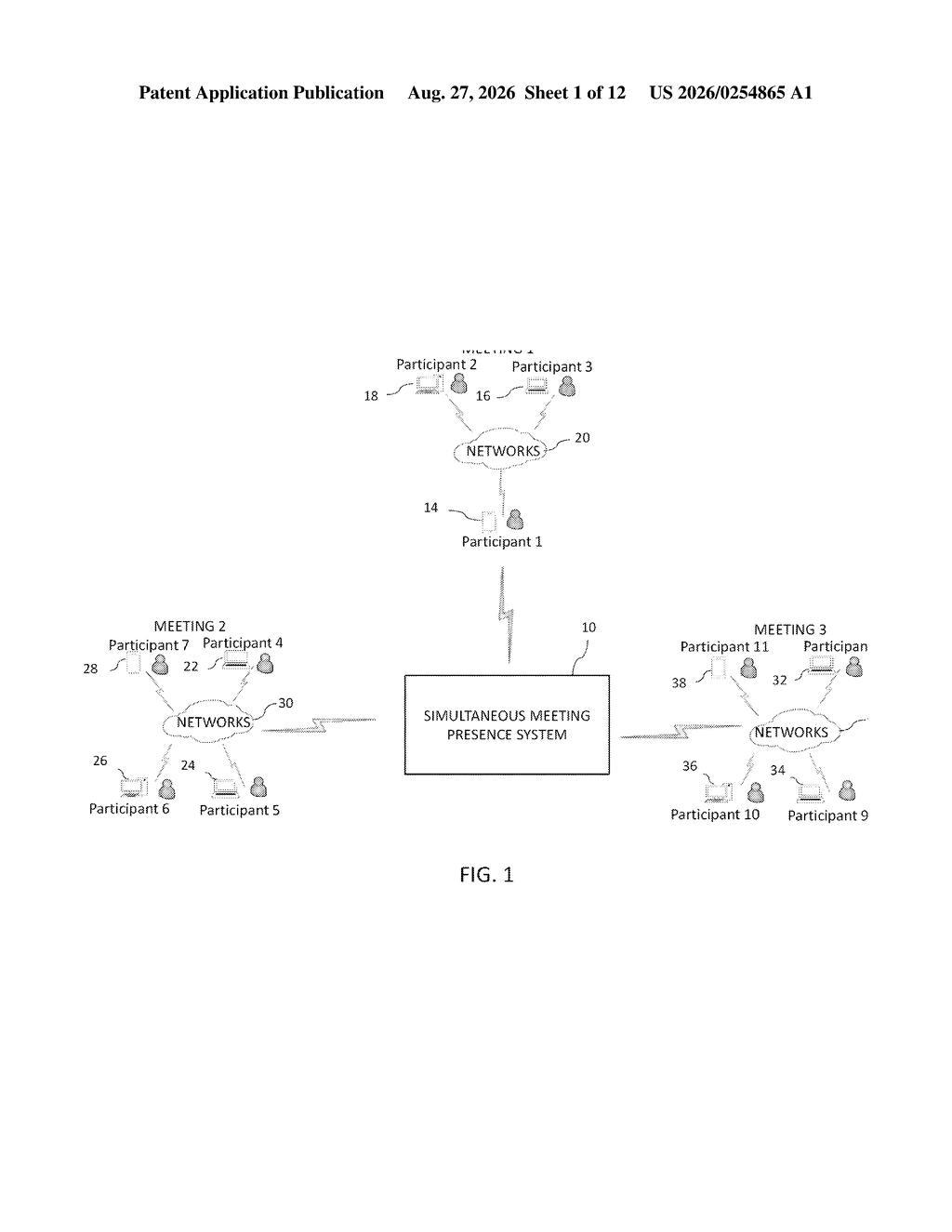
The system creates what the patent calls a "ghost presence" for someone who was invited to a meeting but chose not to attend. A trained AI model monitors the live conversation, scanning for events that relate specifically to the absent person.
The model uses personal features of the absent user, meaning things like their job history, areas of expertise, and past behavior, to figure out two things:
- Whether a question or topic is genuinely directed at them or falls within their knowledge
- Whether the situation can be resolved without actually contacting them
If the event clears that second bar, the agent sends an alert in real time. The patent lists a wide range of delivery methods: instant message, SMS, phone call, video call, or even a pager (yes, pager). The absent person then gets context about what happened and can choose to join.
The method runs entirely on the server side during the call, meaning it does not require the absent person to install anything or stay near their computer. The model is described as a "digital agent representing the invited non-participating user", which is essentially a software stand-in that acts on their behalf without them needing to be present.
An intelligent agent may assume a ghost presence in a meeting on behalf of a non-participant, monitor data communications between participants of the meeting, and identify appropriate triggers or events relating to the non-participant.
Translation: An AI bot attends meetings for absent workers to spot when they are actually needed.
What this means for Microsoft Teams and remote work culture
For remote and hybrid teams, the problem this addresses is real. Important decisions get made in calls where the right expert never showed up, and no one thinks to follow up afterward. An AI that bridges that gap in the moment, rather than relying on someone to write up notes later, could genuinely change how distributed teams operate. If this were built into Microsoft Teams, it would also give Microsoft a concrete differentiator against Zoom and Google Meet, both of which offer AI meeting summaries but not live auto-summoning.
The feature is software-only and sits on top of existing call infrastructure, which makes the path from patent to product shorter than most AI hardware filings. No new device is required, just a model trained on user data that Teams already collects. That said, the personal-profiling angle will attract privacy scrutiny: an AI that knows enough about you to decide when you need to be interrupted is also an AI that has been closely watching how you work. This Microsoft filing joins a growing wave of newest Big Tech patents pushing AI deeper into workplace communication, a space where the technical hurdles are low but the human-trust hurdles are not.
This is the seventh Microsoft filing we've tracked since July on AI agents that act for you, joining earlier work on robot simulation missions and plain English server commands.
The building blocks this would need are already inside the video-call software millions of people use every day: live transcripts, user profiles, and conversation-reading AI. This patent describes a new behavior layered on top of that existing foundation, which puts a working version closer than most patent filings suggest.
The harder problem is human. Being pulled into a meeting by software that decided you were needed will feel, to many people, like losing control of their own schedule, and the patent will need clear opt-in choices and plain explanations of what the system knows before anything ships.
Get those controls right and this could feel as natural as a calendar reminder that actually understands context. Get them wrong and it becomes the feature that made work feel like it could reach anyone, anywhere, without asking.
Get our take in your Top Stories
Liked this breakdown? Add Patentlyze as a preferred source on Google, and our plain-English take shows up more often in your Top Stories the next time Microsoft patent news breaks.
There are more where this came from
We read every patent application Big Tech publishes and send you the ones worth knowing. Plain English, free, every week.
The drawings
12 drawing sheets from US 2026/0254865 A1 · click any drawing to enlarge


Want this weekly breakdown for a company we don't cover? Patentlyze Pro →
Be the first to weigh in