
Microsoft Patents an AI That Gives You Turn-by-Turn Directions Inside Buildings
GPS stops working the moment you step through a door, and most buildings offer nothing better than a paper map on the wall. Microsoft is filing patents for an AI assistant that figures out exactly where you are indoors by looking at your camera feed, then talks you to wherever you need to go.
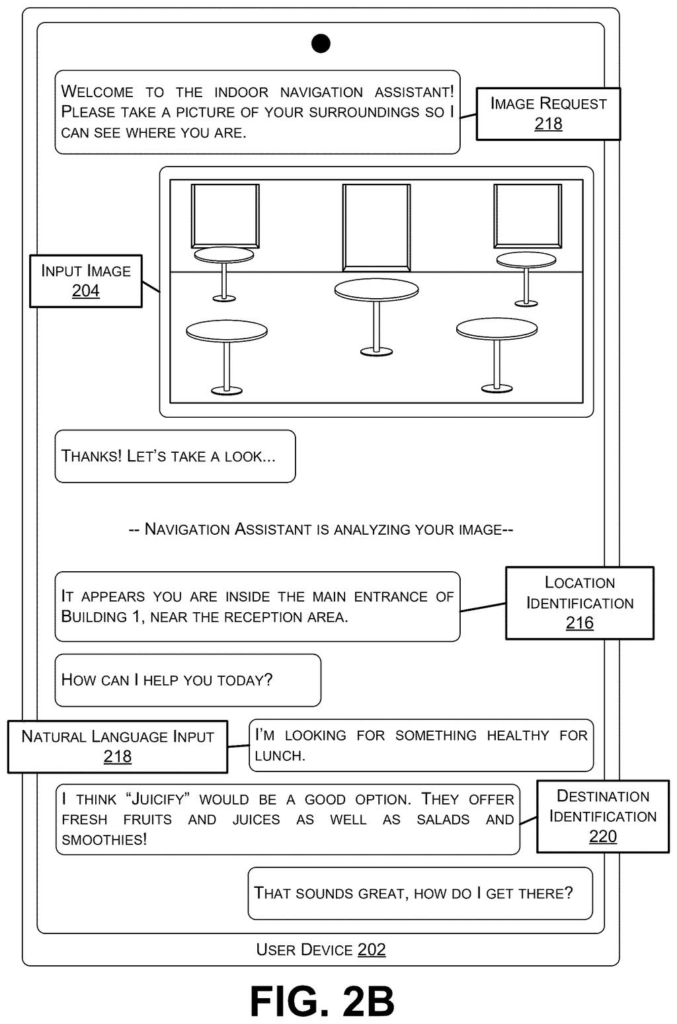
How Microsoft's indoor AI navigation actually works
A visitor steps into a sprawling hospital lobby and has no idea which corridor leads to the cardiology ward. Sound familiar? That disorientation is the problem Microsoft is trying to solve.
The idea is straightforward: a building's managers photograph every hallway, elevator bank, and stairwell ahead of time and add plain-language labels to each shot. Those labeled photos get stored in a database. When you hold up your phone and snap a picture of your surroundings, the AI compares your photo against all the stored images, figures out where you are, and then listens to what you say you want to find. It responds with step-by-step spoken directions in plain English, the same way a friendly colleague would.
No specialized hardware is required on your end. Your phone's camera and a text or voice request are all the system needs. The AI does the heavy lifting by matching visual clues and translating a building's floor plan into directions a person can actually follow.
… outputting, by the multimodal language model, a sequence of natural language directions defining a path from the current position of the user device to the destination identified from the user-defined objective.
Translation: The AI generates step-by-step written directions to guide you to wherever you want to go inside the building.
How the model matches photos to a mapped floor plan
The system has two main phases: setup and real-time navigation.
During setup, building staff collect reference images of every significant location indoors and attach natural-language annotations to each one (for example, "East wing elevator lobby, third floor, near the vending machines"). The system then converts each image-plus-annotation pair into a numerical vector (a long list of numbers that encodes the visual and textual meaning of the scene) and stores all of these vectors in a reference database. Floor plan data is also stored here.
At navigation time:
- A user takes a photo with their phone. The system converts that photo into its own numerical vector.
- A multimodal language model (an AI that understands both images and text at the same time) compares the user's vector against every vector in the database to identify the closest match, effectively pinpointing the user's current position.
- The user then types or speaks a destination in plain language, such as "I need to get to the radiology department."
- The model translates that goal into a specific room or area on the floor plan, then generates a step-by-step sequence of human-readable directions from current position to destination.
The approach is an example of retrieval-augmented generation, or RAG, which means the AI doesn't rely on general training data alone. It pulls from the building's own curated photo library before generating an answer, keeping directions accurate and specific to that environment.
Often referred to as retrieval-augmented generation (RAG), the reference database enables the multimodal language model to respond to user requests using domain-specific information and ensure accurate outputs that are relevant to an end user's context …
Translation: The system uses a database of building details to help the AI give precise, context-aware navigation advice.
What this means for hospitals, campuses, and big offices
For anyone who has ever circled the same hospital corridor twice looking for a check-in desk, this patent addresses a real, everyday frustration. Current indoor navigation solutions tend to require expensive sensor networks, dedicated apps tied to a specific venue, or Bluetooth beacons installed throughout a building. Microsoft's approach leans on existing phone cameras and a photo database that non-technical staff could reasonably maintain, which lowers the barrier to deployment significantly.
The most likely early applications are the places where getting lost has real consequences: hospitals where patients miss appointments, corporate campuses where new hires waste time, and large airports where passengers miss gates. This filing sits alongside a broader wave of interesting tech patents focused on making AI assistants spatially aware of the physical world, not just the digital one, and Microsoft's entry into that space is worth watching as the company builds out its AI product portfolio.
This is the eighth Microsoft filing we've tracked since July on AI agents acting for you, following one that summons absent colleagues and one testing robots in simulation.
The person who benefits most here is not a tech enthusiast. It is a 70-year-old arriving alone at a hospital they have never visited, or a new employee trying to find a conference room on the 34th floor of an unfamiliar building. With this system, they could photograph the corridor in front of them and receive spoken, step-by-step directions to where they need to go.
That is a specific, reducible stress that building directories and static floor maps cannot touch, because neither one knows where you are standing right now. Whether any of this actually works falls on building managers, who must photograph every hallway, label each image accurately, and update the database whenever rooms change.
If that upkeep happens, the experience for the person holding the phone changes in a way they would notice immediately and remember the next time they walk into a large unfamiliar building.
Get our take in your Top Stories
Liked this breakdown? Add Patentlyze as a preferred source on Google, and our plain-English take shows up more often in your Top Stories the next time Microsoft patent news breaks.
There are more where this came from
We read every patent application Big Tech publishes and send you the ones worth knowing. Plain English, free, every week.
The drawings
9 drawing sheets from US 2026/0251458 A1 · click any drawing to enlarge


Want this weekly breakdown for a company we don't cover? Patentlyze Pro →
Be the first to weigh in