
Apple Patents an Adaptive System for Guessing Where Video Pixels Move Next
Every time you stream a video, your device is making thousands of tiny guesses about where objects will move between frames. Apple's new patent describes a way to make those guesses more accurate, and in a smarter order, which could mean sharper video at lower file sizes.
What Apple's motion prediction patent actually does
You're watching a video on your iPhone and a person walks across the screen. Behind the scenes, the video encoder didn't actually store every single pixel for every frame, it stored a description of how things moved from one frame to the next, and let the decoder reconstruct the rest. That shortcut is how streaming video stays small enough to fit on your phone or travel over a Wi-Fi connection.
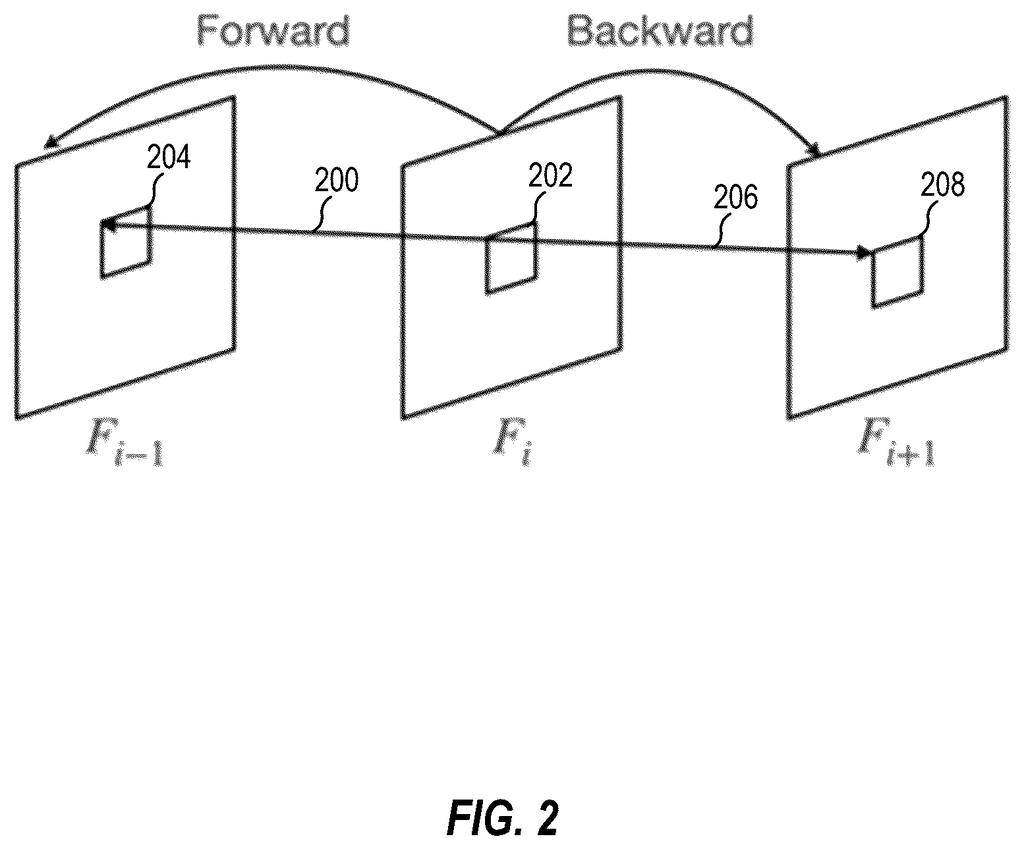
Apple's patent focuses on improving the part where the encoder or decoder predicts which direction each small block of the image moved. Instead of always checking the same list of reference points in the same order, the system builds that list adaptively, meaning it picks the most useful references first based on what kind of shot is being encoded.
The result is a more accurate first guess, which means less extra data has to be sent to fix the guess later. That translates to either a smaller file for the same quality, or better-looking video at the same file size, both outcomes you'd notice most in high-motion scenes like sports or video calls.
… determining a coding strategy for the input block using: inter uni-prediction with a backward reference, or intra prediction; responsive to the determining, identifying a motion vector associated with the input block; and storing the motion vector as a temporal motion vector predictor for a subsequent frame.
Translation: It figures out how to compress a block of video and saves that movement data to help predict future frames.
How the encoder picks and orders its motion guesses
Video compression works by dividing each frame into small blocks and asking: did this block move from the previous frame, and if so, where? The answer is called a motion vector. Instead of recalculating the motion vector from scratch for every block, encoders make a prediction first, a motion vector predictor, and then only encode the difference between the prediction and reality. Smaller differences mean smaller files.
Apple's patent describes an adaptive list construction order for building the pool of candidate predictors. Traditionally, an encoder checks neighboring blocks in a fixed sequence. This system instead adjusts the order based on the current block's coding strategy: whether it is using inter uni-prediction (referencing one other frame, either forward or backward in time) or intra prediction (reconstructing the block purely from surrounding pixels in the same frame, without any motion reference at all).
Critically, the patent also describes storing certain motion vectors as temporal motion vector predictors for future frames. When the current block uses backward-reference prediction or intra-prediction, its motion data is tagged and saved so the encoder processing the next frame can use it as a starting guess.
- Receive an input block from the current frame
- Determine which prediction strategy applies (inter uni, backward reference, or intra)
- Build a candidate list in an order tuned to that strategy
- Store the resulting motion vector for use by future frames
The system is designed to slot into existing video codec pipelines rather than require new hardware, which is a significant practical detail.
Based on the stored motion information, the encoder or decoder can generate a list of one or more motion vector predictor candidates for the input block in accordance with an adaptive list construction order.
Translation: Past movement data is used to build a smart list of guesses for where pixels will travel next.
What this means for Apple video quality and compression
Video compression is one of the invisible battlegrounds in consumer electronics. Apple ships codecs on every iPhone, iPad, Mac, and Apple TV, and small efficiency gains at this level touch everything from FaceTime call quality to the size of videos saved to iCloud. A more accurate motion predictor means the codec wastes fewer bits correcting bad guesses, which either frees up bandwidth or improves image quality without touching the network or the camera hardware at all.
The filing sits inside a long-running patent conversation Apple has been having about codec efficiency, and it connects to the broader stream of new Big Tech patents around video compression that companies are stacking up as 8K content and real-time AI video processing put new pressure on existing standards.
Apple's 354th filing in our Apple coverage since May follows applications like the foam eartip and friend card payments.
From a shipping standpoint, this patent describes a purely software technique. There is no new chip required, no new sensor, just a smarter set of rules for guessing where objects moved between video frames, which means an engineer could, in theory, fold this into an existing codec update.
The real obstacle is that video compression has to work across many devices at once. If Apple encodes a video using this approach, every device that plays it needs to understand the same rules, which either requires getting the technique adopted into a widely shared standard or keeping it inside Apple's own video formats.
The building blocks described here are practical and well-understood, not exploratory. That suggests this came from a team that measured a specific inefficiency and built a targeted fix, which is a short and credible path from patent to product.
Get our take in your Top Stories
Liked this breakdown? Add Patentlyze as a preferred source on Google, and our plain-English take shows up more often in your Top Stories the next time Apple patent news breaks.
There are more where this came from
We read every patent application Big Tech publishes and send you the ones worth knowing. Plain English, free, every week.
The drawings
17 drawing sheets from US 2026/0254987 A1 · click any drawing to enlarge


Show the other 9 sheets


Want this weekly breakdown for a company we don't cover? Patentlyze Pro →
Be the first to weigh in