
Microsoft Patents AI That Connects Business Data Tables So Analysts Skip the Manual Work
Building a business intelligence model is one of those invisible, tedious jobs that slows data teams down before anyone can even run a report. Microsoft wants a machine to do the wiring.
What Microsoft's auto-BI patent actually does for analysts
You're a data analyst and your company has just handed you thirty spreadsheets from different departments, all needing to be connected before you can build a single dashboard. Figuring out which tables link to which, and how, can take days of careful, manual work.
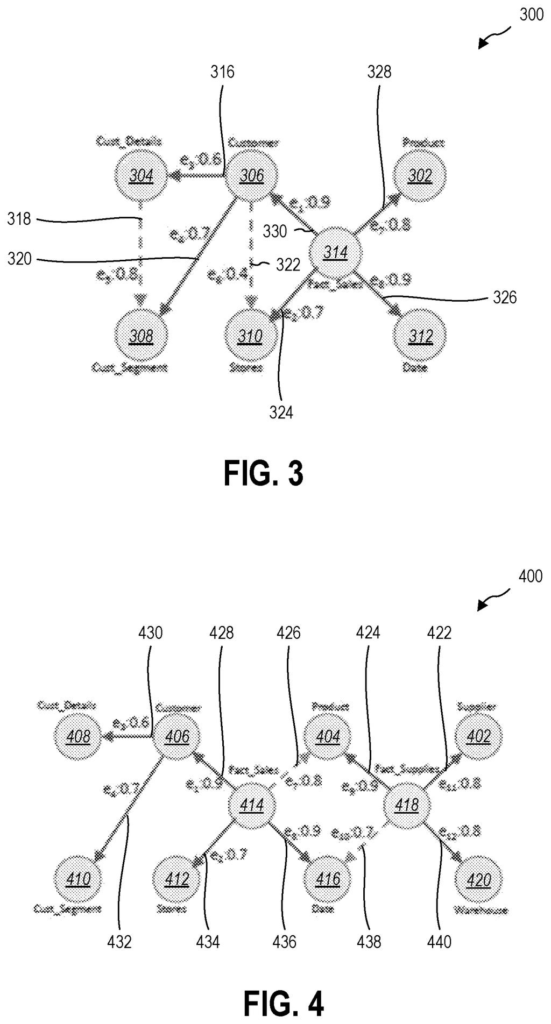
Microsoft's patent describes a system that automates that process. It studies a large collection of existing business intelligence models, the kind that analysts have already built and verified, and uses them to teach an AI what good table connections look like. When you hand the system a new set of tables, it predicts how they should be joined and draws the result as a diagram with each table as a dot and each connection as a line.
The idea is that the AI carries forward the collective knowledge of every model it trained on, so new analysts, or even experienced ones under deadline pressure, get a reasonable starting structure without starting from zero.
… training the machine learning model using the tables and the ground truth information to predict connections between pairs of tables and to output a graph with nodes of the graph representing each input table of the tables and edges of the graph representing the connections between pairs of tables.
Translation: The system learns from past reports to figure out how different data tables fit together in a visual network.
How the model learns table connections from past BI work
The patent describes a machine learning pipeline with two main phases: training and inference.
During training, the system ingests a large corpus of real, already-validated business intelligence (BI) models, the kind built in tools like Power BI or Analysis Services. It automatically extracts the underlying tables from those models and the ground truth information (meaning the correct, human-verified connections between those tables). That paired data, tables plus correct links, becomes the training set.
The machine learning model learns to score pairs of tables: how likely is it that these two belong together, and if so, how should they be joined? It captures signals like column names, data types, value patterns, and structural cues from the source models.
At inference time (when a user hands the system a new set of tables), the model predicts connection probabilities for every pair, then outputs a weighted graph. In that graph:
- Each input table is a node
- Each predicted relationship is an edge (a line between nodes)
- The edge weight reflects the model's confidence in that connection
The graph is both a machine-readable structure and a visual map the analyst can review or override.
The graph provides a visual representation of the business intelligence model with nodes of the graph representing each input table and edges of the graph representing weighted edges joining pairs of tables together.
Translation: It draws a map showing how various data sheets are related to each other.
What this means for Power BI and the people who build reports
For anyone who builds reports or dashboards in tools like Power BI, the most error-prone step is often the one before the fun part: connecting raw data tables into a coherent model. Getting that wrong means every chart built on top of it is also wrong. An AI that proposes a starting structure, trained on thousands of real-world examples, could cut that setup time significantly and catch relationships a tired analyst might miss.
Microsoft's ongoing push to embed AI into its data tools has already touched Excel, Copilot in Teams, and Azure. A system like this would fit naturally inside Power BI's model view, where analysts currently draw those table connections by hand. Whether it ships there or somewhere else, the target user is clear: anyone who touches data before it reaches a decision-maker.
This is the 26th Microsoft patent we've tracked in our Enterprise AI coverage since May, joining earlier work like one on clean video transfer and one on catching bad dubbing.
The system learns by studying existing business intelligence work, which means it also learns whatever bad habits, odd naming choices, or sloppy shortcuts were baked into that history. A new project gets the inherited mistakes of every old one.
A confident-looking wrong answer is often worse than no answer. An analyst who trusts a bad suggested connection between tables and builds a dashboard on top of it now has a hidden error to hunt down rather than a blank canvas to fill correctly.
The repetitive nature of most data work probably makes this trade worth it, but the critical design question the patent leaves open is whether the output is a suggestion or a verdict. That gap, reviewable recommendation versus assumed truth, will determine whether this helps analysts or just gives them new mistakes to clean up.
Get our take in your Top Stories
Liked this breakdown? Add Patentlyze as a preferred source on Google, and our plain-English take shows up more often in your Top Stories the next time Microsoft patent news breaks.
There are more where this came from
We read every patent application Big Tech publishes and send you the ones worth knowing. Plain English, free, every week.
The drawings
6 drawing sheets from US 2026/0260200 A1 · click any drawing to enlarge


Want this weekly breakdown for a company we don't cover? Patentlyze Pro →
Be the first to weigh in