
Sony Patents a System That Swaps Out Broken Virtual-Space Content on the Fly
Virtual content can break in ways users never see coming, a 3D object that won't load, an audio element the hardware can't play, a texture the device can't render. Sony is patenting a system that catches those failures before they reach you and drops in a working replacement.
What Sony's virtual-content fallback system actually does
Ever tried to open a file only to find half of it missing or broken? Now apply that frustration to a virtual world, where a broken object, sound, or visual effect could ruin the whole experience.
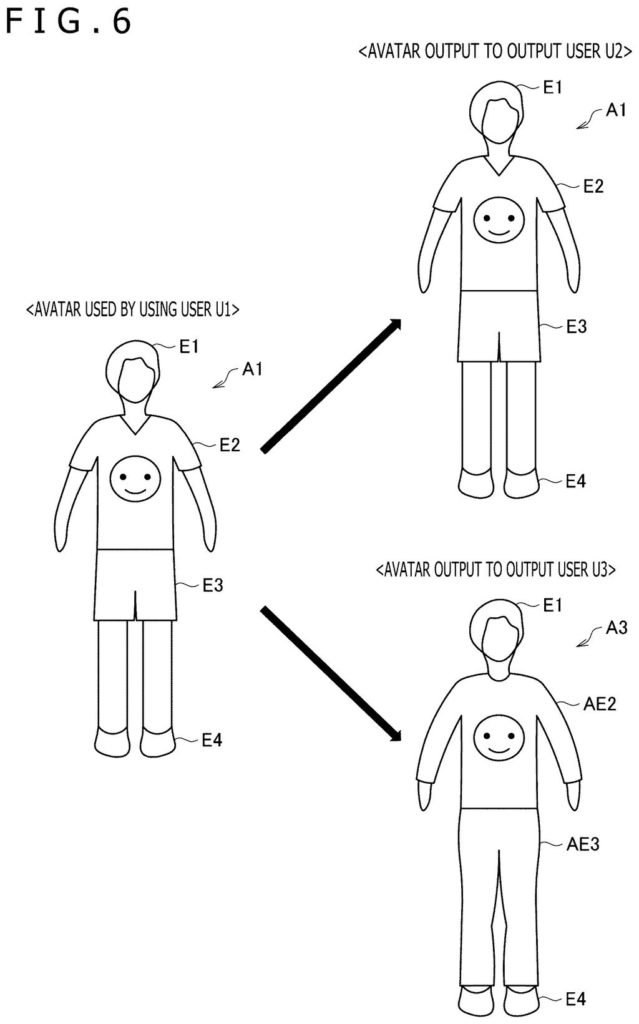
Sony's patent describes a system that checks every individual piece of virtual content against what the current device or context can actually handle. If something won't work, the system picks a suitable substitute from a list of backup options and uses that instead, all without you having to do anything.
Think of it like a website that automatically shows a smaller image when your connection is slow, except this works for 3D virtual environments. The goal is that your experience stays intact even when the original content hits a wall.
… a determination unit that determines whether or not at least one element of multiple elements constituting the content output in the virtual space meets the output condition, in reference to information related to the output condition …
Translation: It checks if any part of the virtual world is failing to meet the required standards.
How the device detects and replaces failing content elements
The patent outlines an information processing device built around three core jobs.
- Condition acquisition: the system collects the current "output conditions," meaning the rules or constraints that apply to how content can be displayed. These could include the capabilities of the hardware running the virtual space, regional restrictions, content-rating limits, or any other requirement the platform enforces.
- Determination: the system checks each individual element that makes up a piece of content, whether that is a 3D model, a texture, a sound clip, or a lighting effect, and decides whether it meets those conditions.
- Selection: if an element fails the check, the system pulls a replacement from a pre-defined pool of alternative element candidates and slots it in instead of the broken or incompatible piece.
The claim is broad enough to cover many scenarios: hardware that can't render a high-polygon model, a jurisdiction where certain content is restricted, or a display type that can't show a particular visual format. The patent does not tie itself to one specific device, so it could in theory apply to headsets, phones, or any platform running virtual-space content.
… a selection unit that selects, in a case of determination that at least one element of the multiple elements does not meet the output condition, an alternative element to be used instead of the element not meeting the output condition from alternative element candidates …
Translation: If something is broken, it automatically picks a replacement to swap in seamlessly.
What this means for users in virtual and mixed-reality spaces
For you as a user, the payoff is simple: you don't see a broken experience. No missing textures, no silent audio, no placeholder cubes where objects should be. The system is meant to handle the failure before it becomes your problem.
Sony's run of virtual-space infrastructure filings points toward building platforms that can serve content reliably across a wide range of hardware, from high-end headsets to budget devices. A fallback system like this is the kind of infrastructure work that makes content accessible to more people without requiring every creator to manually build ten versions of every asset.
That makes this Sony's 412th filing in our Sony coverage since May, a corpus that spans everything from a sleepwalking predictor to daisy-chained display chips.
The real-world payoff here is modest but concrete. Anyone who has watched a VR experience stall because one asset failed to load knows how disruptive that moment is. A system that silently swaps in a working alternative is a genuine quality-of-life fix, even if it sounds like plumbing.
The patent's broad language means it could apply to a lot of different failure modes, which is either a sign that Sony is building flexible infrastructure or a sign that the claim is wide enough to be difficult to enforce in a narrow sense. From a user perspective, what matters is whether the swap happens fast enough and whether the substitute is good enough that you don't notice.
This is infrastructure work, the kind that rarely ships as a feature you'd read about in a product announcement. But it's the difference between a virtual space that feels polished and one that exposes its seams every time a device can't keep up.
There are more where this came from
We read every patent application Big Tech publishes and send you the ones worth knowing. Plain English, free, every week.
The drawings
15 drawing sheets from US 2026/0260430 A1 · click any drawing to enlarge


Want this weekly breakdown for a company we don't cover? Patentlyze Pro →
Be the first to weigh in