
Apple Patent Would Redecorate Your Room Based on What You're Watching
Apple has patented a system that watches how long you focus on an object, figures out its mood or style, and then remakes the lighting, sounds, or visuals around you to match. It's the first step toward a room that responds to what you're looking at.
What Apple's engagement-driven ambience system actually does
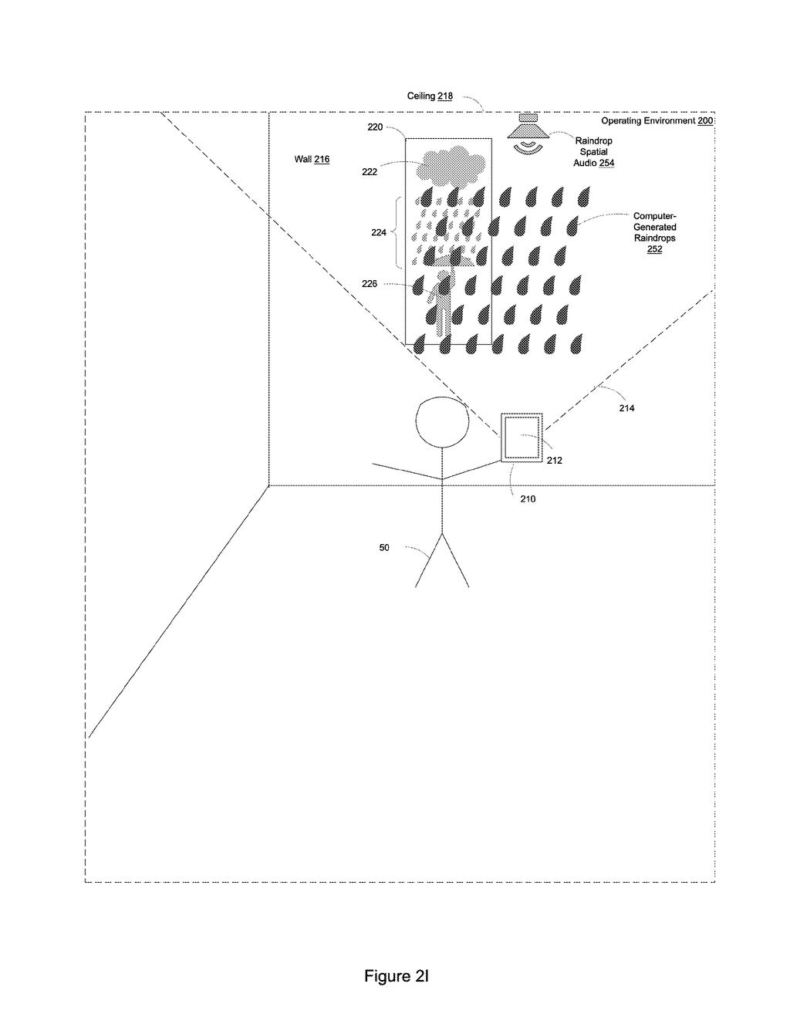
Imagine you're glancing at a houseplant sitting near your TV, and after a few seconds the room subtly shifts: the screen's colors warm up, the ambient sound drifts toward nature sounds, and the lighting follows. Apple's new patent describes exactly that kind of system.
The core idea is simple. A device watches what you're looking at and measures how engaged you seem. The longer and more attentively you focus on an object, the higher your "engagement score" rises. Once that score crosses a threshold, the device studies the object's character (its colors, category, mood) and builds a picture of an ideal ambience to go with it.
The result is that your environment changes to reflect the thing holding your attention. Apple's broader ambient-computing push suggests this fits into a wider effort to make devices that respond to context rather than just taps and commands.
determining an engagement score associated with a physical object within an operating environment, wherein the engagement score characterizes a level of user engagement with respect to the physical object; …
Translation: The system figures out how much attention you are paying to something in the room.
How the device scores attention and builds an ambience vector
The patent describes a three-step pipeline that connects attention, object analysis, and environmental response.
Step one: measuring engagement. The device tracks whether a user is looking at a specific object and for how long. An engagement score (think of it as a focus counter) builds up the more attention the user pays. Once that score hits a set threshold, the system moves to the next stage.
Step two: building an ambience vector. The device extracts semantic values from the object. That means it identifies meaningful attributes: What kind of thing is it? What colors define it? What mood or category does it suggest? A "semantic value" is simply a structured description that a machine can read and compare. Those values are combined into an ambience vector, which is essentially a directional target: a data point representing the desired feel of the environment.
Step three: presenting content. The system then changes something in the environment based on that vector. The patent is deliberately broad about what "content" means, so it could cover on-screen visuals, lighting signals, audio, or other output.
The claim covers both physical objects in the real world and objects visible on a display, which means the system could work on a phone, a smart display, or an AR headset.
… determining an ambience vector associated with the object and presenting content based on the ambience vector. The ambience vector represents a target ambient environment.
Translation: It calculates a new mood for the space and alters the surroundings to match it.
What this means for Apple's ambient computing push
For everyday users, the promise is an environment that updates itself based on what you're paying attention to, rather than one you have to configure manually. That reduces friction: instead of opening a menu to set a mood, you just look at something you like.
For Apple specifically, this patent sits at the intersection of vision technology (already present in the Vision Pro headset) and the broader idea of ambient computing, where devices respond to context. The system described here is software-driven and could theoretically run on hardware Apple already sells, which makes a real product closer than it might appear. Whether it ships as a standalone feature or disappears into a future OS update is the real open question.
Apple's 378th filing in our Apple coverage since May continues a thread around smarter UI timing, joining skipping pop-up menus and quieter notifications.
The shortest path from this patent to a shippable feature is not long in hardware terms. The engagement-scoring part needs a camera and a gaze-tracking system, both of which already exist in Apple Vision Pro. The ambience-output side is software: changing screen colors or triggering a HomeKit scene. No exotic sensors required.
The harder problem is the middle layer: reliably extracting meaningful semantic values from arbitrary real-world objects in real time. That requires strong on-device computer vision, which Apple has been steadily building. The patent doesn't solve that problem explicitly; it assumes it's solved.
So this reads as a feature Apple could ship on Vision Pro with a software update, given the vision-tracking hardware that's already there. On an iPhone or Mac, it would need either an outward-facing camera pipeline or depth sensing to work well. The concept is ready; the question is whether the surrounding infrastructure is mature enough on each device category to make it feel reliable rather than gimmicky.
Get our take in your Top Stories
Liked this breakdown? Add Patentlyze as a preferred source on Google, and our plain-English take shows up more often in your Top Stories the next time Apple patent news breaks.
There are more where this came from
We read every patent application Big Tech publishes and send you the ones worth knowing. Plain English, free, every week.
The drawings
22 drawing sheets from US 2026/0259602 A1 · click any drawing to enlarge


Show the other 14 sheets


Want this weekly breakdown for a company we don't cover? Patentlyze Pro →
Be the first to weigh in