
Samsung Patents a Lower-Power Way to Lock Onto GPS Signals Faster
GPS receivers have to search through dozens of possible frequencies at once just to find a satellite signal. Samsung's new patent describes a way to do that search in far fewer steps, cutting the processing load on the chip without meaningfully degrading accuracy.
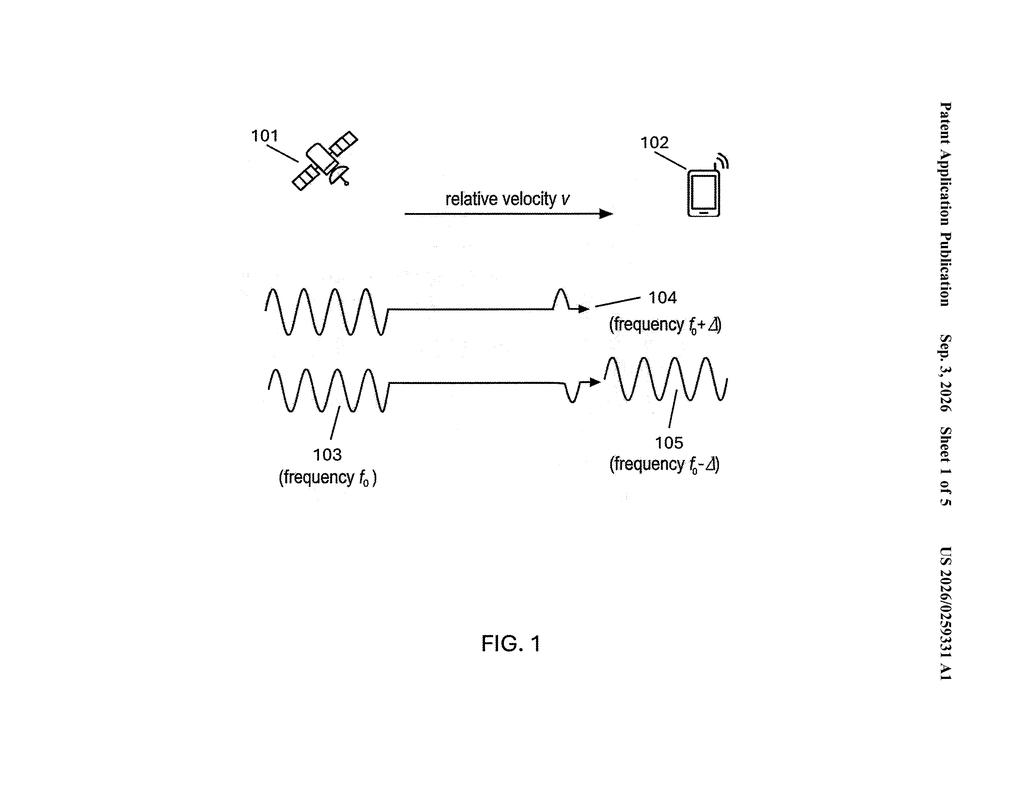
What Samsung's GPS acquisition shortcut actually does
Your phone's GPS has to figure out, almost instantly, which satellite is talking to it and at exactly what frequency, complicated because the satellite is moving and that motion shifts the signal's pitch (a phenomenon called Doppler shift). Today's chips handle this by running a separate calculation for every possible frequency, which takes a lot of power and processing time.
Samsung's approach bundles all those separate frequency guesses into a single composite signal, rotates the incoming GPS signal using that bundle all at once, then shrinks the data before doing the fine-tuned checks. The result is fewer total operations to get the same answer.
The practical payoff is that a GPS chip using this method could find a satellite lock more quickly while drawing less power, which matters most in small devices like earbuds, smartwatches, or fitness trackers where battery life is tightly constrained.
… rotating the signal using a composite signal formed by summing time sections of sinusoidal tones corresponding to the plurality of frequency hypotheses …
Translation: It combines multiple sound wave sections to shift the incoming signal at once.
How the composite tone rotation and downsampling work together
The patent describes a signal acquisition method aimed at GNSS receivers (the hardware inside your phone or wearable that decodes satellite navigation signals like GPS).
The core challenge is called Doppler uncertainty: because satellites move fast relative to Earth, the frequency of their signal shifts slightly depending on where the satellite is in its orbit. A receiver has to test many possible frequency offsets at once (called frequency hypotheses) before it can decode anything. Normally, each hypothesis requires its own independent computation chain.
Samsung's method collapses that by:
- Generating all the frequency hypotheses as individual sinusoidal tones (think of them as tuning forks, each vibrating at a slightly different pitch)
- Summing those tones into one composite signal
- Using that composite signal to rotate (mathematically reorient) the incoming raw satellite signal all at once
- Then downsampling (reducing the data rate, much like compressing an audio file) to shrink the dataset before further processing
- Applying individual phase corrections per hypothesis on the now-smaller dataset, then correlating each against the known reference code from the satellite
The maximum correlation value across all hypotheses tells the receiver which frequency is correct and what timing offset to use. Because the heavy rotation step happens once on a composite signal rather than separately for every hypothesis, the total arithmetic workload drops considerably.
… selecting a frequency hypothesis of the plurality of frequency hypotheses and a code phase based on a maximum value among the correlation outputs …
Translation: It picks the best match by looking for the highest overall signal strength score.
What this means for GPS chips in phones and wearables
For engineers designing GPS chips that go into small, battery-powered devices, computational complexity directly translates to milliwatts of power drain and millimeters of silicon area. A method that cuts the number of required operations at the acquisition stage means the chip can either lock onto a signal faster on the same battery budget, or maintain the same speed at lower power.
Samsung's run of GNSS and positioning-chip filings suggests the company is working to differentiate its own Exynos chip lineup in wearables and mobile devices. If the technique delivers on its SNR (signal-to-noise ratio) claims, meaning it finds satellites just as reliably as the more expensive approach, it could make its way into Galaxy Watch or similar hardware where a slower or more power-hungry GPS chip is a real competitive disadvantage.
Samsung's 150th filing in chip patents we've tracked since May follows stale data across chips and signals cut by watch hardware.
The design trade here is clear: you gain speed and lower power by doing the composite rotation step, but you're betting that combining all the frequency hypotheses into one signal before downsampling doesn't introduce distortion that corrupts the fine-grained phase corrections downstream. The patent's claim of 'minimal SNR loss' carries a lot of weight, and whether that holds across the full range of real-world signal conditions (weak urban signals, high-multipath environments, fast-moving devices) is exactly the kind of thing that separates a clever idea from a shipping product.
The downsampling step is where the tradeoff sharpens further. Shrinking the dataset early is efficient, but it risks discarding information you'd want for the per-hypothesis phase corrections. If the phase correction math is robust enough to survive that compression, the approach is genuinely useful. If not, accuracy degrades in the scenarios that matter most, like trying to get a lock indoors or while cycling through a city.
All told, this reads as a solid incremental engineering improvement rather than a rethink of how GPS receivers work. The value is in the arithmetic savings, and for a company trying to make competitive wearable chips, arithmetic savings at the acquisition stage are a real engineering goal.
There are more where this came from
We read every patent application Big Tech publishes and send you the ones worth knowing. Plain English, free, every week.
The drawings
5 drawing sheets from US 2026/0259331 A1 · click any drawing to enlarge


Want this weekly breakdown for a company we don't cover? Patentlyze Pro →