
Samsung Patents a Smartwatch Design That Stops Its Own Hardware From Cutting Off Wireless Signals
Fitting a reliable antenna inside a metal-framed smartwatch is harder than it looks, and the circuit board is often the culprit. Samsung's new patent solves that by carving out a deliberate non-conductive gap in the board right where the radio signal needs to escape.
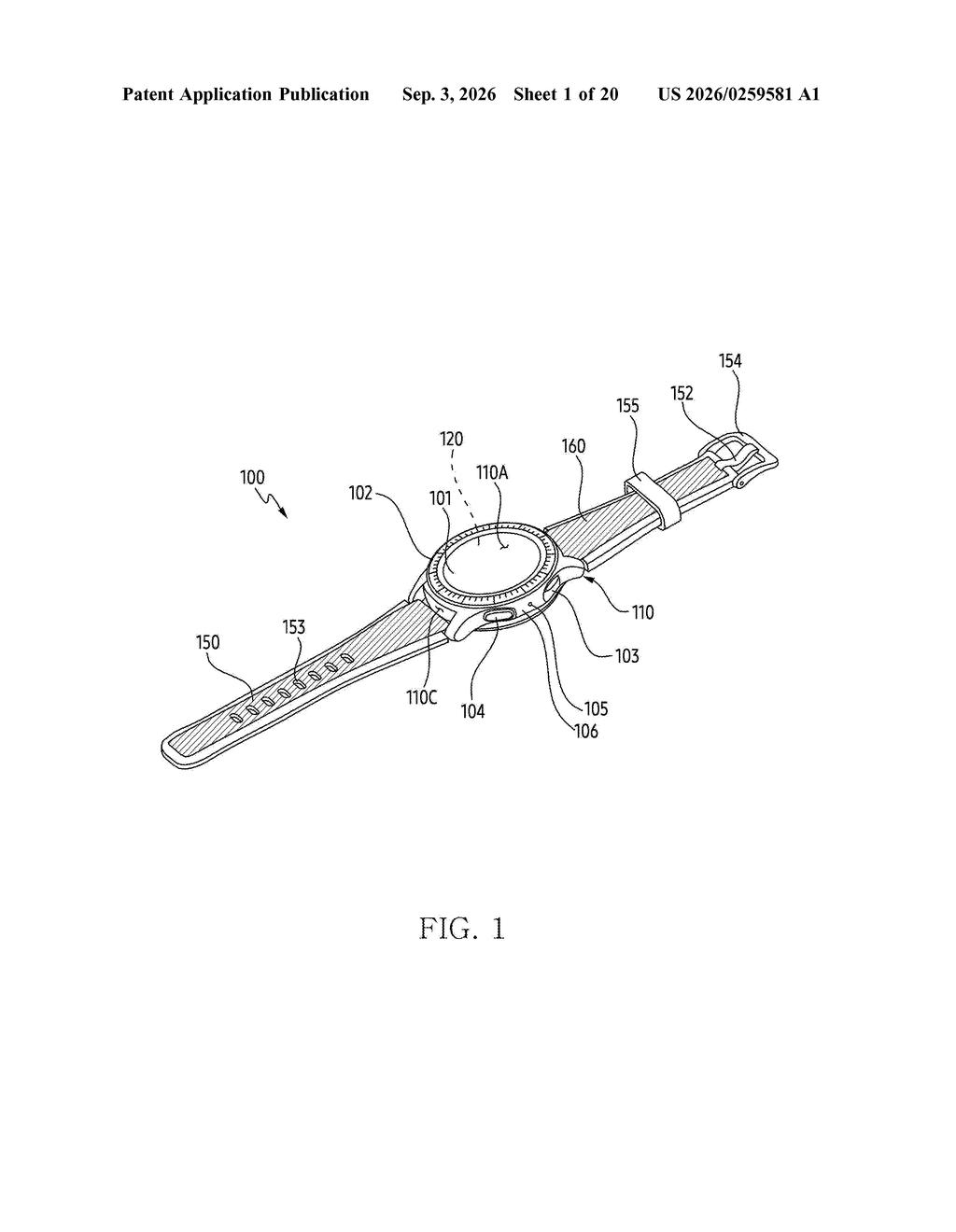
What Samsung's antenna gap design actually does for your watch
You're glancing at your smartwatch to catch a notification, and behind that slim screen, a radio signal is trying to squeeze out through a tiny gap between the metal rim and the display glass. That gap is your watch's antenna slot, and anything conductive sitting in front of it acts like a hand over a speaker.
Samsung's patent describes a circuit board designed with a specific non-conductive zone positioned exactly at that antenna gap. Instead of running solid copper right up to the edge, the board deliberately leaves an electrically neutral area aligned with the slot, so the radio signal can radiate outward without the board itself absorbing or scattering it.
The board also folds partly onto an internal bracket for structural support, keeping everything tight inside the housing. It is a quiet piece of engineering, but the payoff is a wearable that can maintain a stronger, more consistent wireless connection without making the device any thicker.
A wearable electronic device comprising: a metal frame; a display; a printed circuit board disposed to face an inner surface of the metal frame; and an electronic circuitry on the printed circuit board …
Translation: The watch packs a metal body with an internal circuit board sitting right behind it.
How the non-conductive PCB zone protects the antenna slot
The patent describes a rigid-flex printed circuit board (a board that has both stiff sections for mounting chips and flexible sections for routing around corners) inside a wearable with a metal frame and a display.
The board is split into two zones:
- First portion: a stiff section that sits between the inner wall of the metal frame and an internal bracket, carrying the electronic components on top of it.
- Second portion: an extension of the first portion that bends toward the display and rests on the side of the bracket for physical support.
The critical detail is in that second portion. A non-conductive portion is placed to align with the antenna slot, which is the narrow gap between the metal frame and the edge of the display. Metal and standard conductive copper traces on a circuit board can disrupt radio waves trying to pass through that gap, a problem called antenna detuning. By making part of the board electrically neutral at exactly that location, Samsung ensures the slot can function as intended.
The bracket provides mechanical support so the board does not flex or shift over time, which matters because any movement could change the geometry of that antenna gap and degrade signal performance.
… a non-conductive portion arranged with respect to a slot between the metal frame and a portion of the display, the slot used to radiate a signal to an external electronic device …
Translation: A tiny gap near the screen lets wireless signals pass through the metal housing without interference.
What this means for wearable antenna performance
Antenna design is one of the tightest constraints in wearables. Metal frames look premium and protect the device, but they also interfere with radio signals if the internal layout is not carefully tuned. Samsung's ongoing push in wearable hardware filings reflects how competitive the smartwatch space has become, where signal reliability during calls, health monitoring, and notifications is a real user differentiator.
For you as a user, a well-executed antenna design means fewer dropped Bluetooth connections to your phone and more consistent GPS or LTE performance on standalone watch models. This patent addresses a structural cause of those problems rather than patching it in software, which tends to produce a more reliable fix.
Samsung's 69th filing we've tracked since May, following dropping a link to save calls and faster Wi-Fi signal processing, adds another application to their 5G and network push.
The metal frame that makes a Samsung watch feel expensive also blocks wireless signals, so the design solves that problem by cutting a small non-conducting gap into the circuit board and aligning it with a matching slot in the housing. That alignment has to be exact, every single time, across millions of watches assembled on a factory line.
That precision demand is the real cost of this design. If the gap drifts even slightly, the watch either loses signal strength or loses the structural support holding the board in place, and there is no soft landing between those two failures.
For a watch where the metal case is a core part of what customers are paying for, the trade reads as defensible. Whether Samsung can hold that tolerance consistently at scale is the harder question, and the patent answers the engineering problem without making the manufacturing problem disappear.
Get our take in your Top Stories
Liked this breakdown? Add Patentlyze as a preferred source on Google, and our plain-English take shows up more often in your Top Stories the next time Samsung patent news breaks.
There are more where this came from
We read every patent application Big Tech publishes and send you the ones worth knowing. Plain English, free, every week.
The drawings
20 drawing sheets from US 2026/0259581 A1 · click any drawing to enlarge


Show the other 12 sheets


Want this weekly breakdown for a company we don't cover? Patentlyze Pro →
Be the first to weigh in