
Samsung Patents a Molded Waterproof Frame Built Around a Curved Display Edge
Keeping water out of a phone with a curved, edge-bending display is an engineering headache. Samsung's latest patent describes a molded frame that wraps around that bend to seal the gap without thickening the device.
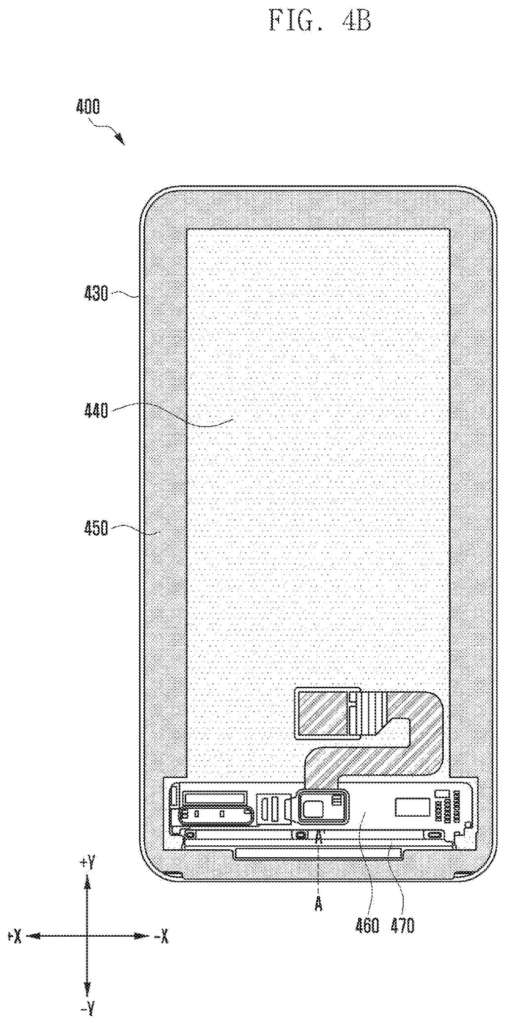
How Samsung's curved-screen waterproofing actually works
Today's phones with curved or folding screens have a structural problem: the point where the display bends is also the easiest place for water to sneak in. Traditional waterproofing materials work fine on flat edges, but a screen that curves around a corner creates a gap that's tough to seal reliably.
Samsung's patent describes a molding part, essentially a shaped plug of material, that sits along the edges of both the screen glass and the display panel inside. The clever bit is that this molding spans both sides of the display's bent end, one portion sitting toward the outside of the phone and one portion sitting toward the inside. It works in combination with a separate waterproof gasket tucked against the housing beneath it.
The result is a layered seal that accounts for the physical reality of a curved screen rather than pretending the corner doesn't exist. Whether that translates into a noticeably thinner or more water-resistant phone depends on how Samsung applies it in production.
… a molding part extending along peripheries of the window cover and the display and disposed on one surface of the waterproof member, wherein at least a part of the molding part may be disposed in one direction toward an outside of the electronic device and in another direction opposite the one direction based on the bending part of the display.
Translation: A molded piece wraps around the curved display edges and waterproof seal to protect the phone's sides.
How the molding spans both sides of the display's bent edge
The patent describes the internal anatomy of a phone (or similar device) where the display panel doesn't just sit flat; it has a bending part at one end, meaning the screen curves around the edge of the housing. That bend is a structural weak point for sealing.
The solution uses two cooperating layers:
- A waterproof member made of waterproofing material that runs along the perimeter of the housing on the surface facing the screen.
- A molding part that extends along the outer edges of both the window cover (the glass you touch) and the display panel underneath, sitting on top of that waterproof member.
The key engineering detail is that the molding part is positioned so that at least some of it extends in two opposing directions relative to the display's bending point: one portion toward the outside of the device, one toward the inside. This means the seal doesn't just cover one face of the bend; it brackets the curve from both sides.
Think of it like caulking a corner joint in two passes rather than one: the material bridges the angle rather than just sitting on one plane. The window cover and the housing together compress this assembly, holding everything in place.
What this means for slim, waterproof Samsung phones
Waterproofing ratings like IP68 matter to real buyers, and maintaining them gets harder as phone designs push screens to wrap around device edges. A seal that only works on flat surfaces becomes a liability as soon as manufacturers try to slim down bezels or introduce curved edges.
For Samsung, which sells a wide range of devices from budget to flagship (Samsung has been filing around display sealing and flexible-screen construction since at least 2023), a manufacturable solution to this corner-sealing problem could mean tighter waterproofing in thinner form factors. Whether this specific approach makes it into a shipping product is another question, but the underlying design challenge it addresses is real and affects almost every modern premium phone.
That makes this Samsung's 104th filing we've tracked in our display technology watchlist since May, adding to work like the two-step touch method and the handwriting-reading display.
Adding a molded ring that wraps around both sides of a curved display edge solves a real sealing problem, but it costs space. That corner of a phone is already one of the tightest spots to engineer, and pushing material outward in two directions at once means either a slightly thicker device or tighter tolerances on every surrounding component.
The tradeoff reads as reasonable if the mold can be kept thin enough, because a seal that fully covers the bend can still net out thinner than the gap a partial seal leaves behind. The patent gives no measurements, so whether the geometry actually works in the device's favor is an open question.
The deeper risk is consistency at scale. A mold that straddles a curved edge and hits a waterproof standard in a lab needs to do the same thing across millions of units with real-world variation in materials and assembly. That is the harder problem, and it is the one this document does not address.
There are more where this came from
We read every patent application Big Tech publishes and send you the ones worth knowing. Plain English, free, every week.
The drawings
19 drawing sheets from US 2026/0282259 A1 · click any drawing to enlarge


Want this weekly breakdown for a company we don't cover? Patentlyze Pro →