
Samsung Patents a Display That Doubles as a Wireless Charging Pad
What if your phone's screen could charge your earbuds just by setting them on top of it? A new Samsung Display patent describes exactly that, hiding wireless charging coils inside the layers of the display itself.
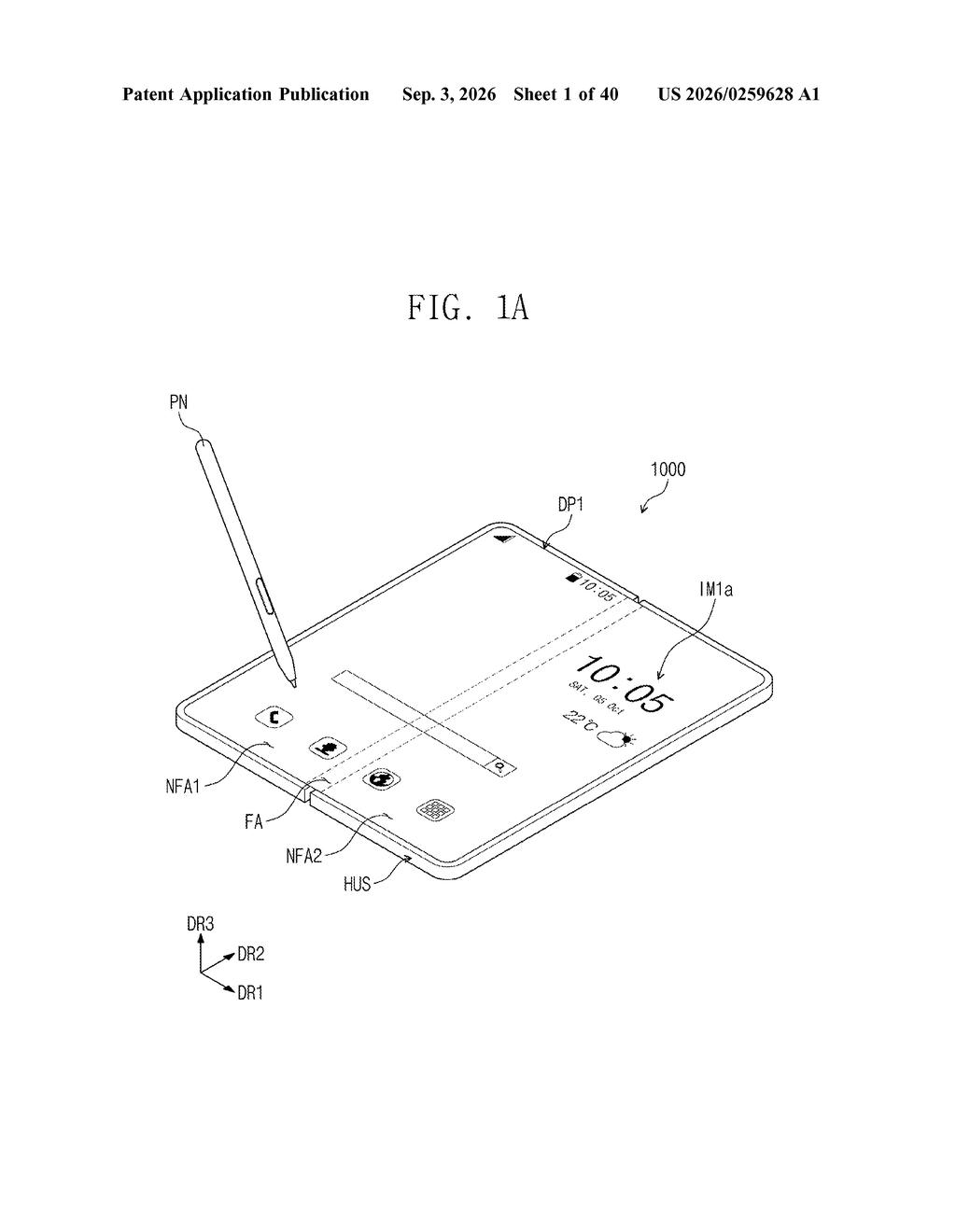
How Samsung's screen could charge your earbuds or watch
Ever set your phone face-down on a wireless charging pad and wished the process worked the other way around? Samsung is working on a screen that can do both jobs at once: display images and push power out wirelessly to whatever you rest on top of it.
The trick is a set of electrode lines woven into the display stack, sitting below the light-producing layer. These lines carry electrical signals timed slightly out of sync with each other, and that deliberate timing mismatch generates a magnetic field, which is the same basic principle used in every wireless charging pad you've ever owned.
The design is stacked so that the charging hardware doesn't interfere with touch input or the pixels above it. In theory, your phone screen becomes a charging surface, letting you power up earbuds, a smartwatch, or other small gadgets by simply placing them on the display.
… a charging electrode disposed below the light-emitting element and including a plurality of first line portions, wherein each of the first line portions overlap the data line in a plan view …
Translation: The screen contains a hidden charging grid placed underneath the display pixels.
How the phase-shifted signals create a magnetic charging field
The patent describes a display device with five main layers stacked in a specific order: a base layer at the bottom, then a data line (which carries pixel-drawing signals), then charging electrodes, then the light-emitting elements (the actual pixels), and finally an input sensor (the touchscreen) on top.
The charging electrodes are made up of multiple line segments, each one crossing over the data line when you look at the device from above. This overlapping layout lets the charging hardware share the same physical footprint as the display circuitry without needing extra space.
The clever part is how the charging field is generated. Two groups of electrode lines receive the same electrical signal, but the second group's signal is phase-delayed (meaning it arrives a fraction of a second behind the first). That offset between the two signals causes an induced magnetic field to form, which is the same electromagnetic phenomenon that lets wireless charging pads transfer power to a phone without touching it.
- The charging layer sits below the pixel layer, keeping it out of the light path
- The touchscreen sensor sits above everything, so touch input still works normally
- Phase-shifting the signals between electrode groups produces the outward magnetic field needed for power transfer
The charging electrode generates an induced magnetic field when a first one of the plurality of first line portions receives a first driving signal and a second one of the plurality of line portions receives a second driving signal whose is phase is delayed from the first driving signal.
Translation: It creates power by sending staggered electrical pulses through the wires.
What this means for cable-free device ecosystems
If this design reaches production, it would let a phone or tablet act as a reverse wireless charger without adding a separate coil to the device's back or sides. The display itself becomes the charging surface, which could free up internal space and reduce hardware complexity.
For everyday use, the most obvious application is charging small accessories like earbuds or styluses by resting them on the front of a phone or display. Samsung Display's run of integrated-sensor filings suggests the company is systematically pushing toward screens that handle more than just visuals, though turning a patent filing into a shipping product always involves years of engineering work that patents don't capture.
Samsung's 93rd filing we've tracked in our display technology watchlist since May adds to a run that includes a cable-reading screen and a light-sensing projector.
The underlying problem here is real: wireless charging accessories still need their own hardware, which means more components, more cost, and more failure points. Folding the charging coil into the display stack is a direct answer to that, and the approach is at least plausible given that inductive charging coils are already thin and flat.
That said, the engineering gap between a patent claim and a working product is significant. Display layers are extremely sensitive to interference, and adding a phase-shifted magnetic field generator into the stack without degrading image quality or touch accuracy is a non-trivial challenge. The patent describes the architecture but says nothing about how Samsung has solved those conflicts.
The problem this attacks is modest in scale. Reverse wireless charging from the front screen is a convenience feature, not a critical gap. Whether the engineering investment matches that level of payoff is an open question.
Get our take in your Top Stories
Liked this breakdown? Add Patentlyze as a preferred source on Google, and our plain-English take shows up more often in your Top Stories the next time Samsung patent news breaks.
There are more where this came from
We read every patent application Big Tech publishes and send you the ones worth knowing. Plain English, free, every week.
The drawings
40 drawing sheets from US 2026/0259628 A1 · click any drawing to enlarge


Show the other 32 sheets


Want this weekly breakdown for a company we don't cover? Patentlyze Pro →
Be the first to weigh in