
Qualcomm Patents a Boot System That Picks Its Own Power Lines
Every time your phone starts up, its chip draws power from a fixed set of lines, whether it needs all of them or not. Qualcomm wants that choice to be made on the fly, at the moment the chip actually boots.
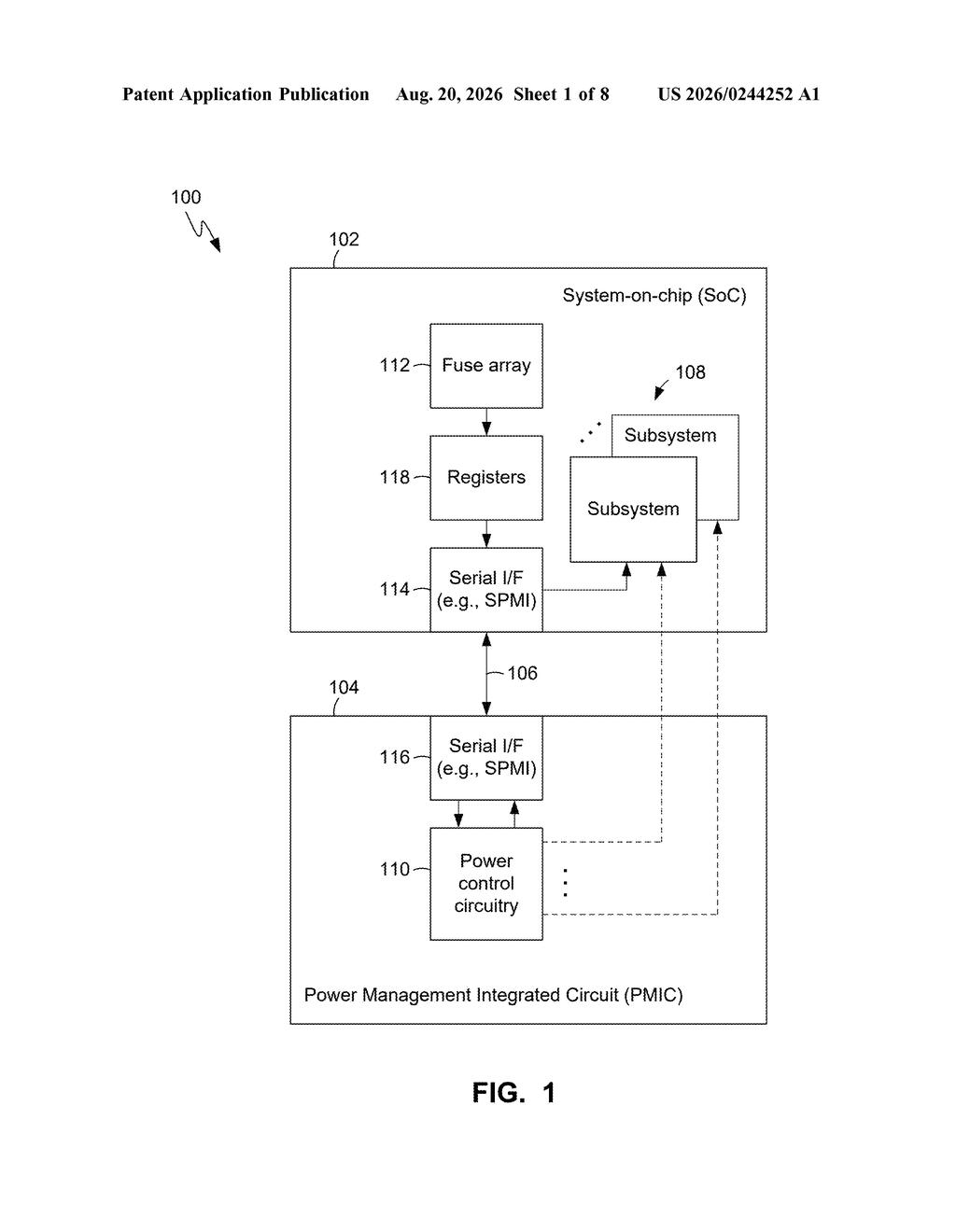
How Qualcomm's chip picks its power lines at startup
Most chips today are wired to specific power lines at the factory level, so when a device powers on, it draws from those lines regardless of what the device actually needs in that moment. Qualcomm wants to change that handshake between the chip and the component that manages its power supply.
With this approach, when your phone or tablet starts up, the main chip sends a message to the power management chip listing exactly which power lines it needs. The power manager turns on only those lines and sends a confirmation back. The processor then boots using only the power it actually asked for.
The result is a startup process that can adapt to different hardware configurations or power states without needing a separate chip design for each one. It's a small but meaningful shift toward chips that manage their own startup conditions rather than relying on fixed wiring decisions made well before a device ever reaches you.
sending, by control circuitry, boot rail information to a power management system, the boot rail information indicating one or more power rails of a plurality of power rails …
Translation: The system tells the power manager which specific electrical lines to turn on first.
Inside the SoC-to-PMIC handshake at boot time
The patent describes a dynamic power rail selection system that operates during the boot sequence of a System-on-Chip (SoC), the all-in-one processor found in smartphones, tablets, and similar devices.
At the center of the system is a two-way conversation between the SoC and a Power Management Integrated Circuit (PMIC), a dedicated chip that controls how power flows to different parts of the processor. Normally, which power lines (called power rails) get activated is decided at design time and stays fixed. Here, the SoC's control circuitry sends boot rail information, essentially a list of which rails to turn on, to the PMIC at the moment of startup.
The PMIC reads that list, activates only the specified rails, and sends an acknowledgement back to the SoC. The boot controller on the SoC waits for that confirmation before it starts the processing components that depend on those rails. The sequence looks like this:
- Power-up trigger fires (e.g., you press the power button)
- SoC sends boot rail information to the PMIC
- PMIC powers up the requested rails and acknowledges
- Boot controller starts the relevant processing components
The key word in the claim is dynamic: the selection happens at runtime, not at the circuit-board design stage, which means the same chip design can adapt its power configuration depending on context.
Power rails may be selected at system-on-chip (SoC) boot time using a handshake protocol between the SoC and a power management system …
Translation: The chip and the power supply negotiate how to start up using a digital handshake.
What this means for mobile chip power efficiency
Qualcomm supplies chips to most of the world's Android phones, so even an incremental improvement in how those chips start up can have a large cumulative effect on battery life, heat generation, and boot speed across hundreds of millions of devices. A system that avoids powering unnecessary rails at startup draws less current in those first critical milliseconds, which also reduces the electrical stress on battery cells over time.
There's also a design flexibility angle. If the same SoC can select different power configurations at boot, manufacturers can use one chip across product lines with different power budgets without spinning a new chip design for each. That kind of flexibility is valuable in a market where chip development costs are high and product variants multiply fast. This filing sits alongside other interesting tech patents in mobile chip power management, an area where incremental gains in startup efficiency compound across massive device volumes.
Qualcomm's 323rd filing we track since May joins earlier work on AR headset timing and faster chip memory math in our Qualcomm coverage.
When a chip starts up, it used to grab the same amount of power every single time, no matter what it actually needed. That forced manufacturers to build in extra headroom for the worst possible case, which wasted energy and added cost to every device they sold. Multiply that waste across millions of products and it becomes a serious, if invisible, expense.
The fix described here is to let the chip and the power-management component negotiate directly with each other at startup, in hardware. That is the right place to solve the problem, because the waste starts there. Nothing about the user experience changes, but the savings are real.
Get our take in your Top Stories
Liked this breakdown? Add Patentlyze as a preferred source on Google, and our plain-English take shows up more often in your Top Stories the next time Qualcomm patent news breaks.
There are more where this came from
We read every patent application Big Tech publishes and send you the ones worth knowing. Plain English, free, every week.
The drawings
8 drawing sheets from US 2026/0244252 A1 · click any drawing to enlarge


Want this weekly breakdown for a company we don't cover? Patentlyze Pro →
Be the first to weigh in