
Tesla Patents a Self-Driving Safety System That Reads Its Own Cameras for Blind Spots
When a self-driving car's cameras are blocked by rain, glare, or fog, the car needs to know it's flying blind. Tesla's new patent describes a system that continuously scores how well its cameras can actually see and uses that score to change how the car behaves.
What Tesla's vision-based fail-safe actually does
You're riding in a Tesla on full self-drive mode when a wave of road spray from a truck coats the front camera. The car doesn't know the lens is fouled unless something tells it. That's the gap this patent tries to close.
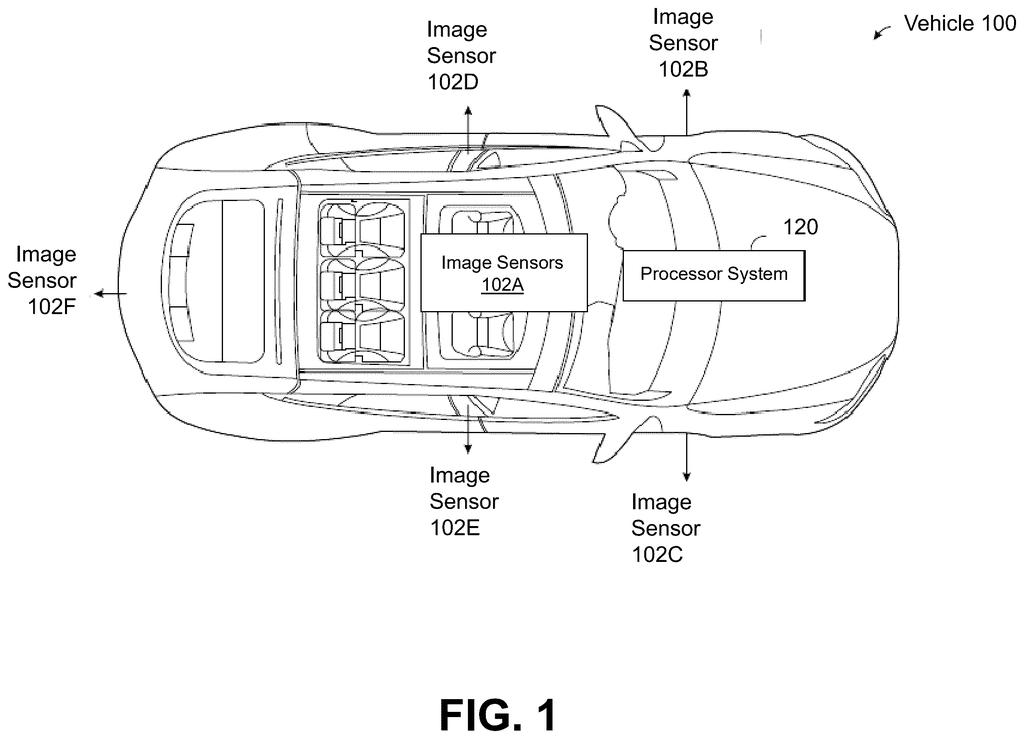
Tesla's proposed system pulls images from the cameras positioned around the vehicle, runs them through an AI model, and produces a "visibility value", basically a score for how clear or obstructed each camera's view is. If the score drops below a safe threshold, the system sends a control signal to adjust how the car operates. That might mean slowing down, pulling over, or handing control back to the driver.
The core idea is that the car monitors its own senses, not just the road. If a camera is blocked by mud, a smeared lens, dense fog, or direct sunlight, the system catches that and reacts. It's an extra layer of self-awareness meant to prevent the car from making confident decisions with bad data.
… executing, by the at least one processor, a machine learning model to determine a visibility value for at least a portion of the image data, the visibility value corresponding to a degree of visibility loss associated with at least the portion of the image data; …
Translation: AI checks camera feeds to figure out how badly vision is blocked.
How the model scores visibility and signals a correction
At its core, the patent describes a three-step loop running on the vehicle's onboard processors.
- Image retrieval: Cameras positioned around the vehicle feed image data continuously into the processor system.
- Visibility scoring: A machine learning model analyzes at least a portion of those images and produces a visibility value, a number representing how much visual clarity has been lost. Think of it as a confidence score for how trustworthy the camera feed is right now.
- Control adjustment: Based on that score, the system outputs a control signal that modifies vehicle behavior. The patent does not lock this to a single response; the adjustment could be speed reduction, a lane change, or initiating a handover to the driver.
The phrase "fail-safe corrective actions" in the title signals the intent: this isn't a primary navigation system but a watchdog layer. It's designed to catch the cases where the main autonomy stack might otherwise carry on as if everything is fine.
The machine learning model is the key component. Rather than using simple brightness thresholds or hard-coded rules ("if pixel variance drops below X, alert"), the model can generalize across different degradation types, from lens smear to fog to direct sun overexposure. That flexibility is what makes the approach more durable across real-world conditions.
The claim is intentionally broad, covering any sensor-equipped vehicle and any adjustment to operation, which gives Tesla wide room to apply the underlying idea across its fleet.
Systems and methods for fail-safe corrective actions based on vision information for autonomous driving.
Translation: Self-driving cars take safety measures when visibility drops.
What this means for autonomous driving in bad conditions
For self-driving systems, the biggest danger isn't an edge case the AI hasn't seen. It's an AI that doesn't know it can't see. A car that confidently navigates on a fouled camera is more dangerous than one that admits uncertainty and slows down. This patent targets exactly that failure mode.
For you as a passenger or a nearby driver, the practical promise is that a Tesla in autonomous mode becomes more likely to react cautiously when conditions degrade rather than barreling through on stale or corrupted visual data. Whether this system performs as described in real fog or spray conditions is a question for testing, but the design goal, making the car aware of its own perceptual limits, is the right one to pursue.
That makes this Tesla's 11th filing we've tracked since May in our self-driving sensing race watchlist, following applications like one syncing cameras and radar and one for emergency alerts.
The core tradeoff here is sensitivity versus permissiveness. A system tuned to react early will slow the car or hand back control during mild rain or glare, which frustrates drivers and teaches them to ignore the warnings. A system tuned to stay calm will sometimes wait too long, which defeats the whole point of a safety net.
Tesla is betting that a trained model can find that balance better than a fixed rulebook, and that is a reasonable bet. But it means the system is only as good as the examples it learned from, and a model trained mostly on sunny California roads may badly misread a Norwegian winter or monsoon-level spray.
The patent covers any camera and any kind of adjustment, which is smart legal drafting but leaves the hard question unanswered: how aggressively does the car actually intervene? That detail determines whether this is a meaningful safety layer or a cautious footnote, and it is nowhere in this filing.
There are more where this came from
We read every patent application Big Tech publishes and send you the ones worth knowing. Plain English, free, every week.
The drawings
11 drawing sheets from US 2026/0274304 A1 · click any drawing to enlarge


Want this weekly breakdown for a company we don't cover? Patentlyze Pro →