
Wing Aviation Patents a Way to Test Drone Battery Health During Normal Flights
A drone that doesn't know how much charge its battery can actually hold is a drone that might fall out of the sky mid-delivery. Wing Aviation has filed a patent for a system that figures out true battery capacity using the flights the drone is already making.
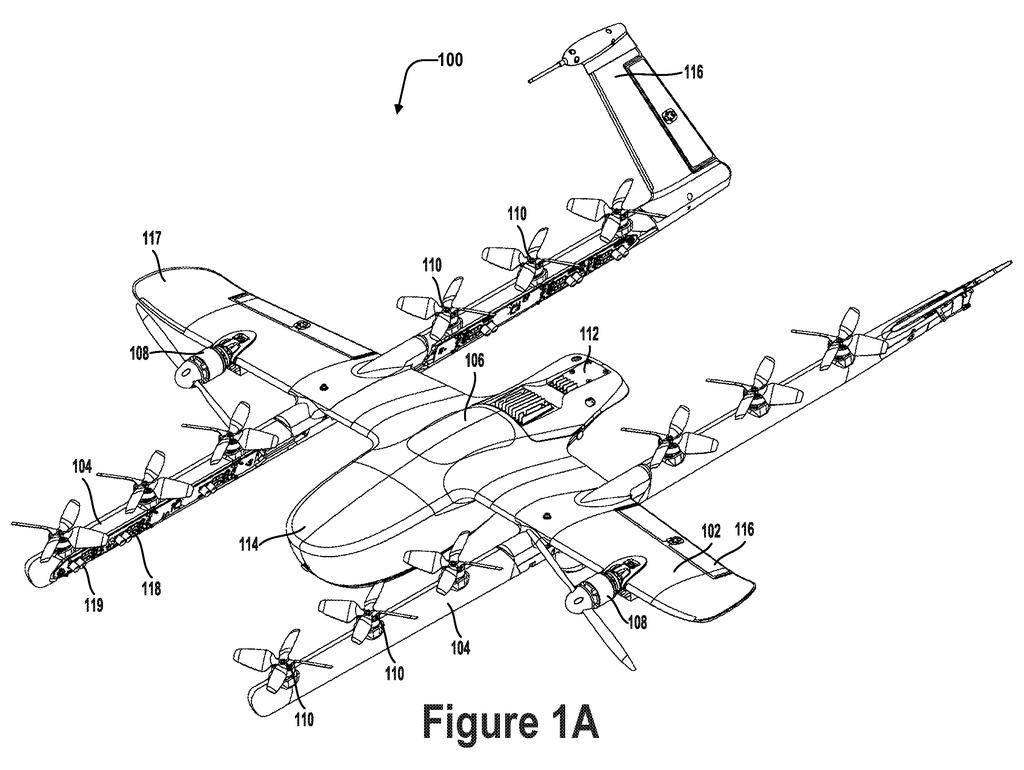
How Wing measures what your delivery drone's battery can actually hold
You're a drone delivery operator, and one of your aircraft just flagged a low-battery warning earlier than expected. Is the battery genuinely degraded, or is the capacity estimate just wrong? Right now, it's surprisingly hard to tell, because battery capacity slowly drifts as batteries age, and recalibrating usually means taking a vehicle offline.
Wing Aviation's patent describes a method that piggybacks on normal delivery flights. The drone does its job, and the system tracks how much electrical energy the battery outputs during that trip. If conditions are right, the drone then runs a short, controlled discharge session right after landing. Together, those two measurements give a precise picture of how much the battery can actually store.
Battery calibration becomes an automatic background task rather than a scheduled maintenance interruption. The drone never has to sit idle running a full drain cycle in the hangar.
discharging a battery of a vehicle from a charge threshold battery state to a post-task battery state by performing a travel task using the vehicle …
Translation: The drone uses up battery power during a normal delivery flight.
How the two-phase discharge calculation works
The method works in two connected phases tied to a single flight cycle.
Phase one is the travel task. The battery starts at a known upper charge threshold. As the drone completes a real delivery or transit flight, the system measures the first electrical output, which is the total energy drawn from the battery during that trip. When the flight ends, the battery is at what the patent calls a post-task battery state, somewhere below that starting threshold.
Phase two triggers only when a battery calibration condition is met. That condition is a built-in check: the system evaluates whether it has enough information to make the calibration worthwhile, for example whether the remaining charge window is large enough to produce a reliable reading. If the condition is satisfied, the drone performs a battery discharge task, a controlled operation (likely hovering or running onboard systems) that drains the battery down to a defined lower threshold. The system logs the second electrical output during that phase.
Capacity is then calculated by combining both outputs. Because the system knows the exact starting and ending battery states for each phase, it can reconstruct the full energy-storage picture without ever requiring a dedicated full-cycle test:
- Charge threshold state: the known starting point
- Post-task state: the battery level after the real flight
- Discharge threshold state: the floor after the calibration discharge
- Total capacity: derived from first output plus second output across the full range
… determining that a battery calibration condition has been met. The method further includes, based on determining that the battery calibration condition has been met, discharging the battery from the post-task voltage to a discharge threshold voltage by performing a battery discharge task …
Translation: The system checks if it is time to test the battery and drains it further if needed.
What accurate battery readings mean for drone delivery safety
For drone delivery to work at scale, operators need to trust their battery data. A battery that thinks it has 30% capacity remaining but actually has less is a safety risk, not just an efficiency problem. Wing's approach means calibration can happen continuously across a fleet's normal workload, without grounding aircraft for dedicated test cycles.
This matters most as drone batteries age. Lithium batteries lose capacity gradually, and factory-set estimates drift farther from reality over time. Wing Aviation's track record in autonomous vehicle operation patents suggests this is part of a broader push to make fleet management reliable enough for dense urban deployment, where a miscalculated battery estimate could mean a lost package or a crash.
This is the 696th Google filing in our Google coverage since May, adding to work like the split wireless charging design and the AI that grabs login codes.
The core idea here is pragmatic and well-scoped. Wing isn't proposing new battery chemistry or exotic sensors; the whole method runs on data the vehicle already generates during normal operation. That's a short path from patent to shipped feature, assuming the onboard energy-monitoring hardware is already capable of logging output with enough precision.
The tricky part is the calibration condition gate. The patent describes determining whether the condition has been met, but a lot rides on how that condition is defined in practice. If the window between post-task state and the discharge threshold is too small, or if real-world flight profiles are too variable, the capacity estimate could still carry meaningful error.
For a company operating delivery drones commercially, this kind of background health monitoring is a table-stakes infrastructure problem, not a headline feature. Getting it right makes everything else more reliable.
There are more where this came from
We read every patent application Big Tech publishes and send you the ones worth knowing. Plain English, free, every week.
The drawings
11 drawing sheets from US 2026/0280326 A1 · click any drawing to enlarge


Want this weekly breakdown for a company we don't cover? Patentlyze Pro →
Be the first to weigh in