
Qualcomm Patents a Way to Line Up Camera Images With Depth Sensor Data
When a car's radar or lidar says an object is in one place and the camera says it's somewhere else, bad things can happen. Qualcomm has filed a patent for a smarter way to reconcile those disagreements before they cause problems.
How Qualcomm's sensor fusion fix actually works
Modern driver-assistance systems and robots typically use two types of sensors at once: a camera that captures flat 2D images, and a depth sensor (like a lidar or radar) that maps out the world in 3D. Getting those two data streams to agree about where objects actually are is harder than it sounds, and small mismatches can lead to missed detections or incorrect object placement.
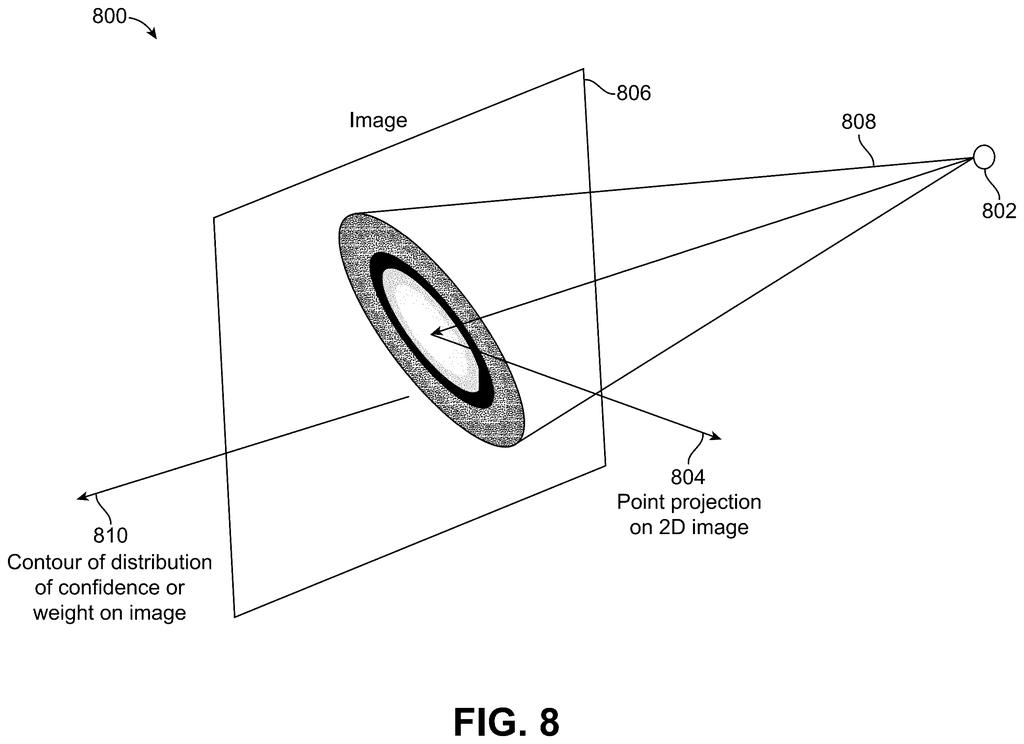
Qualcomm's patent describes a process that takes a point in 3D space (from the depth sensor), projects it onto a 2D image plane (like a camera frame), and then compares that projection to what the camera actually sees. If there's a gap between the two, the system calculates how confident it is in the result and uses a technique called cross-attention (borrowed from AI models) to produce a probability spread rather than a single, brittle answer.
In other words, instead of pretending the sensors always agree perfectly, the system outputs a best estimate plus a measure of how uncertain that estimate is. That uncertainty information can then flow downstream to help perception software make better decisions about what's around it.
project a 3D point in 3D data obtained from a first sensor to a projected 2D point based on a set of projection parameters; determine a filtered estimated set of projection parameters and a variance value for projecting the 3D point to the projected 2D point based on a comparison between the projected 2D point and a 2D point obtained based on 2D data from a second sensor; …
Translation: It maps depth data to a flat image and refines the alignment by comparing it with regular camera data.
How the cross-attention step handles measurement uncertainty
The patent covers a processing pipeline with four main steps:
- Projection: A 3D point from a depth sensor (say, a lidar return off the front of a car) is mathematically projected onto a 2D image plane using a set of calibration parameters (numbers that describe how the camera lens distorts and scales the world).
- Filtering and comparison: The system compares that projected 2D point to where the camera actually detects something. Using a filter (similar to a Kalman filter, a classic algorithm that blends noisy measurements over time), it produces a refined estimate of the calibration parameters and a variance value (a number capturing how uncertain the projection is).
- Cross-attention fusion: The refined parameters, the projected point, and the variance value are all fed into a cross-attention layer (the same kind of mechanism that powers modern large language models, used here to find relationships among the three inputs) to compute a distribution for the projected point. A distribution describes not just where the point lands, but the full range of plausible positions and how likely each is.
- Output: The system outputs both the best-guess 2D location and that distribution, giving downstream software a richer picture of what the sensors are reporting.
The key novelty is treating sensor calibration uncertainty as a first-class output rather than hiding it inside a single number.
What better sensor alignment means for self-driving systems
For self-driving vehicles and advanced driver-assistance systems, sensor misalignment is one of the most persistent sources of error. A system that knows it isn't sure about where an object is can pass that uncertainty along, so the broader decision-making software can slow the car down or flag the situation rather than act on a false-confidence reading.
This approach also has practical engineering value because sensors drift over time, get jostled on rough roads, or simply weren't calibrated perfectly from the factory. A pipeline that tracks and corrects for that drift continuously, rather than assuming static calibration, makes the whole system more reliable in the real world. Qualcomm's bet on automotive perception runs deep in its chip roadmap, and this patent fits that pattern.
Qualcomm's 39th filing we've tracked since July in our self-driving sensing race watch adds to a run that includes depth and object detection and camera self-correction via nearby cars.
When a self-driving car's depth sensor and camera disagree about where an object is, the vehicle can brake too late, drift into another lane, or flag a phantom obstacle. These disagreements happen constantly, not just in unusual conditions, and they remain one of the deepest reasons autonomous vehicles still struggle to earn public trust.
The core problem is that every time a 3D position gets translated into what the camera sees, small errors creep in and accumulate invisibly. Qualcomm's patent attacks this by having the system continuously measure and carry its own uncertainty through that translation, rather than assuming the handoff was clean.
For the automakers and software teams building on this hardware, that continuous self-awareness about error means far fewer confident wrong answers reaching the vehicle's decision layer, which is ultimately what separates a product that earns regulatory approval from one that does not.
There are more where this came from
We read every patent application Big Tech publishes and send you the ones worth knowing. Plain English, free, every week.
The drawings
10 drawing sheets from US 2026/0278815 A1 · click any drawing to enlarge


Want this weekly breakdown for a company we don't cover? Patentlyze Pro →