
Qualcomm Patents a Way for Self-Driving Cars to Find Each Other Using Shared Landmarks
Two self-driving cars spot the same traffic sign, building corner, or road marking, and that shared sighting is enough for each car to figure out exactly where the other one is, no GPS required.
How Qualcomm's shared-landmark trick lets cars locate each other
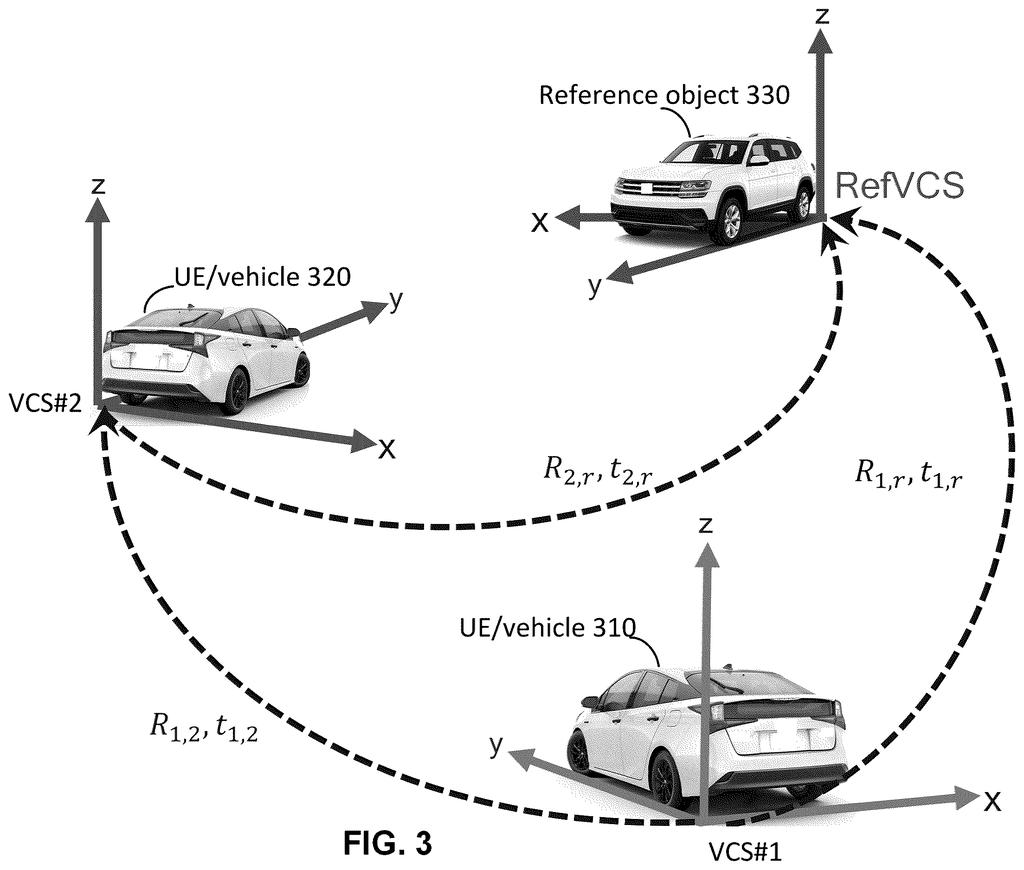
A traffic sign stands at a busy intersection, seen by two cars approaching from different directions. Neither car knows where the other one is, but both can see the sign.
That shared sighting is the core idea in a new Qualcomm patent. Each car uses its camera to figure out its own position relative to the landmark. One car then asks the other, over a wireless link, to share that measurement. With both measurements in hand, the first car can do the math and work out where the second car sits relative to itself, without needing a map or a GPS fix.
The result is a kind of instant spatial awareness between vehicles. Your car does not need to wait for a satellite signal or a roadside sensor. As long as two cars can both see something recognizable, they can orient themselves to each other in real time.
… determining a third relative pose estimate of the first vehicle with respect to the second vehicle using the first relative pose of the first vehicle and the second relative pose of the second vehicle …
Translation: The cars calculate their exact distance and angle from each other by comparing their positions relative to a shared landmark.
How the three-pose calculation actually works
The patent describes a three-step position calculation that Qualcomm calls relative pose estimation (pose meaning a vehicle's position and the direction it is facing).
- Step 1 (own pose): The first car's camera captures an image of a nearby object such as a sign, a building facade, or a road marking. Computer vision software measures the car's position and heading relative to that object, creating what the patent calls a reference coordinate system anchored to the landmark.
- Step 2 (peer pose): The first car sends a wireless request to a second car asking it to report its own position and heading measured against the same landmark. The second car responds with that figure.
- Step 3 (relative pose): Because both measurements use the same landmark as a common reference, the first car can subtract one from the other and get the direct spatial relationship between the two vehicles.
The landmark does not need to be specially installed infrastructure. Any object both cameras can independently recognize works, which is why the patent uses the word opportunistic: the system grabs whatever shared visual anchor happens to be available. The cars communicate through standard cellular vehicle-to-everything (V2X) links, meaning the hardware already exists in many next-generation vehicle platforms.
… transmitting to a second UE associated with a second vehicle, a request message configuring the second UE to transmit a response message indicating a second relative pose of the second vehicle with respect to the reference coordinate system …
Translation: One car asks another car to share its location data so they can both figure out where they are in relation to a landmark.
What this means for self-driving car coordination
Self-driving cars today rely heavily on GPS and pre-built high-definition maps to understand where they are relative to other vehicles. GPS can be unreliable in urban canyons, tunnels, or dense tree cover, and HD maps cost enormous amounts to create and keep current. A system that lets two cars triangulate their positions off a shared visual landmark sidesteps both problems, at least for the short-range coordination tasks that matter most: lane changes, intersection negotiation, and close-following platooning.
The approach fits squarely into the broader push to make vehicles smarter communicators at the edge, and Qualcomm's V2X chip business makes this a natural extension of existing hardware rather than a greenfield project. Qualcomm's autonomous-driving patents sit alongside similar work from automakers and chipmakers covered in this week's Big Tech patents, where the race to replace GPS-dependent positioning with camera-and-radio hybrids is picking up speed.
Claim 1 is written broadly enough to cover almost any shared visual object as the anchor, any wireless link for the peer exchange, and any downstream navigation use of the pose estimate. Granted as written, it would cover the basic act of two vehicles sharing camera-derived position measurements against a common landmark, which is a foundational step in cooperative driving. That scope could complicate patents from automakers or mapping companies building similar peer-ranging systems on V2X infrastructure. The open question is whether prior art in computer vision and vehicular communication already makes the combination obvious to an examiner.
There are more where this came from
We read every patent application Big Tech publishes and send you the ones worth knowing. Plain English, free, every week.
The drawings
6 drawing sheets from US 2026/0235411 A1 · click any drawing to enlarge


Want this weekly breakdown for a company we don't cover? Patentlyze Pro →
Be the first to weigh in