
Samsung Patents a Way to Collapse Your Phone's Alert Pile Into One AI Summary
Your phone gets twenty alerts from five apps in ten minutes, and you ignore all of them. Samsung's new patent describes a system that bundles related notifications together, ships them to a server, and replaces the whole pile with a single sentence.
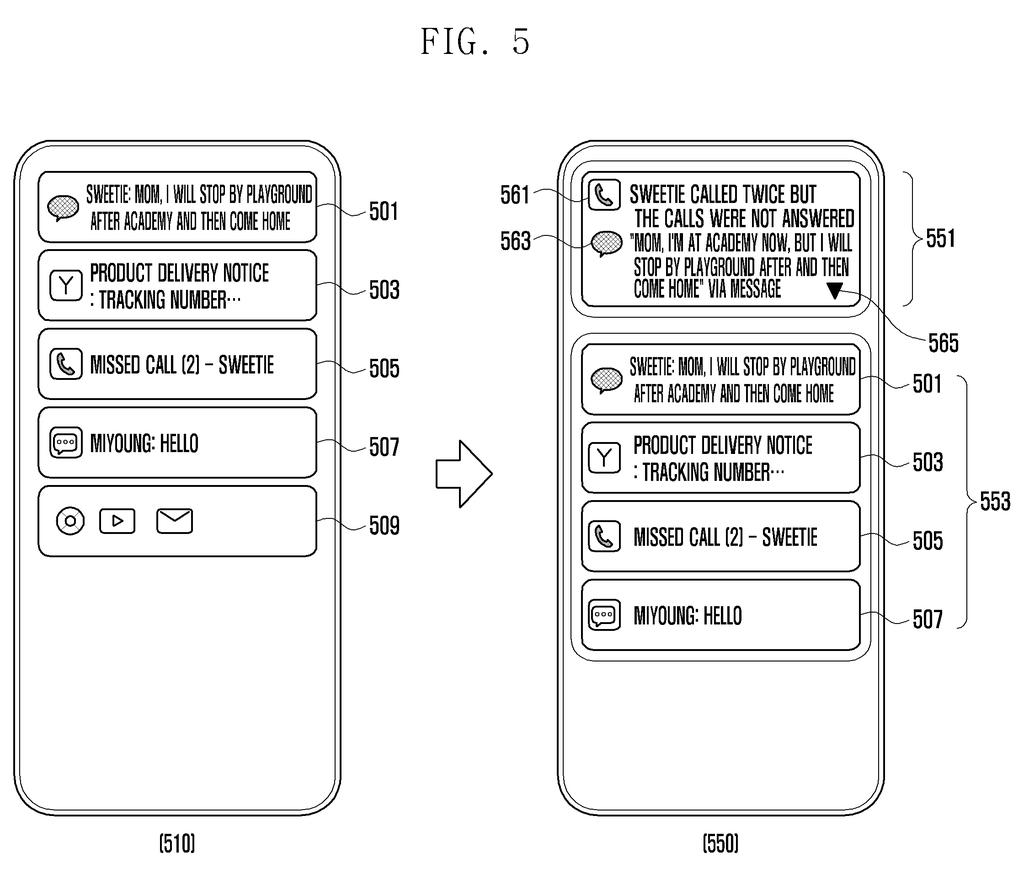
What Samsung's grouped notification summary actually does
A phone screen fills up with overlapping alerts: a shipping update, a follow-up shipping update, and a customer-service message from the same retailer, all stacked in a row. You probably swipe them away without reading any. Samsung's patent is built around that exact frustration.
The idea is that your phone spots notifications that belong together, sends them off to a remote server, and gets back one tidy summary notification instead. That one message replaces the originals on your screen. The server does the heavy lifting of reading the alerts and writing a condensed version, so your phone isn't doing that processing work locally.
The result, if it works as described, is a lock screen that shows you one meaningful line per topic instead of a column of near-identical alerts. You still get the information; you just get it in a form that's actually readable.
… identify a second notification capable of being grouped with the first notification, transmit the first notification and the second notification to a server through the communication module, acquire, from the server, a summary notification generated based on the first notification and the second notification …
Translation: The phone spots related alerts and sends them to a server so an AI can bundle them into one tidy recap.
How the device picks, ships, and replaces grouped alerts
The patent describes an electronic device (read: a phone or tablet) that monitors incoming notifications and identifies which ones belong in the same logical group. The grouping step happens on the device itself.
Once a group is identified, the device transmits those notifications to an external server through its communication module. The server generates a summary notification, a condensed, AI-written message that captures the substance of all the grouped alerts in one package. That summary is then sent back to the device and displayed in place of the originals.
The key architectural choice is that the summarization happens off-device. Rather than running a language model locally (which would drain battery and require on-device AI hardware), the phone acts as a thin client: it spots the group, delegates the writing task, and displays the result.
- Receive a notification and display it normally at first
- Detect a second notification that could be grouped with the first
- Send both to a server via the communication module
- Receive the server's summary and replace the originals on screen
What this means for Android notification overload
Notification fatigue is a real problem: studies consistently find that people stop reading alerts when too many arrive at once, which defeats the whole point of having them. A system that automatically condenses related alerts into one coherent summary could make phones meaningfully less stressful to use, without requiring you to manually set up any rules.
For Samsung, this sits inside the pattern in Samsung's on-device AI filings, where the company keeps finding ways to use server-side processing to deliver AI-powered features on phones that might not have the raw horsepower to run large models locally. Whether this lands in a Galaxy software update or stays on paper, the underlying approach, offload summarization, display the result, is a practical path that does not require a hardware upgrade on your end.
Samsung's 1257th filing we've logged since May in our Samsung coverage adds to a run that includes the tri-fold phone and the headset eye-fit check.
The core idea here is software all the way down: the phone groups related alerts together, sends them to Samsung's servers, and gets back a plain-language summary instead of a pile of individual notifications. Nothing in this patent requires new chips or new hardware, which means the shortest path to a real product is a software update.
The main thing that has to work first is the server connection. Every batch of notifications takes a round trip to Samsung's infrastructure before the user sees anything, which raises real questions about speed, reliability, and whether people are comfortable with their personal alerts leaving their phone at all.
If Samsung can answer those questions convincingly, this is a focused and practical idea that could arrive through an ordinary update rather than a new device launch. That makes it more likely to actually reach people, which is ultimately what determines whether a patent like this matters.
There are more where this came from
We read every patent application Big Tech publishes and send you the ones worth knowing. Plain English, free, every week.
The drawings
12 drawing sheets from US 2026/0281229 A1 · click any drawing to enlarge


Want this weekly breakdown for a company we don't cover? Patentlyze Pro →