
Google Patents a System That Sharpens Blurry Photos Based on Distance from Camera
Blurry photos are frustrating enough, but blurry photos where only part of the frame needed fixing are worse. Google's new patent describes a system that figures out how far away subjects are before deciding how to sharpen them.
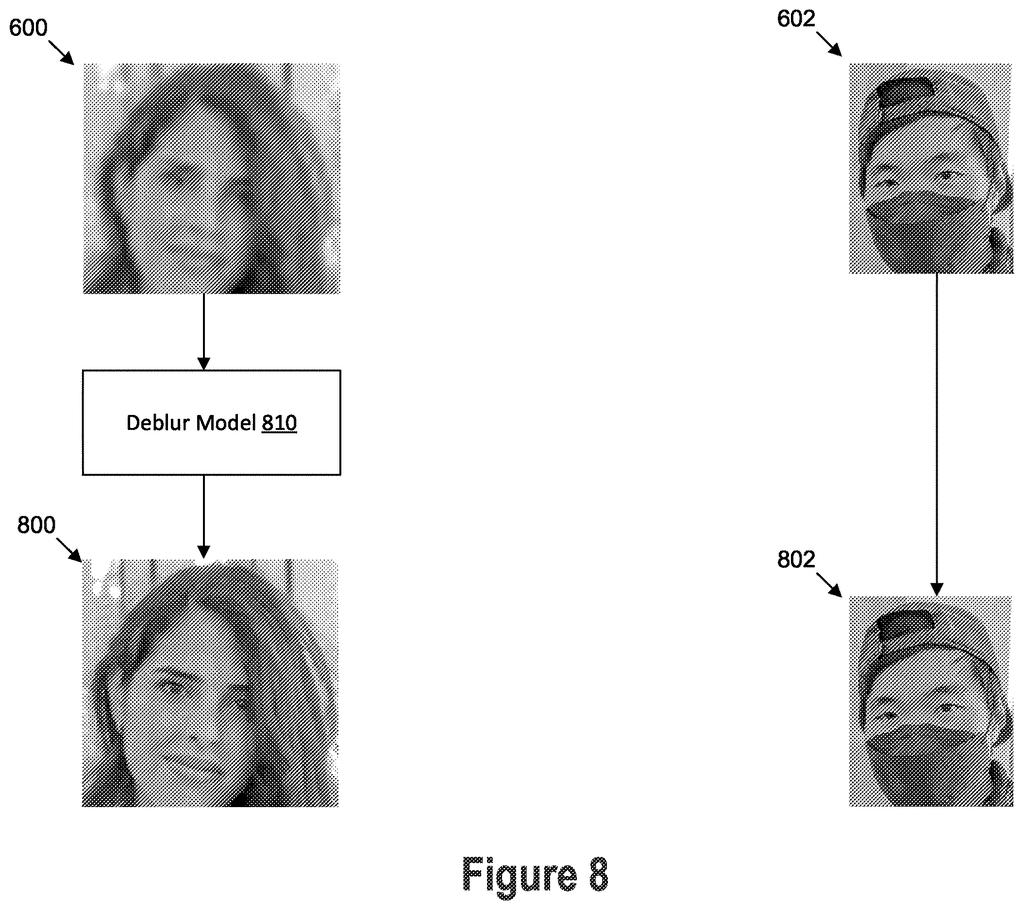
How Google's depth-based deblur actually fixes your photos
A phone camera snaps a shot of a moving child at a birthday party. The background tablecloth is also slightly blurred. The child and the tablecloth are blurry for completely different reasons, at completely different distances, yet most sharpening tools treat them exactly the same.
Google's patent describes a system that first identifies what in a photo is worth fixing, then measures roughly how far away each important area is, and then chooses a different sharpening tool for each depth layer. A subject close to the camera might need one kind of correction; a detail further back gets a different treatment.
The result is a photo where the sharpening feels natural rather than over-processed, because the system matched its approach to the actual physics of why each part of the image went blurry in the first place.
… determining depth information for the at least one pixel area; based on the depth information for the at least one pixel area, selecting at least one deblur model from a plurality of deblur models to apply to the at least one pixel area …
Translation: The system figures out how far away objects are so it can pick the right sharpening filter for them.
How the system picks a deblur model per depth layer
The patent describes a multi-stage image-processing pipeline for deblurring (removing unwanted blur from a photo).
First, the system receives an image from a sensor and identifies regions of interest, specific pixel areas that contain something worth sharpening, like a face, a subject in motion, or a key object. This step stops the system from wasting processing on unimportant parts of the frame.
Next, it determines depth information for each of those identified areas, essentially, an estimate of how far from the camera each region sits. Modern phone cameras already collect depth data via dual-pixel sensors or computational depth-estimation (software that infers distance from focus cues and lens geometry).
Finally, and this is the core claim, the system selects a specific deblur model from a library of pre-trained models based on that depth reading. Different models are tuned for different blur profiles, motion blur up close behaves differently from shallow-depth-of-field blur on a background subject. By routing each pixel area to the model best suited to its depth, the system avoids the over-sharpening artifacts that a single one-size-fits-all approach tends to introduce.
… applying the selected at least one deblur model to determine a deblurred image comprising the at least one pixel area, where the at least one pixel area is deblurred based on the depth information.
Translation: It sharpens specific parts of the picture using the distance data it collected.
What this means for phone cameras and computational photography
For everyday smartphone photos, this approach addresses a real and visible problem: sharpening filters that make a foreground subject look artificially crunchy while leaving a slightly blurry background looking worse than before. Depth-aware processing could make automatic sharpening feel far less heavy-handed.
For Google's Pixel camera line, which already leans on computational photography tricks like Night Sight and Photo Unblur, a depth-matched deblurring step could tighten up the one area where post-processing often goes visibly wrong. the pattern in Google's computational photography filings suggests the company keeps stacking these targeted fixes, building a deeper stack of specialized models rather than one general-purpose tool.
Google's 56th filing we've tracked since May in the AI photo editing race follows a text-driven photo editing system and a faster image compression approach.
Blur is one of the most common reasons a photo ends up in the trash. Motion blur, camera shake, subject distance, and lens physics all create different kinds of blur, and the fact that existing tools often treat them identically is a genuine failure of current systems.
This patent's depth-routing idea is a sensible match to the actual size of that problem. Selecting the right sharpening model for the right distance layer is not a dramatic leap, but it addresses something real. A single badly sharpened portrait can ruin an otherwise good photo.
The approach does depend on having reliable depth data and a well-curated library of per-depth models, which requires significant training and tuning work behind the scenes. Whether the perceptual improvement is large enough to notice in everyday use is the real open question, and a patent cannot answer that.
There are more where this came from
We read every patent application Big Tech publishes and send you the ones worth knowing. Plain English, free, every week.
The drawings
10 drawing sheets from US 2026/0278751 A1 · click any drawing to enlarge


Want this weekly breakdown for a company we don't cover? Patentlyze Pro →
Be the first to weigh in