
Samsung Patents a Chip That Cuts Power Use by Slowing Down During Idle Memory Tasks
Every time your phone's memory chip is busy working through a command, the controller talking to it is still running at full speed, burning power for no reason. Samsung's new patent describes a fix: drop the clock speed when memory is busy, and ramp it back up the moment it's ready.
How Samsung's clock-switching memory idea saves power
Imagine your phone's processor is like a manager who keeps checking in on an employee every second, even when that employee is clearly head-down in a long task and won't be ready to report back for a while. All that checking-in burns energy for nothing.
Samsung's patent tackles exactly that scenario inside your device's memory system. When your phone sends a command to its memory chip, that chip raises a little flag that says "I'm busy." Under this design, the memory controller sees that flag and dials its own internal clock speed down to a lower, power-sipping rate. It's not doing anything useful at full speed anyway.
The moment the memory chip finishes and drops that busy flag, the controller ramps the clock back up to full speed so it's ready to send the next command without delay. The whole handoff is automatic, with no manual tuning required.
How the controller reads busy signals to shift clock speed
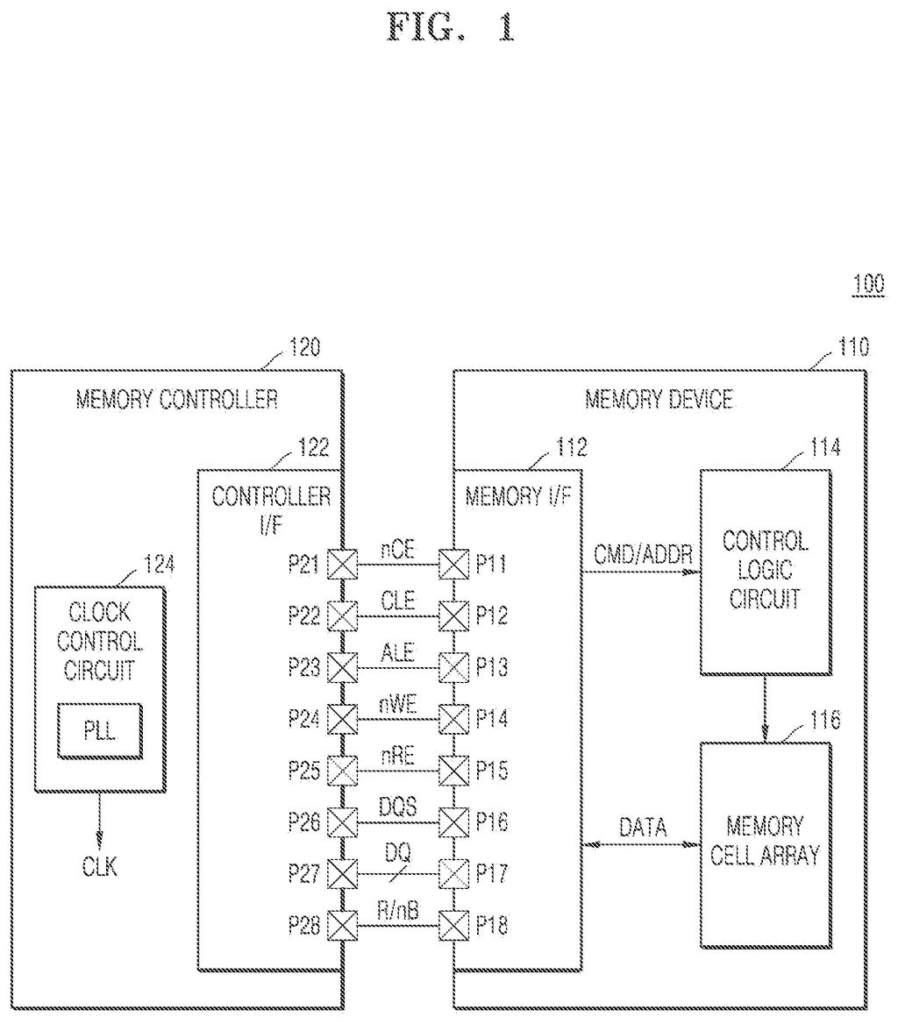
The patent centers on a memory controller, the chip that acts as the go-between for a processor and the actual memory storage. When the controller sends a command to the memory device, it watches for a status signal (in many memory standards, called a Ready/Busy pin) that the memory chip drives high to say "I'm occupied."
On seeing that signal asserted (set active), the controller switches its own clock to a lower frequency. Because clock speed is one of the biggest drivers of power consumption in digital chips, running at a lower frequency directly reduces how much energy the controller burns during the waiting period.
When the memory device finishes its internal operation and de-asserts the status signal (returns it to the ready state), the controller automatically switches back to the higher clock frequency. The design handles this through a clock-switching circuit that can change frequencies in response to the status signal, without needing the main processor to intervene.
The patent covers the controller itself, the memory device that drives the status signal, the combination of the two as a system, and the method as a process that any compatible hardware could implement.
What lower memory power draw means for phones and servers
For smartphones and tablets, memory system power is one of the less obvious drains on battery life. A controller that runs at full clock speed even while waiting on slow memory operations is wasting energy on idle cycles. A design that cuts that waste automatically, across every busy-wait period, could add up to meaningful real-world battery savings without any change to how apps behave.
For servers and storage systems, where thousands of memory operations happen per second, the power savings per chip are small, but the aggregate across a data center rack matters. This is a low-drama, infrastructure-level improvement: not a feature you'd ever see advertised, but exactly the kind of efficiency gain that compounds across every device that ships with it.
Samsung's 51st filing we've tracked in the AI chip wars since June follows work like dedicated AI data storage and a two-stage sentence-skipping reader.
The core idea here is straightforward: when a memory chip is busy doing its own work, the controlling processor dials down its clock speed, then ramps back up when the memory is ready again. That signal about whether memory is busy or ready already exists in common memory standards, so nothing new has to be invented or manufactured to make this work.
The shortest path to a shipping product is a design update, not a factory change. No new materials, no new fabrication process, just a circuit that watches an existing signal and adjusts a clock accordingly. That is about as close to ready as a patent idea gets.
The document does not quantify how much power this actually saves, which is the honest remaining question. But the mechanism itself is simple enough that it could appear inside a future chip without requiring any announcement at all.
There are more where this came from
We read every patent application Big Tech publishes and send you the ones worth knowing. Plain English, free, every week.
The drawings
21 drawing sheets from US 2026/0279420 A1 · click any drawing to enlarge


Want this weekly breakdown for a company we don't cover? Patentlyze Pro →