
Sony Patents a Light-Based Touch Sensor to Give Robot Hands a Finer Sense of Feel
Teaching a robot hand to feel the difference between gripping an egg and a wrench is one of the hardest problems in robotics. Sony's new patent attacks it with light.
What Sony's optical force sensor actually does for robots
You're watching a robot arm try to pick up a paper cup. It either crushes it or drops it, because it can't quite tell how hard it's pressing. That gap between "too much" and "too little" is exactly what force sensors are supposed to solve, and Sony thinks it has a better way to build one.
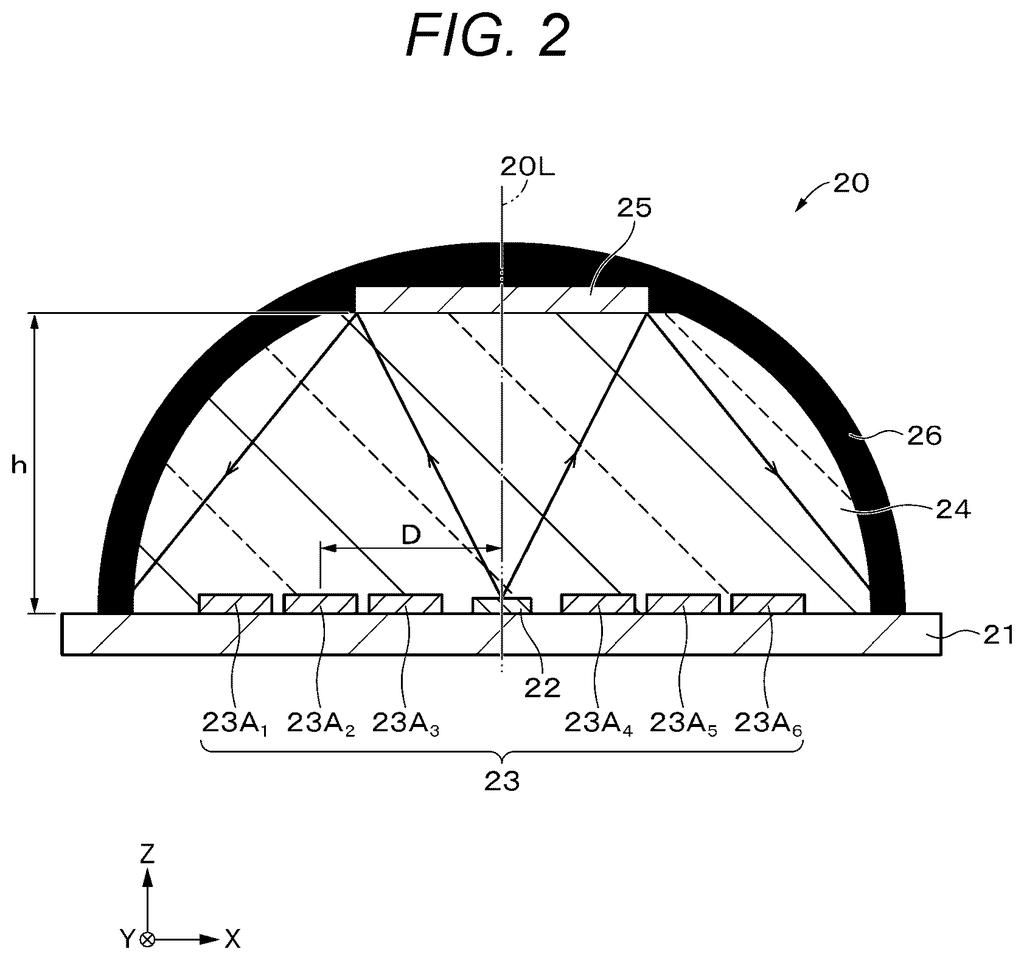
The idea is to measure pressure using light instead of traditional electrical strain gauges. A small elastic (squeezable) block sits inside the sensor. When something presses on it, the block deforms slightly, shifting a mirror above it. Rows of tiny light detectors beneath the mirror track exactly how far and in which direction that mirror has moved, translating the shift into a precise force reading.
By arranging four or more detectors in each of two directions, the sensor can capture a much wider range of forces, from a feather-light touch to a firm grip, without losing accuracy at either end. That combination of wide range and high sensitivity is hard to achieve with older sensor designs.
a light receiving unit group; a reflection unit provided above the light receiving unit group; and an elastic body provided between the reflection unit and the light receiving unit group …
Translation: It uses a bouncy layer sandwiched between a mirror-like reflector and a group of light sensors to measure touch.
How light bounces to measure pressure from any angle
The patent describes a force sensor built around three stacked layers. At the bottom sits a grid of photodetectors (light-measuring chips), arranged in two perpendicular rows, at least four units along each axis. In the middle is an elastic body, essentially a small block of compressible material. On top is a reflective surface that bounces light back down toward the detectors.
When a force pushes on the top of the sensor, the elastic block deforms. That deformation tilts or shifts the reflective surface above. Because the detectors are spread across two axes in a cross-shaped grid, they can measure how much light lands on each one. A shift in the light pattern tells the system both the magnitude (how hard) and the direction (which way) of the applied force.
The key claim is the grid layout:
- Four or more detectors along the X-axis
- Four or more detectors along the Y-axis
- Together they allow fine-grained mapping of force distribution across the sensor surface
Using more detectors per axis is what gives the sensor its wide dynamic range (meaning it can handle both very small and very large forces accurately). Optical sensing also avoids some electrical noise issues that can plague conventional piezoelectric or strain-gauge designs.
… four or more first light receiving units arranged in a first direction and four or more second light receiving units arranged in a second direction orthogonal to the first direction …
Translation: Sensors are lined up in a grid pattern crossing at right angles to pinpoint the exact direction of a force.
What better robot touch sensitivity means in practice
Robot hands are only as useful as their sense of touch. Without accurate force feedback, a robot can't reliably handle fragile or irregularly shaped objects, which keeps automation out of tasks like food handling, medical assistance, and fine assembly work. A sensor that captures both light touches and strong grips with high accuracy directly expands what robot hands can do in the real world.
Sony's run of robotics and sensing filings fits a broader push by the company into physical AI systems. For you as a consumer, better force sensing in robot hands is the step that eventually separates useful household robots from expensive toys that knock things over.
Sony's eighth filing since July in our robot grasping and movement watchlist builds on one about push-and-yield arm control and one combining touch and distance sensing.
The problem here is real and the cost of getting it wrong is high. In industrial robotics alone, poor force sensing means wasted product, broken parts, and tasks that still require human hands. The optical approach Sony is filing around is a credible engineering response to a stubborn limitation in how current sensors trade off range against sensitivity.
That said, this is a component-level patent, not a finished product claim. The jump from a clever sensor design to a robot hand that actually uses it reliably in messy, real-world conditions is enormous. The sensor geometry described is novel enough to be interesting, but its practical edge over existing optical and capacitive force sensors won't be clear until it shows up in hardware.
Still, the problem it targets, giving robots a believable sense of touch, is one of the few remaining bottlenecks before robotic manipulation becomes broadly practical. A filing aimed squarely at that bottleneck deserves more attention than it will probably get.
There are more where this came from
We read every patent application Big Tech publishes and send you the ones worth knowing. Plain English, free, every week.
The drawings
41 drawing sheets from US 2026/0276461 A1 · click any drawing to enlarge


Want this weekly breakdown for a company we don't cover? Patentlyze Pro →
Be the first to weigh in