
Waymo Patents a System That Decides Which LIDAR Sensor Data to Throw Away
Self-driving cars generate enormous amounts of sensor data every second, and not all of it is worth keeping. Waymo has filed a patent for a system that figures out, on the fly, which chunks of that data can be safely discarded without putting anyone at risk.
What Waymo's LIDAR data-pruning system actually does
A self-driving car's LIDAR sensor works by firing thousands of tiny laser pulses per second and measuring how long each one takes to bounce back. That produces a constant flood of data points representing every object around the vehicle, from nearby pedestrians to distant buildings, every single moment the car is moving.
The problem: transmitting and processing all of that data is expensive. Some of it describes things that simply don't need full attention right now, like an empty patch of road far ahead or a static guardrail the car has already mapped. Waymo's patent describes a system that decides which data points to skip, either by throwing away readings after the fact or by not firing the laser in that direction at all.
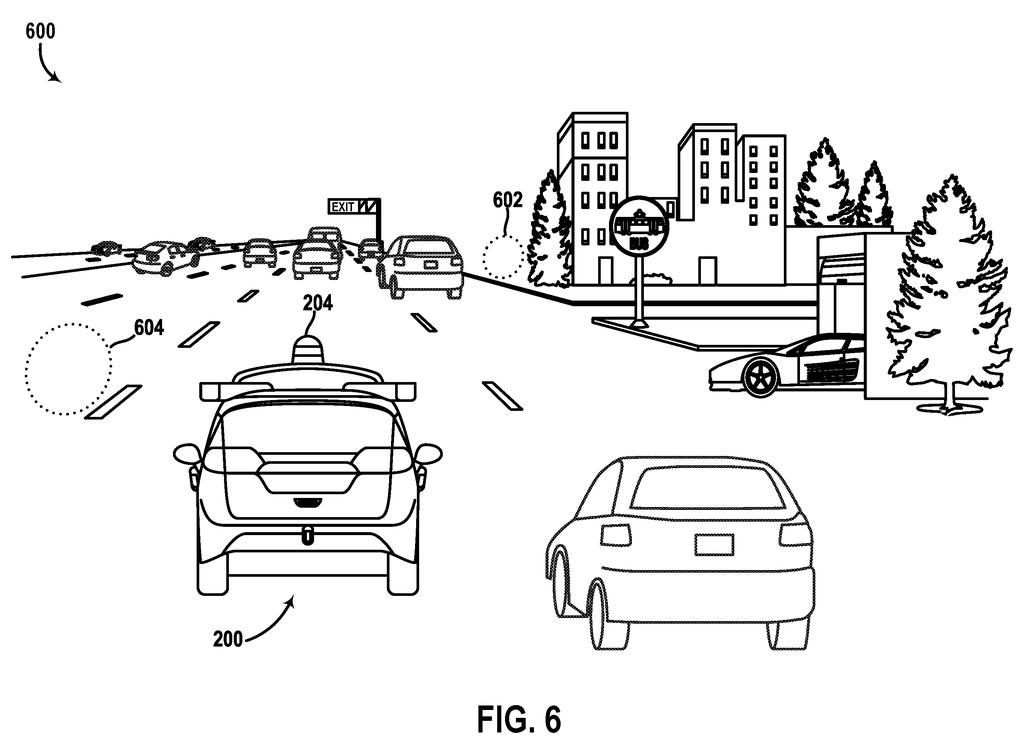
The key idea is that the decision isn't random. The system looks at what objects are nearby, how the vehicle is moving, and how the LIDAR is currently operating before choosing what to drop. That way, the car keeps the data that matters most and sheds the data that doesn't, without a human having to program every possible scenario.
… identifying, by the computing system and from among the data points of the set, a subset of data points to be discarded, wherein identifying the subset of data points to be discarded is based on one or more characteristics of an object in the environment around the vehicle …
Translation: The car decides which sensor readings to throw away based on what kind of object is nearby.
How the system picks which scan points to discard
The patent describes a two-part process. First, the system detects a trigger that tells it a drop process should begin. That trigger could be bandwidth pressure on the communication channel, processing load, or some condition in the environment around the car.
Once triggered, the system looks at context before deciding what to cut:
- Object characteristics: What kind of object generated a particular data point? A pedestrian close to the vehicle warrants more data than a distant empty lane.
- Vehicle operation: Is the car braking, turning, or cruising? The driving situation shapes which sensor readings are most safety-critical.
- LIDAR device state: How is the sensor itself currently configured and performing?
Using that context, the system picks a strategy for the drop process. The strategy determines which specific data points get discarded (removed from the dataset after capture) and, optionally, which laser pulses get suppressed entirely before they're even fired. Suppressing pulses is more efficient because it skips the work of capturing and then throwing away data.
The surviving data points are then sent over a communication channel to another computing device, which could be an onboard processor or an off-vehicle system for remote monitoring or logging. The whole pipeline is designed to stay adaptive: different situations call for different drop strategies, and the system is built to match the two.
What this means for self-driving cars processing sensor data
Self-driving vehicles are essentially moving data centers. LIDAR alone can produce millions of data points per second, and every one of those points has to travel across internal networks, get processed, and either inform a driving decision or get stored. When that pipeline gets congested, the whole system slows down, and slowdowns in a vehicle traveling at highway speed have real consequences.
For Waymo's robotaxi fleet, a system that intelligently prunes sensor data in real time could mean lower processing costs, faster response times for the software making driving decisions, and more efficient data logging. It also hints at a broader challenge Waymo's long bet on full autonomy creates: the more sensors you add for safety, the more data you have to manage without letting that management become its own safety problem.
Google's 55th filing we've tracked in our self-driving sensing race watchlist since May adds to a run that includes one predicting object collisions and one reading weather via laser.
Every self-driving car generates far more sensor data than its computers can realistically process in the moment, and that gap has direct safety consequences. When a LIDAR system floods its own pipeline, something has to give, and a system that makes poor choices about what to discard can go effectively blind at the worst possible time.
Waymo's approach here is to make those discard decisions context-aware, letting the car's current situation, its surroundings, its speed, its sensor state, shape what gets dropped rather than applying a fixed reduction rule. That match between the severity of the problem and the nuance of the solution is what makes this worth taking seriously.
The honest limit is that smarter dropping is only half the equation. Whether the car's decision-making holds up when fed a deliberately thinned-out data stream is the harder question, and this patent does not go there.
There are more where this came from
We read every patent application Big Tech publishes and send you the ones worth knowing. Plain English, free, every week.
The drawings
9 drawing sheets from US 2026/0276831 A1 · click any drawing to enlarge


Want this weekly breakdown for a company we don't cover? Patentlyze Pro →
Be the first to weigh in