
Apple Patents a Way for Phones to Locate Each Other Without a Cell Tower
Your phone already talks to cell towers to figure out where you are. Apple is filing patents on a system where phones figure out each other's location directly, by measuring the angle of a wireless beam that travels between them.
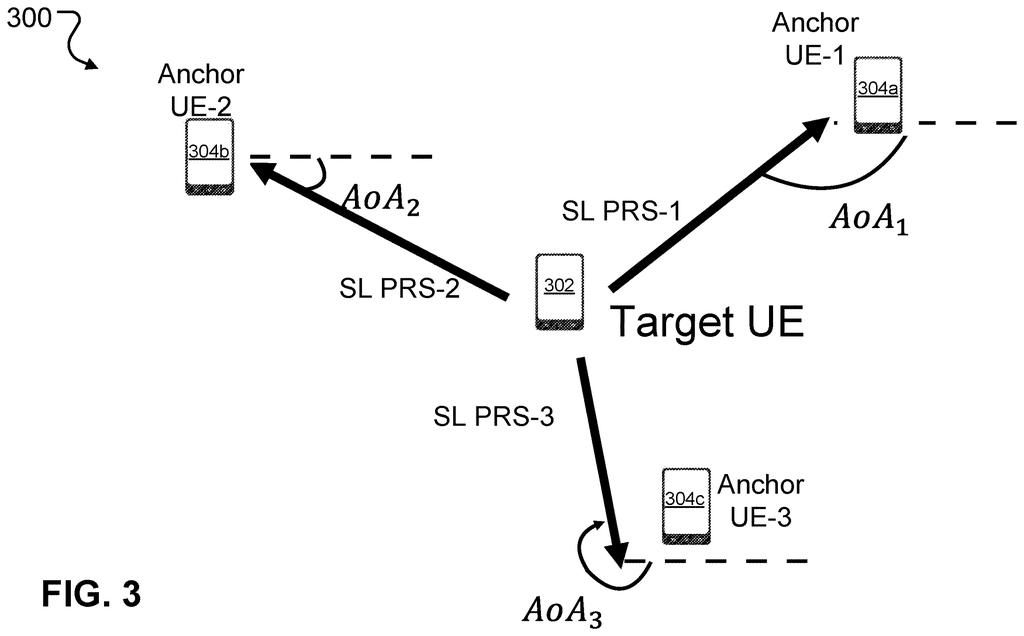
What Apple's phone-to-phone location trick actually does
You're trying to find a friend in a crowded indoor space, like a concert hall or a mall, where GPS barely works. Your phones can see cell towers, but the towers aren't precise enough to tell you your friend is 30 feet to your left versus 30 feet ahead.
Apple's patent describes a different approach. Instead of relying only on the tower, one phone (the "anchor") listens for a special radio signal sent by another phone (the "target"). The anchor phone measures the angle at which that signal arrives, like tracking exactly which direction a sound came from. It reports that angle back to the network, which uses it to calculate where the target phone actually is.
The clever part is that phones are doing most of the measuring work directly between themselves, using a connection called sidelink. The network just coordinates the process and collects the results. That could make location estimates far more precise in places where towers alone fall short.
… measurement results data comprising a measurement of a beam that is transmitted from the target UE to the anchor UE in the SL-PRS, the measurement results specifying an angle of arrival (AoA) of the beam that is measured at the anchor UE.
Translation: One phone figures out where another phone is by measuring the exact angle of the incoming wireless signal.
How beam angles between two phones pin down a position
The system centers on a technique called sidelink positioning. "Sidelink" means a direct radio link between two phones, separate from the usual path that goes phone-to-tower-to-phone. Most location systems rely on signals bouncing through the network; this one lets devices talk directly and measure where each other is.
Here is how the process flows:
- The network sends a request to an anchor UE (user equipment, meaning your phone) asking it to listen for a special signal.
- A target UE (another phone) transmits a sidelink position reference signal (SL-PRS), a short burst of radio energy specifically designed for measurement.
- The anchor phone measures the angle of arrival (AoA) of that signal, meaning it figures out the direction the signal came from, similar to how a satellite dish rotates to find the strongest signal from a specific direction.
- The anchor reports that angle measurement back to the network, which combines it with other data to compute the target phone's location.
The angle-of-arrival measurement is done at the beam level. Modern phones use beamforming, a technique where a phone focuses its radio signal in a specific direction rather than broadcasting it equally in all directions. Measuring the angle of that focused beam gives a much sharper directional reading than older methods that just measured signal strength.
What this means for GPS-free indoor location on iPhones
For everyday users, the practical payoff shows up in places GPS cannot reach. Shopping malls, airports, hospitals, and parking garages all defeat GPS because the satellite signals can't punch through concrete and steel. If phones can locate each other by measuring beam angles directly, location accuracy in those spaces could jump from "somewhere on this floor" to "third aisle on your left."
Apple keeps filing on precision location and wireless positioning across multiple wireless standards. This particular approach leans on 5G's beamforming hardware, which is already inside recent iPhones, so there is no obvious new hardware needed. The question is whether the software and network coordination required can be made reliable enough to matter in real-world messy RF environments.
Apple's 461st filing in our Apple coverage since May adds to a navigation thread that includes drawing routes on a map and car digital key control.
The person who benefits most is the one standing in a hospital corridor, phone in hand, trying to find radiology, getting directions that keep sending them in circles. What this filing describes is a way for phones to measure the precise angle of a signal arriving from another nearby device, so that location gets calculated from direction rather than from the blurry guesswork of signal strength.
That distinction matters most inside buildings, where stadiums, shopping centers, and large offices routinely defeat current location tools. A system that knows which way a signal came from can place you on the right side of the right floor.
The filing is early-stage and some core claims were pulled back in the published version, so this is a direction being explored rather than a feature arriving soon. But when it does arrive, people will notice it the way they notice all good navigation improvements: by simply stopping to get lost.
There are more where this came from
We read every patent application Big Tech publishes and send you the ones worth knowing. Plain English, free, every week.
The drawings
13 drawing sheets from US 2026/0292767 A1 · click any drawing to enlarge


Want this weekly breakdown for a company we don't cover? Patentlyze Pro →
Be the first to weigh in