
Salesforce Patents a System That Finds the Right Training Setup for New AI Models
Training an AI model is expensive and full of trial and error. Salesforce has filed a patent for a system that short-circuits that process by looking up how similar models were trained and reusing what already worked.
What Salesforce's AI training matchmaker actually does
Setting up an AI model for training is not as simple as pressing a button. Engineers have to make dozens of decisions about memory use, computing resources, and how data flows through the system, and a wrong call can waste days of expensive computing time.
Salesforce's patent describes a system that takes a new AI model, studies its structure, and then searches a database of previously trained models for something similar. If it finds a close match, it borrows that model's training setup. If it doesn't, it falls back to a sensible default. Either way, the new model skips a lot of the guesswork.
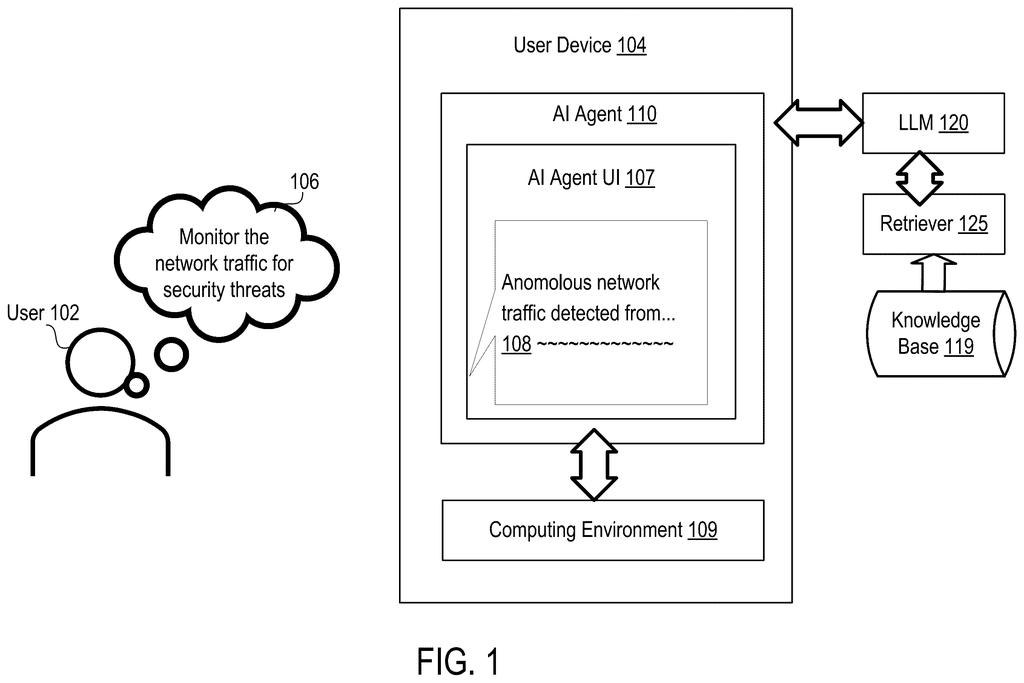
Once the training finishes, the model is deployed as an AI agent, meaning it can go off and take actions inside a software system on its own. The whole idea is to get from "here's a new model" to "here's a working agent" with less human hand-holding at each step.
… determining a memory utilization and an amount of data communicated between at least two components of the target neural network model during a forward pass of the target neural network model based at least in part on the architecture characteristics; …
Translation: It calculates how much memory and communication power the model will need.
How the system profiles a model and picks a training config
The system starts by collecting what the patent calls profile information about the target neural network: how many layers it has, how those layers are connected, and how it processes data on a forward pass (the step where data flows through the model to produce an output, before any learning happens).
From that profile, the system calculates two key numbers: how much memory the model needs, and how much data gets passed between its internal components during that forward pass. Those two numbers act as a fingerprint.
The fingerprint is used to search a database of pretrained models, each paired with the training configuration that worked for it. Training configurations include settings like batch size, learning rate, and how work is divided across multiple servers in a distributed computing setup (where many machines share the load). If the search finds a model with a similar fingerprint, it retrieves that model's configuration. If nothing close enough exists, a default configuration is used instead.
The target model is then trained using those settings across one or more distributed servers. After successful training, it is deployed as an AI agent, meaning it can execute tasks autonomously inside a computing environment without waiting for a human to tell it what to do at each step.
The approach includes obtaining profile information of a target neural network model, such as architecture characteristics, and determining memory utilization and data communication during a forward pass.
Translation: The system checks the model's design specs to estimate its resource needs.
What this means for building AI agents faster
For most people using AI tools at work, this kind of system operates invisibly. But its effect is real: AI agents that reach production faster, with fewer failed training runs burning through compute budgets, are cheaper to build and more likely to actually get built. That means more of the AI-powered features companies promise end up shipping.
For teams inside companies that use Salesforce's platform to build their own AI agents, a system like this could reduce the specialized expertise needed to configure training runs. Right now, getting those settings right often requires experienced machine-learning engineers. A lookup system that inherits proven configurations from similar models could open that process to smaller teams.
Salesforce files its eighth patent we've tracked since May in AI training and infrastructure, adding to earlier work like coaching AI accuracy and steering via logic rules.
The core idea here is genuinely practical: instead of reinventing the training setup for every new model, look up what worked before for something similar. That is a sensible engineering instinct, and the patent formalizes it into a database-backed pipeline.
The part that is harder to evaluate is the matching logic. How similar does a model have to be before borrowing its configuration actually helps rather than hurts? The patent describes the concept but leaves the quality of that matching as an open question. If the fingerprint is too coarse, the retrieved configuration could be a poor fit, and you are back to trial and error anyway.
For a person using a Salesforce product, the payoff would show up as AI features that arrive sooner and behave more consistently out of the box. That is a real benefit, even if the plumbing behind it is unglamorous infrastructure work rather than a visible new capability.
There are more where this came from
We read every patent application Big Tech publishes and send you the ones worth knowing. Plain English, free, every week.
The drawings
7 drawing sheets from US 2026/0289313 A1 · click any drawing to enlarge


Want this weekly breakdown for a company we don't cover? Patentlyze Pro →
Be the first to weigh in