
Nvidia Patents a System That Teaches AI Models to Fix Their Own Blind Spots
When an AI model keeps failing on certain situations, the usual fix is to go collect more real-world examples of those situations. Nvidia's new patent describes a system that skips that step entirely, generating synthetic training data precisely tailored to the AI's weakest spots.
How Nvidia's self-correcting AI training loop works
Every time an AI system misidentifies something in a video, say a pedestrian stepping out from behind a bus in the rain, that failure gets logged. But finding enough real footage of that exact scenario to train the AI to do better is slow, expensive, and sometimes impossible.
Nvidia's patent describes a loop that automates the whole fix. The system watches where an AI model underperforms, figures out which specific conditions are causing trouble (time of day, weather, object combinations), and then uses a separate AI to generate synthetic videos depicting exactly those conditions. Those fake videos get fed back into training, the model improves, and the loop runs again until the weak spots are gone.
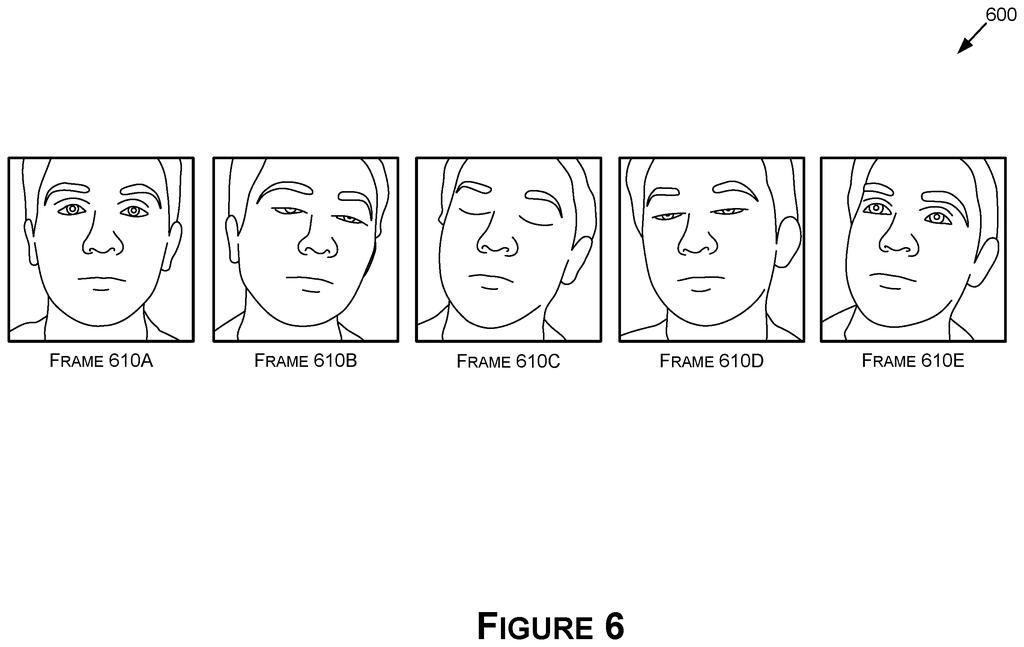
The generated data isn't random. It follows realistic time-based patterns, so a video of a car merging in fog actually unfolds the way that situation would in the real world, frame by frame. That makes the fake training clips useful rather than just plausible.
… generating, using one or more generative machine learning models (MLMs), a temporal data sample comprising the sequence of data items using the assigned values; and evaluating performance corresponding to at least one MLM …
Translation: The system uses generative AI models to create test data and then checks how well the target AI performs on it.
How the generative model targets and fills performance gaps
The system has two main layers working together. The first is a performance auditor: it tracks how a machine learning model does on different combinations of attributes (lighting conditions, object types, weather, motion patterns) and flags any combination where accuracy drops below a threshold.
The second layer is a generative model, essentially an AI that creates data. Once the auditor identifies a problem combination, the generative model is given a blueprint: produce a sequence of video frames (or other time-series data) where those exact attributes appear in a realistic temporal pattern. A "temporal pattern" just means the way things change over time, so the generated clip shows a truck slowly entering frame in low light, not just a static image of those conditions.
The key technical claim is the temporal scenario assignment: the system defines how attribute values should shift across a sequence before generating anything, ensuring the output matches real-world dynamics rather than being a collection of unrelated snapshots.
The whole loop is iterative:
- Train the model on existing data
- Evaluate performance broken down by attribute combinations
- Generate synthetic sequences targeting the weakest combinations
- Augment the training set with those sequences
- Repeat until performance criteria are met
Attribute-based performance metrics may be analyzed to identify attributes for which the MLM is performing below a threshold when each are present in a sample.
Translation: The software checks where the AI makes mistakes to figure out its specific blind spots.
What this means for AI trained on video and sensor data
Collecting real-world data that covers every edge case an AI might encounter is one of the most expensive parts of building reliable AI systems, particularly for anything involving video or sensor feeds. A model trained mostly on sunny highway footage will struggle when it encounters a foggy intersection at dusk. Filling those gaps by filming or licensing more real footage costs time and money that often isn't available.
This approach turns the data problem into a compute problem, which is a trade Nvidia is well-positioned to offer. If synthetic data generated this way holds up in practice, it could meaningfully accelerate the testing and improvement cycle for autonomous vehicles, surveillance systems, robotics, and any other domain where the AI needs to handle rare but important scenarios reliably.
Nvidia's 70th filing we've tracked since May in our self-driving sensing race watchlist follows work on flawed sensing gaps and dual decision paths.
Rare, dangerous conditions are exactly where automated systems fail, and exactly where failure costs the most. A vehicle that handles dry highways flawlessly but loses its footing in a nighttime rainstorm represents an enormous liability, not a finished product.
Nvidia's approach here targets that gap directly by identifying the specific conditions that trip up a model and then generating realistic training footage of those exact conditions, including how they unfold over time, not just as isolated snapshots. That focus on matching the fix to the specific failure is what makes this more than a brute-force solution.
The honest limit is that the generative system doing the gap-filling could carry its own blind spots, which would bake problems in rather than fix them. Whether that loop stays healthy is the open question, and the answer will determine whether this delivers on what the problem actually demands.
There are more where this came from
We read every patent application Big Tech publishes and send you the ones worth knowing. Plain English, free, every week.
The drawings
16 drawing sheets from US 2026/0290075 A1 · click any drawing to enlarge


Want this weekly breakdown for a company we don't cover? Patentlyze Pro →
Be the first to weigh in