
Disney Patents an AI That Filters Out Crowd Noise to Catch Broken Ride Equipment
Amusement parks are loud by design, which makes it nearly impossible to hear when a motor or mechanism is starting to fail. Disney's new patent describes an AI that listens through all that noise, strips out the screaming guests, and focuses on whether the machines themselves sound right.
How Disney's audio AI spots a failing motor in a noisy park
Every time a Disney ride cycles through its queue, dozens of motors, gears, and hydraulic systems are humming along in the background. That mechanical soundtrack is normally drowned out by music, announcements, and thousands of guests talking at once.
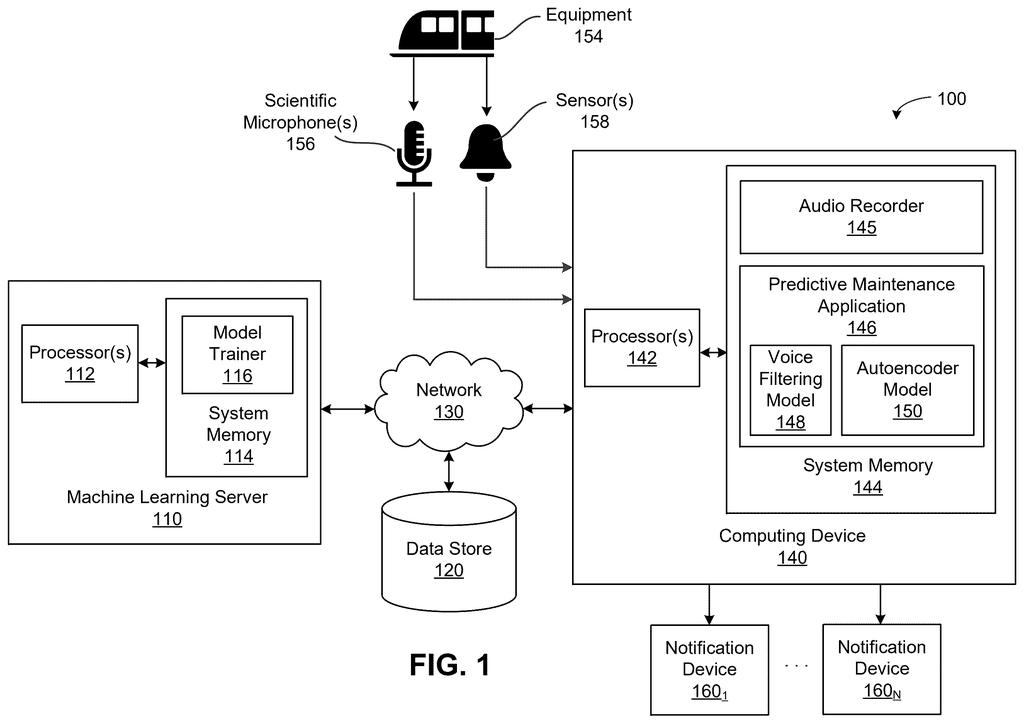
Disney's patent describes a system that records audio in or around a ride, then uses two separate AI models to make sense of what it hears. The first model acts like an audio filter: it separates the human sounds (voices, crowd noise) from the mechanical sounds (motors, pumps, gears). The second model then studies those machine sounds specifically, looking for anything that sounds off compared to what normal operation sounds like.
If something unusual turns up, the system sends an alert to a maintenance team's device automatically. The idea is to catch a problem before it becomes a breakdown or a safety issue, rather than waiting for a guest or operator to notice something is wrong.
processing a first frequency representation of a first audio recording using a first trained machine learning model to generate a second frequency representation of at least one voice and a third frequency representation of at least one sound produced by an equipment …
Translation: An AI separates normal visitor chatter from the mechanical sounds of the ride.
How two AI models split voices from machines and flag faults
The patent describes a two-stage audio analysis pipeline that works roughly like this:
- Stage 1 (source separation): A first AI model takes a frequency representation of a recorded audio clip (essentially a visual map of all the sounds by pitch and timing, called a spectrogram) and splits it into two outputs: one capturing only voices, and one capturing only equipment sounds.
- Stage 2 (anomaly detection): A second AI model examines the equipment-only sound output and compares it against patterns of what healthy machinery sounds like. If it finds a mismatch, that counts as an anomaly.
- Alerting: When an anomaly is detected, the system transmits an alert to a computing device, which would likely be a maintenance crew's phone, tablet, or monitoring console.
The two-model approach matters because trying to detect a subtle mechanical fault inside a raw recording full of crowd noise is far harder than working from a clean equipment-only audio signal. Separating the two first gives the fault-detection model a much cleaner picture to analyze.
The training of both models presumably involves large sets of labeled audio, with examples of normal equipment sounds and known fault signatures, though the patent focuses on the deployed system rather than the training methodology.
… detecting, using a second trained machine learning model, an anomaly based on the third frequency representation; and transmitting an alert to at least one computing device based on the anomaly …
Translation: A second AI listens to those machine sounds and instantly warns staff if something breaks.
What early fault detection means for park guests and safety crews
For a guest at a Disney park, this kind of system is invisible when it works. You ride the attraction, the machine runs normally, and you never know that an AI caught a developing fault two days earlier and a technician fixed it before your visit. That's exactly the point: fewer unexpected closures, fewer situations where a ride shuts down mid-operation, and less risk of a mechanical failure reaching the point where it could hurt someone.
For Disney's operations teams, it shifts maintenance from reactive (something broke, fix it now) to predictive (something is starting to sound wrong, schedule a check). In a park environment where a single attraction going down can affect tens of thousands of guests in a single day, that shift has real operational and financial weight. a growing pile of Disney sensing and monitoring filings suggests the company is building out a broader infrastructure layer beneath its guest-facing experiences.
Disney's Enterprise AI sixth filing we've tracked since June follows earlier applications like auto-tagging movies and shows and cutting sports highlights.
When a ride breaks down mid-operation, the guest experience goes from magical to frustrating in seconds. Disney's approach here is to catch the warning signs earlier, by teaching software to separate the sounds a machine makes from the crowd noise surrounding it, then flag anything unusual before it becomes a failure.
Most guests would never notice this system working. That's the point. The ride runs, the queue moves, and nobody knows that a subtle mechanical irregularity was caught and scheduled for repair overnight.
The concrete payoff is fewer unexpected shutdowns and more maintenance that happens on Disney's timeline rather than the equipment's. For anyone who has ever waited an hour for a ride only to watch it go down, that matters.
There are more where this came from
We read every patent application Big Tech publishes and send you the ones worth knowing. Plain English, free, every week.
The drawings
9 drawing sheets from US 2026/0287420 A1 · click any drawing to enlarge


Want this weekly breakdown for a company we don't cover? Patentlyze Pro →
Be the first to weigh in