
IBM Patents a Way to Train AI on Messy, Poorly-Worded Questions
Most AI models are trained on clean, well-formed questions, but real people type messily. IBM has filed a patent for a system that teaches AI to handle the actual way humans communicate, not just the ideal version.
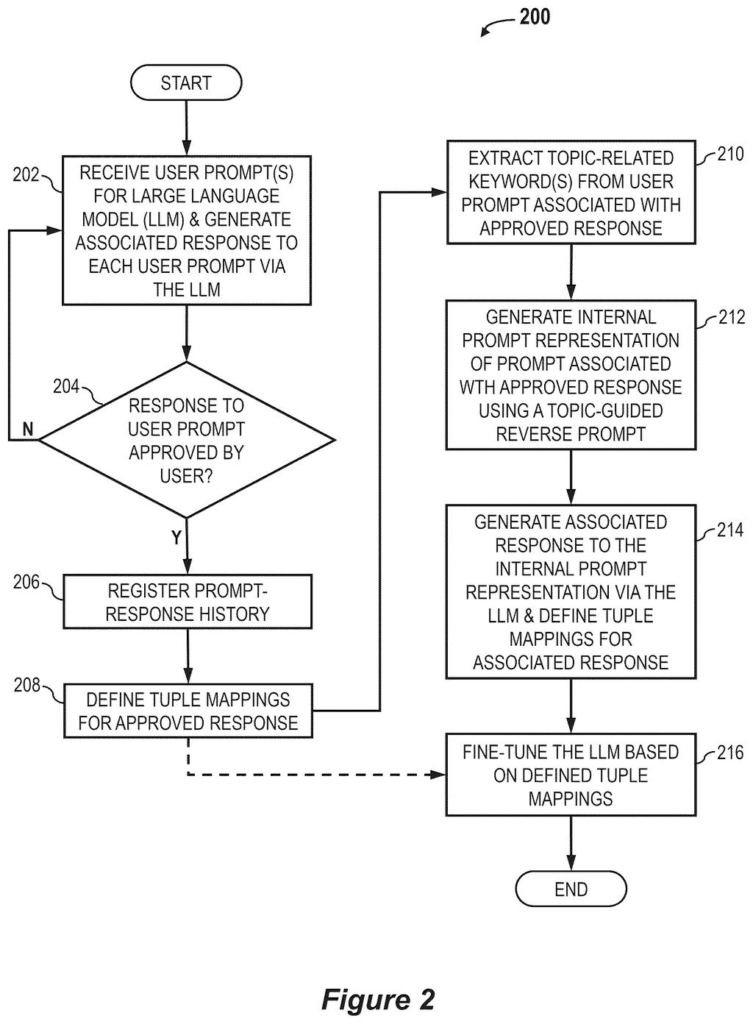
What IBM's prompt-hardening technique actually does
Every time someone types a half-finished question into an AI chatbot, something goes wrong: the AI may answer a slightly different question than the one the person meant to ask. That gap between what you type and what you meant is one of the most common frustrations with AI tools today.
IBM's new patent describes a process for closing that gap. The idea is to collect a range of differently-worded questions that all point at the same thing, figure out which answer is the right one, and then use all those variations to teach the AI model to recognize the intent behind the question, not just the literal words.
The clever part is that the system also works backward: it takes a good answer and generates what the question probably should have looked like, then uses that as additional training material. The AI gets better at handling the full messy range of ways a real person might ask something.
… extracting one or more topic-related keywords from the final user prompt, wherein the one or more topic-related keywords are extracted by applying, via the LLM, a topic extraction prompt to the final user prompt …
Translation: The system pulls the core subjects out of the final question using the AI itself.
How the reverse-prompt loop generates training data
The patent describes a fine-tuning pipeline for large language models (LLMs, the AI systems behind tools like chatbots and AI assistants). The goal is to make those models more reliable when users phrase questions in unconventional, incomplete, or confusing ways.
Here is how the process works:
- A set of user prompts is collected, all relating to a topic. These might be different ways people phrase the same underlying question.
- The LLM generates a response to each prompt, and a human reviewer approves one best answer for the final, most representative prompt.
- The system extracts topic-related keywords from that final prompt, then uses those keywords plus the approved answer to generate what the patent calls a topic-guided reverse prompt, essentially working backwards from the answer to reconstruct a canonical version of the question.
- All of these pairings (various messy prompts, the reverse-engineered prompt, and the approved answers) are assembled into tuple mappings, which are structured data pairs that tell the model: when you see something like X, the right answer is Y.
The LLM is then fine-tuned (retrained on a smaller, targeted dataset to adjust its behavior) using all those mappings. The result is a model that has been exposed to many phrasings of the same intent and has been anchored to a single correct output.
… defining a respective tuple mapping for each user prompt to the user-approved, associated response; generating, via the LLM, an internal prompt representation of the final user prompt using a topic-guided reverse prompt …
Translation: It links the messy user questions to the correct answer and builds a cleaner internal version of the prompt.
What this means for AI tools used in real workplaces
For companies deploying AI assistants internally, whether for customer service, HR, or technical support, one of the biggest practical headaches is that employees and customers do not type in clean, structured language. A model trained mostly on well-formed prompts can give wildly different answers to questions that mean the same thing, depending on how they are worded. That inconsistency erodes trust fast.
This patent's approach tries to solve that at the training level rather than patching it with prompt guidelines or user-interface workarounds. If it works as described, your AI tool could give you the same quality answer whether you ask it carefully or just bang out whatever comes to mind, which is how most of us actually use these things.
IBM's 35th filing in the AI training and infrastructure work we've tracked since May adds to a set that includes one on making AI forget selectively and one catching bad training data.
Ask the same legal question two different ways to an AI assistant and get two different answers, and suddenly no lawyer will trust it in front of a judge. That inconsistency is not a minor annoyance; it is the reason entire industries have hesitated to bet serious money on AI for anything consequential.
IBM's approach requires a human expert to confirm what the correct answer actually is, then builds the system's reliability on top of that confirmed truth. That human checkpoint costs time and money, which means this solution scales only as fast as qualified people can review outputs.
For companies where a wrong answer carries legal, medical, or financial consequences, paying for that human review is almost certainly cheaper than defending a lawsuit or losing a client's trust. The fix is appropriately careful rather than cheap, and that is exactly what the size of the problem demands.
There are more where this came from
We read every patent application Big Tech publishes and send you the ones worth knowing. Plain English, free, every week.
The drawings
2 drawing sheets from US 2026/0288826 A1 · click any drawing to enlarge


Want this weekly breakdown for a company we don't cover? Patentlyze Pro →
Be the first to weigh in